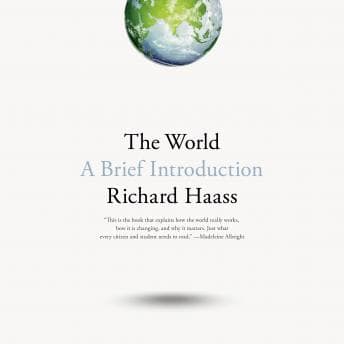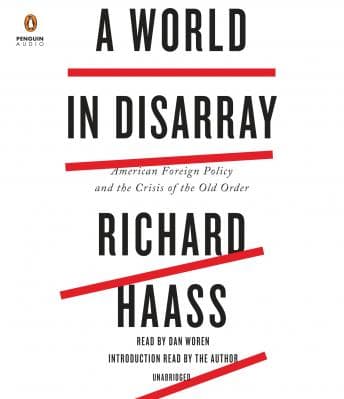

What happens when the guy who's been in the room where it happens decides to write down everything he knows about why the world's falling apart?
I was driving back from a client meeting in Houston - four hours of I-10 that feels like six - when I finished this one. And I'll admit, Richard Haass had me thinking harder about global strategy than I have since my last deployment brief. The man ran Policy Planning at State and now heads the Council on Foreign Relations. He's not some armchair general. He's been in the fight, just a different kind.
The Intel Brief You Actually Need
Let me cut to the chase: Haass delivers a comprehensive threat assessment of the international order. And unlike the bloated policy papers I used to wade through, he actually explains why things are the way they are. For ground-level perspective on what that post-WWII system cost to build, With the Old Breed shows the brutal Pacific campaign that helped shape the world Haass is analyzing. The historical context here is solid - he traces the post-WWII system from Westphalia through the Cold War to our current mess with the precision of a good staff officer.
What struck me most was his framework for thinking about sovereignty. In the military, we dealt with this constantly - when do you respect borders, when do you cross them, and who decides? Haass argues that the old rules simply don't work when you're dealing with terrorism, climate change, and cyber threats that laugh at national boundaries. He's right. I've seen it firsthand. A drone strike doesn't care about the Westphalian system.
The sections on China and Russia read like they could've been written yesterday, even though the book came out in 2017. His analysis of great power competition is the kind of clear-eyed assessment that's often missing from the talking heads on cable news. He's not cheerleading for any particular administration - he's diagnosing a systemic problem.
Where the Mission Gets Complicated
Here's my issue: Haass is brilliant at the diagnosis but his prescription feels... academic. "World Order 2.0" sounds great in a conference room at the Council on Foreign Relations. But I've been on the ground when theory meets reality, and reality usually wins ugly.
Some listeners have called this boring. I get it. This isn't a page-turner. There are no explosions, no heroes storming buildings. It's policy analysis, and Haass writes like a policy analyst - methodical, thorough, sometimes dry as the Kuwaiti desert in August. If you're expecting Tom Clancy, you're in the wrong theater of operations entirely.
But boring? No. Complex, yes. This requires focused listening. I had to rewind a few sections because my mind wandered to the road, and when I came back, Haass had moved three chess pieces while I wasn't paying attention.
The Voice in Your Ear
Dan Woren handles the narration, with Haass himself contributing. Woren's delivery is clean and professional - he sounds like a good briefer who knows his material. No dramatic flourishes, no attempts to make foreign policy sound like an action movie. Just clear, informative presentation. For this kind of content, that's exactly what you want. A narrator trying to punch up discussions of multilateral institutions would be painful.
The production quality is solid. No audio issues, no weird pacing problems. At just under nine hours, it's a reasonable commitment for the depth of material covered.
Know Your Mission Before You Commit
If you're the kind of person who reads Foreign Affairs for fun (guilty), this is essential. If you want to understand why your news feed is a constant stream of international chaos, Haass provides the framework. Business leaders dealing with global operations, military folks transitioning to civilian roles, anyone who needs to brief executives on geopolitical risk - this is your homework.
Skip it if you need narrative drive, character development, or anything resembling entertainment. This is medicine, not candy. Effective, but you have to want to take it.
I listened at 1.25x - Woren's pacing allows for it without losing content, and honestly, it helped maintain engagement during the denser sections.
Cooper's Bottom Line
Haass wrote a book that every citizen probably should read but most won't. It's the vegetables of the audiobook world - nutritious, necessary, not exactly what you're craving. But after 25 years of watching American foreign policy from the inside, I can tell you his analysis is sound. His solutions may be optimistic, but his understanding of the problems is dead-on. The human cost of global disorder hits differently when you read something like Dressmakers of Auschwitz - a reminder that policy failures aren't abstract, they're measured in lives.
Ranger slept through most of it. He's more of a thriller dog. But I'm keeping this one in the mental library for the next time a client asks me why the world seems to be coming apart at the seams.
Worth your time if you're serious about understanding the strategic environment. Not worth it if you're looking for entertainment. Know which one you need before you spend the credit.





![Steve Jobs [unabridged audiobook] audiobook cover](/_next/image?url=https%3A%2F%2Fcovers.audiobooks.com%2Fimages%2Fcovers%2Ffull%2F9788499923406.jpg&w=1920&q=75)