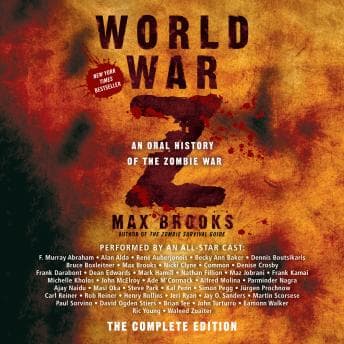

The Audiobook That Ruined All Other Audiobooks
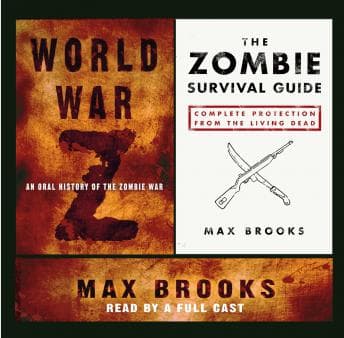
I was grading sophomore essays on The Great Gatsby - you know, the ones where every other sentence starts with "Gatsby is a symbol of" - when I decided I needed something to keep me from losing my mind. So I put on World War Z. Three hours later, the essays were still ungraded, my coffee had gone cold, and I was genuinely stressed about the geopolitical implications of a fictional zombie apocalypse. This is why we still read the classics. (Yes, I'm calling a zombie oral history a classic. Fight me.)
Look, here's the thing. I've been teaching literature for twenty years, and I've spent most of that time explaining to teenagers why form matters. Why Faulkner's stream of consciousness isn't just showing off. Why epistolary novels work differently than third-person narratives. Max Brooks understood this assignment better than most of my AP students. The oral history format isn't a gimmick - it's the whole point. You're not reading about the zombie war. You're hearing testimony. Survivors. Witnesses. People who watched the world end and somehow kept breathing.
And the narrator understands that pause is punctuation.
Forty Voices, One War
I need to talk about this cast. Over forty narrators. Alan Alda. Mark Hamill. John Turturro. Martin Scorsese (yes, that Scorsese). Simon Pegg. Nathan Fillion. Common. The list goes on and it sounds like a fever dream, but somehow it works. Each interview is its own performance, its own world, its own survivor. Max Brooks anchors everything as the interviewer - consistent, measured, the through-line that keeps you grounded as you jump from a Chinese doctor to a South African politician to an American soldier.
The prose deserves to be savored. And at 1.0x speed - because the author chose those words - you hear every choice these performers make. Mark Hamill doesn't just read his section. He becomes a traumatized veteran recounting the Battle of Yonkers. There's this moment where his voice cracks, just slightly, and I had to pause and stare at Lake Michigan for a minute. (Denise asked if I was okay. I said I was thinking about lesson plans. I was not thinking about lesson plans.)
Some of the accent work isn't perfect - a few listeners have noted that certain regional voices don't quite land. Fair. But honestly? The emotional authenticity carries it. When you've got this many performers, each bringing their own interpretation, minor inconsistencies fade into background noise. What stays with you is the cumulative weight. Story after story. Loss after loss. Survival after survival.
What Brooks Is Really Saying
This reminds me of what Hemingway said about writing one true sentence. Brooks writes dozens of them. Hundreds. Each interview is a window into how different cultures, governments, and individuals respond to existential crisis. Tattooist of Auschwitz explores similar ground - how individuals navigate institutional horror, though through a very different lens. The Chinese cover-up. The Israeli "voluntary quarantine." The American military's catastrophic overconfidence. My students would hate this. I love it.
Because here's the thing - it's not really about zombies. (Don't tell anyone who picked this up for the gore. Let them figure it out.) It's about institutional failure. About the stories we tell ourselves to avoid uncomfortable truths. About what happens when the systems we trust collapse and we're left with nothing but each other.
The episodic structure means you can listen in chunks - perfect for a commute, or for pretending to pay attention during faculty meetings. (Principal Martinez, I was definitely listening to your curriculum update. I was not. I was listening to a blind Japanese gardener describe surviving alone in the wilderness.) Each interview is self-contained enough that you can pause and return without losing the thread. But fair warning: once you start, you won't want to pause.
Worth Pausing the Faculty Meeting For
The production quality is genuinely impressive. Clean audio, professional mixing, no weird background hum. This won an Audie Award for Best Multi-Voiced Performance, and you can hear why. The Complete Edition adds five hours of previously unrecorded content to the original abridged version, and honestly, I can't imagine experiencing this any other way. The format was made for audio. Reading it on the page would be like watching a concert on mute.
Some listeners have mentioned that the interview format can feel distancing - you're always one step removed from the action, hearing about events rather than experiencing them directly. I get that. If you need constant forward momentum, if you want a traditional narrative with a protagonist you follow from beginning to end, this might frustrate you. But if you loved Middlemarch - if you appreciate how a novel can build a world through accumulation, through the slow layering of perspectives and voices - this is its spiritual successor. (Okay, George Eliot probably wouldn't appreciate the comparison. But she's not here to object.)
Who Should Listen (And Who Should Skip)
This is for readers who love literary fiction disguised as genre, who appreciate world-building through voices rather than plot. Skip it if you need a single protagonist or constant forward momentum - the episodic interview format will frustrate you.
Final Grade
Listen to this. Just... listen to it. On your commute. While grading papers at 11PM. While walking the lakefront with someone you love. The full-cast performance elevates already excellent source material into something genuinely special. It's twelve hours, which sounds like a lot, but it moves. By the time I finished, I wanted to start over immediately.
My only real complaint? It's set an impossibly high bar. Every single-narrator audiobook I've listened to since feels a little flat by comparison. That's not fair to those other books. But that's where we are now.
Worth every minute. Even the ungraded essays were worth it.