I usually listen to audiobooks to escape the crushing reality of human nature—or at least to analyze it from a safe distance—but Jill Leovy just dragged me right back into the trenches. And honestly? I needed it.
Let's be real for a second. Most true crime is voyeuristic trash. (Yes, I said it. Don't look at my Audible library history, that's private.) We consume tragedy like popcorn. But Ghettoside isn't your typical "who-dunnit" where we gawk at the killer. It's an autopsy of a broken system. I listened to this while grading papers on behavioral conditioning, and the irony wasn't lost on me. Leovy is describing a societal experiment gone wrong, and it made me want to throw my red pen across the room.
Rebecca Lowman's Earned Restraint
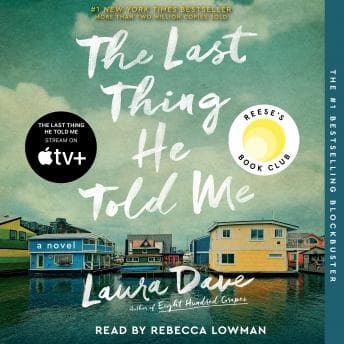
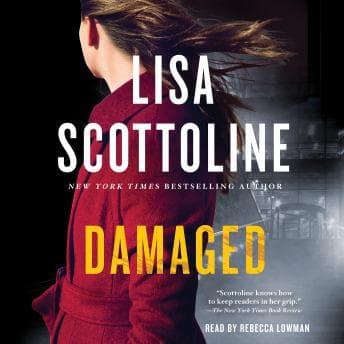
I checked the research on the narrator, Rebecca Lowman, and apparently she won an Audie for this performance. She earned it. Lowman brings that same understated brilliance to Last Thing He Told Me, though the emotional stakes there are more personal than systemic.
Here's the thing—when you're dealing with the murder of young men in South Los Angeles, you don't need a narrator who chews the scenery. You don't need melodrama. The facts are dramatic enough. Lowman gets that. Her delivery is incredibly low-key. Almost clinical. But it's that specific kind of clinical detachment that masks a deep, simmering rage.
She doesn't try to "act" out the gunshots or do caricature voices for the gang members. She treats the text with the respect of a eulogy. There were moments during my morning run along the Charles River where I actually slowed down to a walk because her voice dropped a register, delivering a statistic about unsolved homicides that just punched me in the gut. If she had hammed it up, I would've turned it off. The restraint is what makes it devastating.
The Anomaly in the Data
Psychologically, this book is a goldmine. Leovy presents a theory that is so obvious it hurts: violence thrives where the law is weak. It's basic operant conditioning. If there's no consequence for murder (the stimulus), the behavior (violence) reinforces itself. David and Goliath explores similar patterns about how power structures fail—and how outliers exploit those failures.
But then you have Detective John Skaggs. In a dataset full of apathy and bureaucratic incompetence, Skaggs is the outlier. The anomaly. He's the relentless detective who actually believes black lives matter—not as a slogan, but as a procedural necessity.
Leovy (and Lowman) paints him not as a saint, but as a man obsessed with the puzzle. As a researcher, I relate to that. The need to make the pieces fit. Watching him work against a system designed to fail is exhausting. Frustrating. It made me late for a faculty meeting because I sat in my car for ten minutes just listening to him interview a witness, desperate for him to get a break in the case.
Who This Is (and Isn't) For
Skip this if you want true crime as entertainment or background noise. But if you care about why people do terrible things—and why we let them get away with it—you need to hear this.
Closing the Case File
This isn't a fun listen. It's not something you put on while you're trying to relax in a bubble bath. It's heavy, it's infuriating, and it's arguably one of the most important books on American crime ever written.
My therapist says I need to stop consuming media that makes me angry, but she's wrong about this one. This is the good kind of angry. The productive kind. It forces you to look at the patterns we ignore.