It was Tuesday. I was walking the lakefront trail—trying to get my daily steps in because my doctor says sitting for eight hours grading essays is "sedentary behavior"—and I literally had to stop walking. Just stopped. Right there by the chess pavilion.
A jogger actually slowed down and asked, "You okay, man?"
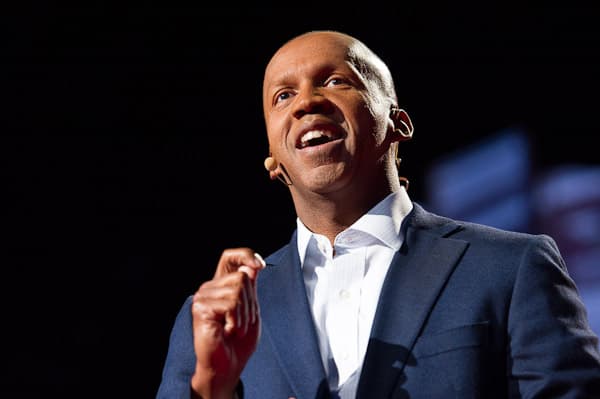
I wasn't. I was listening to Bryan Stevenson explain how he sat with a man on death row hours before his execution, and I was weeping behind my sunglasses. (So, yeah. Great start. Don't listen to this one if you're trying to look cool in public.)
Here's the thing about Just Mercy. I teach To Kill a Mockingbird every year. I've spent two decades telling teenagers about Atticus Finch and the nobility of the law. I thought Dare to Lead would give me some framework for having those tough conversations about justice with my students, but honestly, it felt more like corporate team-building than moral reckoning. Listening to Stevenson narrate his own life makes me feel like I've been teaching a fairy tale. This is the real deal. And honestly? It wrecked me.
A Witness, Not a Performer
Usually, I have a strict rule: Authors shouldn't narrate their own books. Actors act. Writers write. (I listened to a thriller writer narrate his own book last month and it sounded like he was reading a grocery list at gunpoint.)
But Bryan Stevenson is the exception that proves the rule.
He doesn't have a "performer's" voice. He has a witness's voice. Deep, incredibly calm, and terrifyingly patient. He speaks with the cadence of a man who has had to explain the unexplainable to grieving mothers and stone-faced judges for thirty years. When he describes the details of the Walter McMillian case—a man sentenced to die for a murder he physically couldn't have committed—Stevenson doesn't yell. He doesn't get theatrical. He just lays the facts out, one by one, with this quiet devastation.
I listen at 1.0x speed (obviously), and with Stevenson, you need to. You need the pauses. The silence between the sentences does as much work as the words.
Harder Than Fiction
The structure here is brilliant—and painful. Stevenson weaves his memoir of starting the Equal Justice Initiative with specific cases of people on death row. It's not just legal theory. It's human stories.
There were moments where I had to pause the audio just to breathe. (Denise found me staring at the wall in the kitchen while the pasta boiled over. I didn't even hear the water hitting the burner.) The way he describes the systemic trapping of the poor and the mentally ill... it makes you look at the news differently.
My students would probably say, "Mr. Williams, this sounds depressing." And yeah, it is. But it's also hopeful in a way that feels earned, not cheap. When Stevenson talks about mercy, he's not quoting a greeting card. He's talking about saving a life when the entire state machinery wants to end it.
A Warning on Pacing
Okay, let's be real for a second. If you're used to full-cast productions with sound effects and dramatic reenactments, this might feel slow to you.
It's not a thriller. It's a sermon.
Some of the legal procedural stuff is dense. I loved it—reminded me of the nuances in a good Dickens novel—but if you're looking for fast-paced action, you might zone out during the appeals process descriptions. Stevenson's voice is very consistent. He doesn't do "funny voices" for different characters. He treats everyone—from the judges to the condemned—with the same level of gravity.
The Verdict
I finished this at 1 AM on a school night. (Sorry, 3rd period, your papers aren't graded yet.)
This isn't just an audiobook; it's a moral recalibration. One of those rare listens that actually changes how you walk through the world. I used to think audiobooks were just for entertainment while I did chores. This one felt like a responsibility.
Listen if: you want to understand the American justice system's failures through the eyes of someone who's spent his life fighting them. Skip if: you need action-packed pacing or can't handle emotionally heavy material right now.
Just maybe don't do it in public unless you're okay with crying in front of strangers.