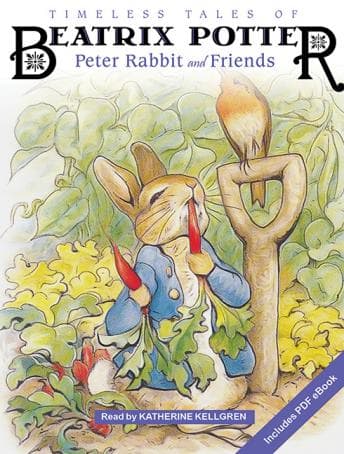

I need to talk about the singing.
Look, I've been teaching high school English for two decades. I've heard teenagers attempt Shakespeare soliloquies. I've survived countless renditions of "To be or not to be" delivered in monotone while the student checks their phone. I thought I was prepared for anything. But Katherine Kellgren bursting into song as Appley Dapply? That caught me off guard during a particularly tedious faculty meeting about standardized testing metrics. Principal Martinez definitely noticed me flinch.
Here's the thing though—and I say this as someone who usually champions every artistic choice a performer makes—the singing is going to be divisive. Some of it lands beautifully. Some of it... well. One listener put it perfectly: "Every time the audiobook narrator started singing I died a little inside." That's harsh. But I get it.
Kellgren Knows That Pause Is Punctuation (Except When She Doesn't)
Kellgren is genuinely brilliant here. Her British accent isn't just authentic—it's appropriately old-fashioned, which matters enormously with Potter. These stories were written at the turn of the twentieth century, and Kellgren sounds like she could have been reading them in a Victorian parlor. Her Squirrel Nutkin has this manic chittering quality that's genuinely unsettling when you remember the owl nearly eats him. Her Mr. McGregor is all gruff menace. The character differentiation is exceptional.
But—and this is where my teacher instincts kick in—she moves fast. Potter's prose deserves to be savored. These sentences are carefully constructed little gems, and Kellgren sometimes barrels through them like she's got somewhere to be. If you're listening with young children following along in the physical books, they'll lose their place. Guaranteed. The pacing works for adult ears (I was grading sophomore essays on The Great Gatsby while listening, so the energy actually helped), but for the intended audience? It's a problem.
Twenty-One Tales Is Actually A Lot
At three and a half hours, this collection is substantial. You're getting the greatest hits—Peter Rabbit, Benjamin Bunny, Jemima Puddle-Duck—but also deep cuts like The Tale of Pigling Bland and The Tale of Mr. Tod. I'd forgotten how genuinely dark some of these stories are. Potter doesn't shy away from the reality that foxes eat ducks and owls eat squirrels. The natural predation themes are right there, unapologetically. Jungle Book operates in that same unflinching territory—Kipling understood that the jungle has teeth. My students would probably appreciate that honesty more than the sanitized versions they grew up with.
This reminds me of what Hemingway said about writing—the dignity of movement of an iceberg is due to only one-eighth of it being above water. Potter's stories seem simple on the surface, but there's real weight underneath. The Tale of Two Bad Mice is essentially a meditation on destruction and guilt. The Tailor of Gloucester has genuine pathos. That unexpected emotional weight in seemingly simple stories—I encountered something similar in Blue Cross, where a straightforward mystery carries more than you'd expect. Kellgren captures these layers, even when she's racing through them.
The Animal Sounds Are A Choice
I should mention—there are actual animal sounds woven in. Squirrel chitters. Cat meows. It's charming in small doses, theatrical in larger ones. The production from Tantor Audio is clean and professional, but these little touches push it toward performance rather than pure reading. Whether that works for you depends entirely on your tolerance for theatrical children's audio.
Who Should Queue This Up (And Who Should Skip)
If you're an adult rediscovering these classics—maybe while pretending to pay attention in meetings, hypothetically—this works beautifully. The energy keeps you engaged. If you're playing it for young children at bedtime, the pacing might wind them up rather than settle them down. And if you're hoping for a peaceful car ride soundtrack, those singing interludes might test everyone's patience. Skip this one if you need gentle, drowsy storytelling for little ones.
Mr. Williams's Final Grade
This is an Audie Award finalist for good reason. Kellgren is a multiple Audie winner, and her skill is undeniable. But this particular pairing of narrator and text creates friction. Her vigorous approach sometimes clashes with Potter's gentle precision.
My students would hate this. Too quaint, too British, too earnest. I love it. But I'm also the guy who listens to Middlemarch during budget presentations, so my judgment on "appropriate listening choices" is questionable at best.
Denise and I walked the lakefront with this playing last Sunday. The contrast of Potter's English countryside with Chicago's skyline was oddly perfect. Peter Rabbit outwitting Mr. McGregor while joggers passed us and the wind came off the lake. Literature persists, even in unlikely contexts. That's why we still read the classics—or in this case, listen to them, at exactly 1.0x speed, because the author chose those words and I choose to hear them properly.