
Okay, I need a minute.
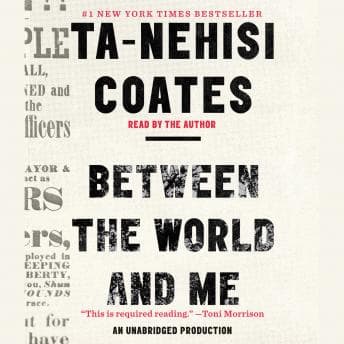
I literally just took my headphones off and I'm sitting on my living room floor. Diego (my tabby) is head-butting my knee trying to get attention, but I can't move yet. I just spent three and a half hours listening to Ta-Nehisi Coates read Between the World and Me, and I feel... heavy. Hollowed out? But in a necessary way.
Usually, I'm here screaming about romance tropes or how good a narrator's British accent is. This isn't that. This is something else entirely.
Let's be real for a second—I am super skeptical of authors narrating their own audiobooks. (Don't tell my writer friends I said that.) Usually, they don't have the training. They sound flat. They rush. But listening to anyone else read this book would have been a crime. Seriously.
The Voice (And Why It Had To Be Him)
Here's the thing: this book is written as a letter to his teenage son. It's intimate. It's terrifyingly personal. If a polished actor like Bahni Turpin or Dion Graham had read this, it might've sounded too... performative? Too smooth?
Coates sounds like a father who is terrified and proud and exhausted all at once. His voice has this rhythm to it—lyrical, almost like poetry or hip-hop, but grounded in this gravelly reality. There were moments where I felt like I was eavesdropping on a private conversation I wasn't supposed to hear.
He doesn't do "character voices" because he doesn't need to. He's just speaking his truth. When he talks about the fear of losing his body—the Black body—to the streets or the police or the "Dreamers" (people who think they're white), you can hear the vibration of that fear in his throat. It's not acting. It's lived experience. That same raw authenticity is what made Lone Survivor so powerful—Marcus Luttrell narrating his own survival story with that same unpolished, necessary honesty.
(I listened at 1.0x speed, by the way. Do not speed this up. You need to sit with the pauses.)
Howard, The Mecca, and the Pivot That Wrecked Me
I know, I know—I'm a Latina from Texas, so my experience isn't the same as a Black man from Baltimore. But the way he talks about history? About how America is built on plunder? It hit me somewhere deep.
There's this part where he talks about his time at Howard University—he calls it "The Mecca"—and the energy in his voice shifts. It becomes this electric thing. You can feel the drumbeat of the yard, the diversity, the beauty he found there. And then he pivots back to the fragility of it all. The contrast is... whew. My heart.
It's not a long listen—under four hours—but I had to pause it twice just to breathe. It's dense. Not "textbook dense," but emotionally dense. Every sentence feels like it was carved out of something hard.
Who Should Listen (And Who Should Skip)
Look, if you're looking for escapism while you fold laundry, this ain't it. This isn't a "rainy Sunday cozy vibe" book. This is a "stare out the window and question the structure of society" book.
Skip if you need something light right now—no shame in that. But if you care about memoir, social justice, or just hearing a father try to explain an impossible world to his son, you need this. Even if you think you know the politics, hearing it through his voice changes the texture of the argument. It makes it human.
My Abuela used to tell me that truth doesn't always taste sweet, but it cures you. That's what this audiobook felt like. Bitter medicine, maybe, but absolutely essential.
Just... maybe have a glass of wine (or a cat to hug) ready for when it's over. You're gonna need the comfort.