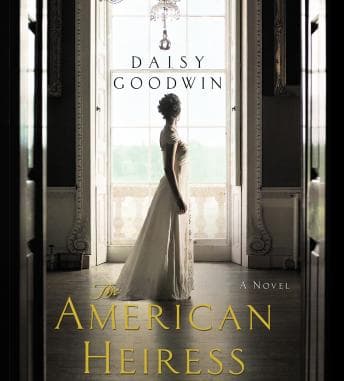

"Money, Cora soon learns, cannot buy everything."
I paused my work on a client's wedding invitation suite when that line hit. Frida was curled on my keyboard (as always), and I just sat there, stylus hovering, feeling the weight of that simple truth settle into my chest. Because isn't that the whole gorgeous tragedy of the Gilded Age? All that gold, all that silk, all those Parisian-made trousseaus described in such loving detail you can practically feel the fabric—and none of it can purchase the one thing Cora actually wants.
Love. Belonging. Being seen.
Abuela would have eaten this book alive. She would've been clutching her rosary at Cora's mother, Mrs. Cash—a woman so obsessed with social climbing she'd sell her daughter's happiness for a duchess title without blinking. The telenovela energy is STRONG here, and I mean that as the highest compliment.
Katherine Kellgren's Velvet-and-Honey Voice
Oh, Katherine Kellgren. Her voice is velvet and honey, but with edges—she can shift from a haughty Mayfair drawl to a Southern-tinged American accent so naturally that you forget you're listening to one person. The pretentious Mrs. Cash gets this affected, climbing quality that made me cringe in recognition. Bertha, Cora's maid, feels grounded and real. And Cora herself—you can hear her grow up. That's the magic. By the end, Cora's voice carries a weight it didn't have at the beginning.
But. (There's always a but.)
The men blur together. Ivo, the secretive duke, and the other male characters sometimes sound too similar, and I found myself rewinding a few times going "wait, who said that?" Some of the villain voices tip into cartoonish territory—shrill and affected in a way that grates after a few hours. It's not a dealbreaker, but at nearly 14 hours, those small irritations compound.
The Slow Burn of Cora's Becoming
This is a rainy Sunday book. It's not rushing anywhere. Goodwin lingers on descriptions—the Newport mansion that dwarfs the Vanderbilts', the social traps of British aristocracy, the way money opens doors but can't make anyone actually like you. I listened at my usual 1.0x because I was savoring every layered detail.
Cora starts naive. Almost frustratingly so. I wanted to shake her sometimes—girl, OPEN YOUR EYES—but that's the point. She's been raised in a golden cage, and watching her slowly, painfully learn to see the bars? That's where the emotional payoff lives. Her growth feels earned, not rushed.
The chemistry between Cora and Ivo is... complicated. He's withdrawn, secretive, carrying something heavy. Their relationship isn't the sweeping romance you might expect—it's quieter, more uncertain. The vibes are immaculate for anyone who loves slow-burn tension and the ache of almost-understanding someone.
Where It Stumbles (And Why I Didn't Quite Ugly-Cry)
I wanted to cry. I was ready to cry. I had my spreadsheet open and everything.
But the ending felt rushed. After 13 hours of careful, layered buildup, the resolution comes too quickly—predictable when it should've been earned. I had the opposite experience with Nine Perfect Strangers—that ending earned every single twist. It's like watching a beautiful dress with a slightly uneven hem. You still love it, but you notice.
And Cora's naivety, while realistic, tested my patience in places. I kept wanting her to be sharper, faster, more aware. Maybe that's unfair—she's a product of her time and her sheltered upbringing—but it slowed my emotional investment.
Perfect For Downton Withdrawal, Skip If You Need Sizzle
If you're in Downton Abbey withdrawal? This is your medicine. If you love Edith Wharton's world but want something a little more accessible, a little warmer? Yes. All the Light We Cannot See gave me that same feeling of being completely transported to another time, though its wartime setting hits harder emotionally. If you're here for slow-burn romance with complicated class dynamics and gorgeous period details? Absolutely.
But if you need fast pacing, if you want your romance to sizzle rather than simmer, if similar-sounding male voices will drive you crazy—maybe wait for a sale. This book rewards patience and dedicated attention. It's not background listening material.
Abuela Would've Stayed Up Late Too
I finished this at 2 AM, Diego purring on my feet, feeling that specific melancholy of a world I didn't want to leave. Cora's story felt like—like watching someone learn that being seen is worth more than being envied. That love can't be bought, only chosen.
Abuela would have loved this one. She would've complained about the ending too, probably, but she would've stayed up late to finish it.
Four crying sessions? No. But my eyes got suspiciously wet around hour 11. And sometimes that quiet ache is worth more than the ugly-cry anyway.