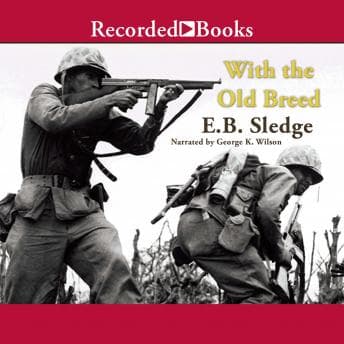

Let me cut to the chase: this is the real deal. Not some Hollywood version of war, not some sanitized history lesson - this is what combat actually looks like through the eyes of a young Marine who lived it. And George Wilson's narration? Spot on.
I've read a lot of war memoirs. Comes with the territory after 25 years in uniform. Most of them fall into two camps: either they're written by officers trying to justify decisions, or they're ghost-written action hero fantasies. Sledge's book is neither. It's a private's-eye view of two of the most brutal island campaigns in the Pacific, written from notes he illegally scribbled into his New Testament while dodging Japanese artillery. That detail alone tells you everything about the man's commitment to getting this right.
Why This One Hits Different
Here's the thing about Peleliu and Okinawa - they don't get the attention that Iwo Jima or Guadalcanal do. But the fighting was just as savage. Maybe worse. Sledge doesn't flinch from any of it. The heat, the stench of decomposing bodies, the coral that shredded everything, the constant terror of combat in caves and ridgelines. He writes about watching friends die, about the psychological toll that never fully heals, about moments of dark humor that only make sense when you've been there.
I listened to most of this during a drive from Austin to El Paso. Six hours of West Texas highway, and I barely noticed the scenery. Ranger was in the back seat, and I swear even he was paying attention. (Okay, he was probably just sleeping, but still.)
What struck me - and I've seen some of this myself in different terrain, different era - is how accurately Sledge captures the mundane horror of sustained combat. It's not all heroic charges. It's exhaustion. It's dysentery. It's watching your buddy lose his mind from stress and knowing you might be next. He lived it, so he got it right.
The Voice in My Head
George Wilson was the right choice for this. His voice has this steady, measured quality that matches Sledge's prose - frank but not melodramatic. When Sledge describes particularly brutal scenes, Wilson doesn't oversell it. He lets the words do the work. That restraint matters. I've heard narrators try to inject too much drama into combat memoirs, and it always rings false. Wilson gets it.
The pacing works for the 14-plus hours too. This isn't a book you rush through. Some sections are genuinely hard to listen to - the descriptions of what prolonged combat does to the human psyche, the casual brutality that becomes normalized. Wilson's delivery gives you room to process without dragging.
I listened at my usual 1.25x and it held up fine. The production is clean, no weird audio artifacts or volume issues.
Where It Lost Me (Briefly)
Look, I'll be honest - there are stretches in the middle where the operational details get repetitive. Move to this ridge. Dig in. Get shelled. Move again. That's combat, and Sledge is being faithful to the experience, but around hour eight I found my attention wandering during some of the tactical descriptions. It picks back up, though. The Okinawa sections have some gut-punch moments that snapped me right back.
And this is a warning, not a criticism - this book doesn't look away from anything. The violence is graphic. The conditions are horrific. If you're sensitive to that stuff, skip this one. But if you want to understand what the Pacific War actually cost the men who fought it? This is where you start.
SITREP
I've seen this scenario play out in real life - young men thrown into impossible situations, trying to survive and stay human at the same time. Sledge captured something true about that experience. The fact that he wrote it decades later, from those hidden notes, makes it even more remarkable. Memory fades and distorts, but those contemporaneous scraps kept him honest.
This belongs on the short list of essential war memoirs. Right up there with "The Things They Carried" and "Goodbye, Darkness." Different wars, same fundamental truths about what combat does to people.
Hell, even World War Z - fictional as it is - captures some of that same oral history authenticity, that sense of ordinary people trying to articulate the unthinkable.
Ranger approved this one. Mission accomplished.








![Steve Jobs [unabridged audiobook] audiobook cover](/_next/image?url=https%3A%2F%2Fcovers.audiobooks.com%2Fimages%2Fcovers%2Ffull%2F9788499923406.jpg&w=1920&q=75)