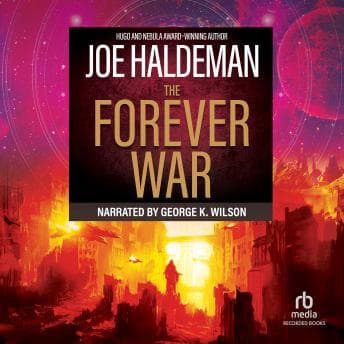

So I'm sitting in my advisor's office, nodding along while Dr. Patel explains why my thesis timeline is "concerning," and the whole time I'm thinking about time dilation. Not because of my research - because I'd just finished The Forever War during my walk over, and my brain was absolutely wrecked by it.
Look, I've read a lot of military sci-fi. Probably too much, if we're being honest. But Haldeman's doing something different here, and it took me a few chapters to realize what. This isn't power fantasy. This isn't "humanity, heck yeah" chest-thumping. This is a Vietnam vet processing trauma through relativistic physics, and it hits different when you understand that.
The Time Dilation Gut-Punch
Here's the thing that makes this book special: the actual physics of interstellar travel become the emotional core. Mandella ships out, fights a battle, comes home - and decades have passed. Everyone he knew is gone or unrecognizable. The culture has shifted so dramatically he's basically an alien on his own planet. Then he ships out again, and it happens again. And again.
It's Sanderson-level world-building, except instead of a hard magic system, Haldeman built a hard consequence system. That same methodical approach to consequences shows up in Heart Seeker, though there it's applied to cultivation mechanics instead of relativistic physics. Every jump through a collapsar means losing everyone you love. The military becomes the only constant, the only place that makes sense - which is, uh, kind of the point about how war works, right? (I should probably put this insight in my thesis somehow. Dr. Patel would hate it.)
The progression is satisfying in the most devastating way possible. You're watching Mandella become increasingly alienated from humanity while also becoming increasingly good at killing things. The technology keeps advancing around him. The war keeps going. And you start to wonder if there's even a "home" left to go back to.
George Wilson's Matter-of-Fact Delivery
Okay, so George Wilson isn't going to blow you away with theatrical voices. He's not doing Steven Pacey-level character differentiation - pretty much everyone sounds like variations of the same guy. Some listeners find that frustrating, and I get it.
But honestly? It works for this book. Mandella is our narrator, and Mandella is emotionally flattened by war. The matter-of-fact delivery matches the protagonist's headspace. When Wilson conveys intensity or sadness, it lands harder because he's been so controlled. The emotional moments punch through the military detachment.
The pacing is solid. Nine hours feels right - long enough to feel the weight of centuries passing, short enough that it doesn't drag. Wilson handles the technical jargon without making it feel like a textbook, and the battle scenes come through clearly. Some listeners mention mouth noise issues, but I didn't notice them? Maybe I was too busy having an existential crisis about the nature of war and time.
Why This Hits Different in 2024
I read this instead of writing my thesis, and I don't regret it. (Sorry, Dr. Patel.)
Haldeman wrote this in 1974, processing Vietnam. But listening to it now, after twenty years of forever wars in the Middle East, after watching veterans come home to a country that had moved on without them... yeah. The metaphor isn't subtle, but it doesn't need to be. The sci-fi elements aren't escapism - they're amplification.
The 1970s sensibility is there. Some of the social predictions feel dated (the book imagines a future where homosexuality becomes the norm, which reads differently now than it did then). If It Bleeds has that same quality of feeling both dated and timeless - King's writing the pandemic before it happened, which is eerie now. But the core emotional truth? That doesn't age. The way institutions chew people up and spit them out? The way time keeps moving while you're stuck in survival mode? That's evergreen, unfortunately.
My D&D group would love this, actually. The military structure, the escalating tech, the way Mandella has to keep adapting to new equipment and new tactics - it's basically a campaign where you keep leveling up but the world keeps changing around you. Except way more depressing.
Roll for Initiative (Or Don't)
If you don't like info-dumps, this might not be for you. Haldeman front-loads some technical exposition, and Wilson delivers it straight. Push through the first hour and you'll be hooked. Skip this if you want your military sci-fi with clear heroes and satisfying victories - Mandella's wins feel hollow by design.
This is essential sci-fi. Hugo winner, Nebula winner, and it earned both. The audiobook production is clean, Wilson's narration serves the material well, and at nine hours it's a perfect commute book. I listened to the whole thing in a week of walks across campus - walks I probably should have been using to think about procedural generation algorithms.
Worth it.