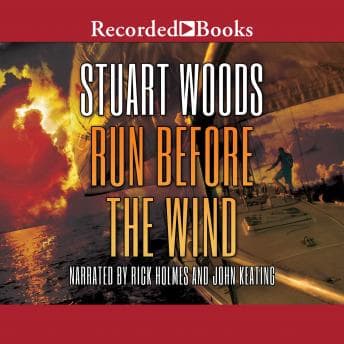

Had a client meeting cancel on me last Thursday - two hours of dead time in a San Antonio parking garage, engine running, Ranger snoring in the backseat. That's when I finished the last stretch of Run Before the Wind. Fitting, maybe. Nothing to do but sit with it.
Stuart Woods wrote this one before Stone Barrington became his meal ticket, and it shows - in the best and worst ways.
Will Lee Sails Into Someone Else's War
Let me cut to the chase: this is not a thriller in the way the cover art wants you to believe. It's a coming-of-age story with a violent undercurrent, set against the backdrop of 1970s Ireland and the IRA. Will Lee goes over to build a sailboat and ends up inheriting a dead man's enemies. That setup - getting pulled into someone else's fight through no fault of your own - that's a scenario I've seen play out in real life. You're minding your own business in a forward operating base and suddenly you're in the middle of a tribal dispute that started forty years before you were born. Woods captures that particular helplessness pretty well.
The IRA angle gives the book its teeth. There's a specific sequence where Will realizes the threat isn't abstract anymore - it's standing across the street watching him - and Woods handles that slow-dawning dread with real patience. No Hollywood moment where the hero suddenly gets tactical. Just a young man figuring out, too slowly, that he's already in it. That slow-burn realization — the moment a civilian understands the rules have changed without anyone telling him — is something Last Call at the Nightingale handles with similar patience, though in a very different time and place.
But here's where it lost me, at least temporarily: the boat-building sections. Look, I respect seamanship. I've been on enough naval vessels to know it's a serious discipline. But there are passages in this audiobook where Woods essentially reads you a boatwright's manual. Keel specifications. Wood selection. Rigging terminology stacked three sentences deep. I'm listening at 1.25x and I still felt like I was taking on water. If you're a sailor, you'll probably love it. If you're not, you'll be checking your phone.
Two Narrators, Two Worlds
Keating and Holmes split the duties here, and the Irish and British accents are the real deal - not the Hollywood version where every Irishman sounds like he's about to sing a pub song. The class distinctions come through in the voice work: when Will interacts with the Anglo-Irish gentry versus the working-class locals, you actually hear the social gap. That's not easy to pull off. The author clearly did his homework on the setting, and the narrators honor that.
No audio issues worth flagging. Clean production. The two-narrator setup doesn't create any jarring handoff problems, which is more than I can say for some multi-narrator productions I've suffered through.
Who This Is Actually For
If you came here for Stone Barrington-style urban thriller, wrong frequency. Redirect. This is for readers who can tolerate - or genuinely enjoy - the sailing craft sections and want to watch a protagonist get his edges knocked off by real-world violence rather than cinematic violence. Will Lee is not a badass. He's a smart kid learning that being smart isn't enough. There's something honest about that.
If technical sailing detail makes you want to bail out, this one will test your patience. I pushed through because the IRA storyline eventually pulls taut again, and the ending earns what came before it. But I won't pretend those middle sections didn't cost the book some momentum.
Ranger slept through the boat-building chapters. Woke up for the ambush sequence. I'm going to call that an accurate critical assessment.
Worth your time if you've got patience for the slow stretches. Borrow it before you buy it.