
I was making dal at 10 PM on a Tuesday—the kind of elaborate, multi-step dal my mother would approve of, the kind that takes attention—when I realized I'd been standing motionless over a pot of lentils for fifteen minutes, completely absorbed in Vivian Kelly's world. The dal burned. Worth it.
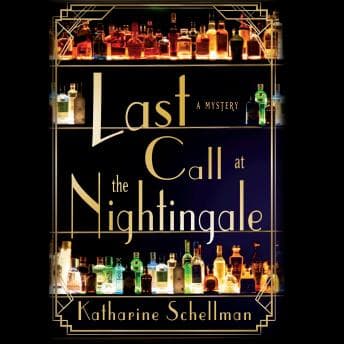
Here's the thing about Last Call at the Nightingale: Katharine Schellman understands something fundamental about human psychology that a lot of mystery writers miss. Vivian isn't just a plucky protagonist solving a crime. She's a case study in code-switching, in the exhausting performance of being poor in proximity to wealth, in the way marginalized people learn to read rooms for survival.
The Psychology of Prohibition-Era Survival
The protagonist exhibits classic hypervigilance patterns—and Schellman earns every one of them. Vivian works in a dress shop by day, sewing for hours in conditions that would make OSHA weep, then escapes to The Nightingale at night. But here's what got me: the speakeasy isn't just escapism. It's the only space where Vivian can exist authentically. She flirts with men and women. She dances until her feet ache. Nobody asks about her tenement apartment or her immigrant background.
The research actually shows that liminal spaces—places that exist outside normal social rules—serve a crucial psychological function for people navigating oppressive systems. The Nightingale is that space. Until, of course, a dead body ruins everything. (Bodies tend to do that.)
What makes this character compelling is how Vivian's survival instincts conflict with her moral compass. When she discovers the corpse behind the club, she doesn't immediately run to the police. Why would she? The police are a threat, not a resource. When she gets caught in a raid, she understands instinctively that her word means nothing against money. The dead man "wasn't the nameless bootlegger he first appeared"—he was connected to wealth, and wealth protects its own.
Sara Young Gets the Class Divide
Sara Young's narration does something subtle that I didn't fully appreciate until about hour three. Her Midwestern accent grounds Vivian in working-class reality, but when Honor—the Nightingale's owner—speaks, Young shifts into this sultry, controlled register. It's not just a "different voice." It's a different power dynamic made audible.
I found myself asking: why does this voice work so well for Honor? And I think it's because Young understands that Honor isn't just running a speakeasy. She's running a sanctuary. The sultriness isn't seduction—it's authority wearing a glamorous mask. (My therapist would have thoughts about this character. Several thoughts. Possibly a whole session's worth.)
The character differentiation is genuinely skilled. You can hear the difference between the wealthy and careless versus the poor and careful. That's not easy to pull off without making it cartoonish, but Young keeps it grounded.
Where the Mystery Gets Messy—Intentionally
This is a fascinating case study in how class shapes investigation. Vivian can't just "solve the mystery" like a wealthy amateur detective would. She has to navigate between New York's underground—where people protect their own but trust no one—and the world of the city's elite, where money can hide any sin.
The plot twists work because they're psychologically coherent. People lie for reasons that make sense given their circumstances. The wealthy characters treat Vivian as disposable because, to them, she is. The underground characters help her when it serves them and vanish when it doesn't. Nobody behaves irrationally—they behave according to their incentives and fears.
Psychologically, this tracks. Completely.
I will say: you need to pay attention. This isn't a background-listening audiobook. The plot has layers, and if you zone out during a key conversation (say, while rescuing burned dal), you'll miss something. Four Blind Mice has that same demand for attention—miss one conversation and you'll be scrambling to catch up. At nine hours, it's a decent commitment, but the pacing doesn't drag. Schellman knows when to let Vivian breathe and when to tighten the screws.
Who Should Dance at The Nightingale (And Who Should Sit This One Out)
If you're here for a cozy mystery with a plucky heroine who never faces real consequences—skip this. Vivian is in actual danger, and the book doesn't pretend otherwise.
But if you want a Jazz Age mystery that takes its setting seriously? If you're interested in how economic precarity shapes behavior, how queer spaces functioned as survival mechanisms, how women navigated a world that considered them disposable? This is your book. Listeners who loved Schellman's Silence in the Library will find the same careful plotting here, but with higher personal stakes for the protagonist.
Diagnosis: Compelling
I started this audiobook expecting a fun period piece with some murder thrown in. What I got was a character study wrapped in a mystery wrapped in a love letter to the people history tried to forget. Pretty Baby does something similar with its layered approach to character and mystery, though in a completely different setting. Vivian Kelly isn't just surviving Prohibition-era New York. She's surviving a system designed to crush her.
And Sara Young makes you feel every moment of that survival in her voice.
Now if you'll excuse me, I need to make more dal. This time, I'm putting the audiobook on pause.