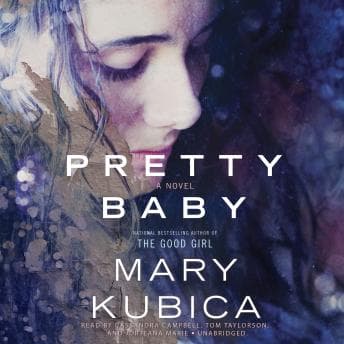

Three narrators, three unreliable perspectives, and one baby that everyone seems to want for completely different reasons. Pretty Baby is a psychological case study disguised as a thriller, and honestly? I'm here for it.
Look, Mary Kubica understands something fundamental about human behavior that a lot of thriller writers miss: people don't do terrible things because they're evil. They do terrible things because they've convinced themselves they're the hero of their own story. Every single character in this book genuinely believes they're doing the right thing. That's what makes it so deeply unsettling.
The Psychology of Good Intentions Gone Wrong
Heidi Wood is the kind of character I could write a dissertation about. She's not just charitable - she's compulsively charitable. The woman takes in stray cats, works for a nonprofit, and when she sees a homeless teenage mother on the street, her brain doesn't even consider walking away. That's not kindness. That's a pathology. And Kubica knows it.
What I found myself asking throughout this book: why does Heidi really need to save Willow? The answer isn't pretty. It's wrapped up in guilt, in loss, in the desperate need to prove something to herself that has nothing to do with this random girl she found on the street. The research actually shows that extreme altruism often masks unresolved trauma, and Heidi is textbook. Her family sees it. Her husband Chris sees it. We see it. Heidi doesn't.
And Willow - oh, Willow. She exhibits classic survival behavior, the kind you see in people who've learned that truth is a luxury they can't afford. Every lie she tells makes perfect sense from her perspective. That's what makes her so compelling. What Alice Forgot explores a similar theme of unreliable self-perception, though from the opposite angle—someone who's forgotten who they became. She's not a villain. She's a product of systems that failed her repeatedly.
Why the Three-Voice Approach Works (Mostly)
Here's the thing about multi-narrator audiobooks: they can either clarify or confuse. This one clarifies. Cassandra Campbell handles Heidi's chapters, Jorjeana Marie takes Willow, and Tom Taylorson voices Chris. Having three distinct voices meant I never lost track of whose head I was in, which matters when you're dealing with unreliable narrators who are all lying to themselves.
Campbell's Heidi is earnest to the point of being uncomfortable - and I mean that as a compliment. She captures that slightly manic energy of someone who's convinced themselves they're helping when they're actually spiraling. Some listeners apparently found her annoying, and honestly? Good. Heidi IS annoying. That's the point. She's meant to make you want to shake her.
Marie's Willow is harder to read, which is exactly right. You're never quite sure what's genuine and what's performance. The emotional delivery works because it keeps you off-balance.
Taylorson as Chris grounds the whole thing. He's the voice of reason that nobody's listening to, and you can hear the frustration building.
The Slow Burn That Paid Off
I'm not going to lie - I listened to this during my morning jogs, and there were stretches where I was impatient for things to move. Kubica takes her time. She builds her characters layer by layer, and if you're the type who needs constant action, you might zone out around hour three.
But psychologically? The pacing makes sense. Real people don't reveal themselves in dramatic monologues. They reveal themselves in small moments - the way Heidi justifies one more boundary crossed, the way Willow's story shifts slightly each time she tells it, the way Chris notices things his wife refuses to see. The Mystery of Mary uses those same incremental reveals, though it leans more heavily into the mystery element than the psychological breakdown.
The climax, when it comes, hits harder because you've spent twelve hours watching these people build toward disaster. You see it coming. You can't stop it. That's the horror of it.
Who Should Listen (And Who Should Skip)
If you're into character-driven psychological thrillers - the kind where the mystery isn't "who did it" but "why do people do what they do" - this is your book. If you appreciate unreliable narrators who are unreliable in realistic ways (not just lying for plot convenience), you'll find a lot to analyze here.
Skip this one if you need fast pacing or if slow-burn storytelling makes you reach for the 2x speed button. This isn't a thriller that rushes to its twists. It earns them.
For me, as someone who spends her days analyzing why fictional people make terrible decisions, Pretty Baby was a fascinating case study in how good intentions become weapons. Heidi wants to help. Willow wants to survive. Chris wants his family back. Nobody's wrong. Everybody's wrong.
My therapist would have thoughts about all of these characters. And honestly, that's the highest compliment I can give a psychological thriller.