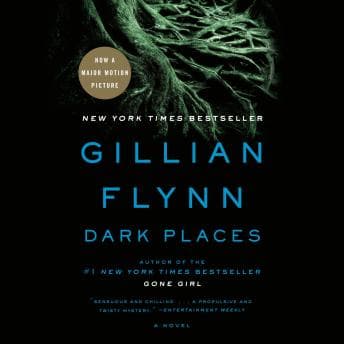

The "Meanness" is Real (and It Sounds Fantastic)
Okay, let's be real for a second. The opening line of this book—"I have a meanness inside me, real as an organ"—is probably the hardest opening line in thriller history. Period.
I was listening to this at 1 AM (because obviously, I make poor life choices and refuse to consume horror in the daylight), and that line hit me so hard I nearly dropped my wine glass. Shirley, my cat, was staring at me from the top of the bookshelf with her usual judgment, and for once, the book matched her energy. If you think Gone Girl is Gillian Flynn's best work, you're entitled to your wrong opinion. (Though if you haven't listened to Gone Girl yet, start there—it's still brilliant, just less brutal.) Dark Places is the nasty, gritty, unwashed sibling of Gone Girl, and honestly? I prefer it.
The Ensemble Cast: A Messy, Beautiful Nightmare
Here's the thing about multi-cast audiobooks—usually, they're a gimmick. They get distracting. But here? It's necessary.
Cassandra Campbell voices Libby Day, and she doesn't just read the lines; she inhabits this stunted, angry, traumatized woman who has been living off charity since her family got slaughtered in the 80s. Campbell understands that Libby isn't supposed to be likable. She's abrasive. She's greedy. She's broken. Campbell brings that same unflinching commitment to difficult characters in Where the Crawdads Sing, though Kya's isolation reads softer than Libby's rage. Her delivery is clipped, weary, and dripping with sarcasm—playing an anti-heroine without winking at the audience to say, "I'm actually nice deep down!" (Spoiler: Libby is not nice deep down.)
Then we have the flashbacks to 1985. This is where the dread sets in. Mark Deakins handles the brother, Ben, and I know some people found him a bit flat—I saw the reviews—but hear me out. Ben is a moody, depressed teenager watching his life fall apart in a freezing farmhouse. The flat affect? It works for me. It sounds like hopelessness.
(Fair warning: Rebecca Lowman and Cassandra Campbell do have somewhat similar timbres. There were a couple of times during the transitions where I had to pause and go, "Wait, are we in the past or the present?" But once you lock into the rhythm, it flows.)
Atmosphere Over Jump Scares
This isn't a slasher movie. It's an atmosphere piece. It's about the Satanic Panic—which, as someone who grew up in a religious house where D&D was considered a gateway to hell, hit a little too close to home. Flynn captures that specific hysteria perfectly, and the narration leans into the poverty and the cold.
You can practically feel the freezing Kansas wind coming through your headphones. It's oppressive. It's claustrophobic. The sound design is clean—no cheesy sound effects, thank god—just the voices dragging you down into the mud.
I spent three hours cleaning my apartment while listening to the "Kill Club" sections (basically a convention for true crime weirdos), and I found myself scrubbing the counter way too hard. The tension is tangible. It makes you feel dirty, but in the way good noir should.
The Verdict
Look, if you want a polished, happy ending where everyone hugs, go read a cozy mystery. This ain't it. Listen if: you like your protagonists complicated, your mysteries brutal, and you don't mind feeling grimy for a few days afterward. Skip if: you need someone to root for in the traditional sense, or graphic violence toward children is a hard no.
Flynn writes about the ugliness of poverty and the weird obsession America has with tragedy, and the cast—especially Campbell—delivers that ugliness on a silver platter. I finished this at 3 AM, stared at the ceiling for twenty minutes, and then immediately recommended it to my therapist.
Shirley was unimpressed, but she's a cat. You, however, need to listen to this.