
I was supposed to be debugging a memory leak in my procedural dungeon generator. You know the vibe—it's 2 AM, the AC in the lab is humming that specific frequency that drives you insane, and my thesis advisor, Dr. Patel, is probably dreaming about emailing me for a progress update.
But instead of fixing the code, I was mentally sailing a Viking ship through icy waters.
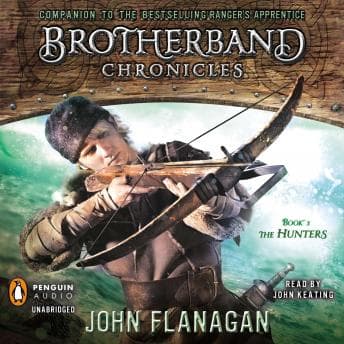
Look, I needed a break from the high-fantasy epics where the fate of the multiverse rests on a teenager's shoulders. Sometimes you just want a tournament arc. You want training montages. You want stats. And *Outcasts*? It's basically a 12-hour training montage with boats. I listened to the entire first half while painting a squad of Warhammer minis (Skaven, obviously), and honestly? Exactly the brain cleanse I needed.
When Your Party is All Dump Stats
Here's the setup: You're in Skandia. If you've read *Ranger's Apprentice*, you know these guys. They're the Vikings of this world—big, loud, axe-happy, and obsessed with raiding. But Hal, our main guy? He rolled high Intelligence and low Strength. In a society that worships DPS tanks, Hal is an Artificer.
He gets stuck leading a "Brotherband" (read: D&D party) of other rejects. You've got Stig (the Barbarian with anger issues), a thief, a guy who can't see without glasses, and a pair of twins who argue constantly. They have to compete against the "cool kid" teams—the Wolves and the Sharks—in a series of navigation and combat challenges.
This is my jam. Seriously. I love stories where the magic system isn't just "I cast Fireball" but actual engineering. Hal wins not because he's the Chosen One, but because he understands aerodynamics. He builds a ship, the *Heron*, with a triangular sail that lets him tack into the wind while everyone else is stuck rowing their square-rigged longships.
(As someone currently struggling to code wind physics for a game engine, the sailing descriptions were weirdly satisfying. I may have paused the book to sketch a diagram of the rigging. Don't judge me.)
The progression is satisfying. It's not instant. They fail. They get beat up. But watching them figure out how to use their weird, niche skills to outmaneuver the meatheads? *Chef's kiss.* It's the ultimate "Work Smarter, Not Harder" narrative.
John Keating Knows His Way Around a Longship
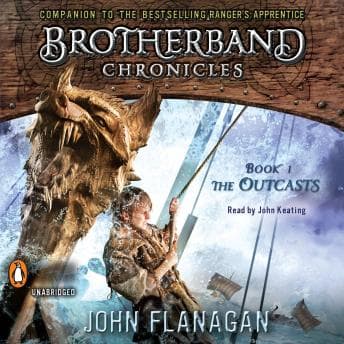
Let's talk about the audio. John Keating narrates this, and if you've listened to *Ranger's Apprentice*, you know the voice. It's gritty, rhythmic, and has this distinct accent that just *sounds* like a cold ocean wind.
I was a little worried at first. Usually, when a narrator does a spinoff, it's hard to separate the new characters from the old ones. I didn't want to hear Halt every time an old mentor figure spoke. But Keating nails it. He gives Hal this thoughtful, slightly unsure tone that differentiates him from Will Treaty. And the accents for the crew? Distinct enough that I never lost track of who was talking, even during the chaotic sailing scenes.
He also hits the humor perfectly. There's a lot of banter between the crewmates—classic locker room trash talk, but PG—and Keating's delivery makes it genuinely funny rather than cringe-worthy. He understands the rhythm of Flanagan's dialogue. It's snappy.
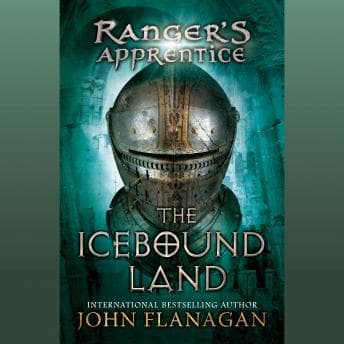
Keating has that same cold-sea cadence in Icebound Land: Book Three, which is probably why my brain now associates his voice with hypothermia and bad tactical decisions.(Side note: There's a scene involving a thief and a contract that had me laughing out loud in the quiet section of the library. I got shushed. Worth it.)
Who Should Set Sail (And Who Should Stay Ashore)
If you love underdog team-building stories, tactical problem-solving over raw power fantasy, or you just want something that scratches that "early D&D campaign clearing a goblin cave" itch—this is your book. Skip it if you need world-ending stakes or complex political intrigue; this isn't *Malazan*. You won't need a wiki open.
Thesis Update: Still Not Done
Is this high literature? No. But that's why it works. It's comfort food. A well-executed underdog sports movie in book form.
For me, the best part is the lack of "Save the World" stress. The stakes are personal. They just want to win the competition and not be outcasts anymore. It's grounded. It reminds me of early D&D campaigns where we weren't fighting gods yet, just trying to clear a goblin cave without dying.
If you're like me and you spend way too much time over-analyzing magic systems and lore, *Outcasts* is a nice palate cleanser. Focused on tactics, sailing physics, and team dynamics.
I have a horrible feeling Invaders: Brotherband Chronicles, Book 2 is going to eat another debugging night, because apparently my self-control has the structural integrity of wet cardboard.So, yeah. I didn't finish my code. But I did finish the book. And now I have to download the next one because the ending? No spoilers, but... man. Flanagan knows how to hook you.
(Mom, if you're reading this: I'm definitely studying. This is... research. For the narrative structure of procedural quests. Yeah, let's go with that.)