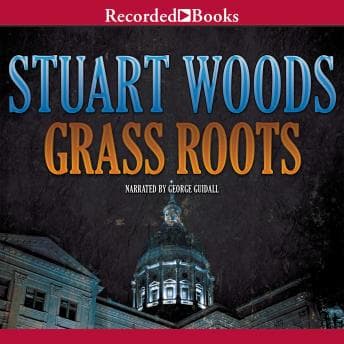

Look, I need to talk about Will Lee's decision-making for a minute. Because this man - a supposedly brilliant lawyer - decides to take on a racially charged murder case in 1980s Georgia while simultaneously launching a Senate campaign. And I'm sitting here on my morning jog through Cambridge thinking: what kind of psychological profile are we working with here? The protagonist exhibits classic savior complex patterns mixed with what I can only describe as a concerning lack of self-preservation instinct.
But here's the thing. It works. Stuart Woods gets something right about ambitious men that a lot of thriller writers miss - the way their personal crusades and political ambitions become so tangled they can't separate them anymore. Will genuinely believes he's doing the right thing. My therapist would have thoughts about this character.
The Psychology of Small-Town Power
What makes this book a fascinating case study is how Woods constructs The Elect. This shadowy group isn't some cartoonish villain organization - they're the logical extension of what happens when local power structures feel threatened. The research actually shows that extremist groups don't emerge from nowhere; they crystallize around perceived threats to established hierarchies. And watching Will stumble into their crosshairs while being completely oblivious to the danger? Psychologically, that tracks. Smart people often have the biggest blind spots about their own vulnerability.
The racial dynamics here are... complicated. Woods wrote this in the late '80s, and you can feel him trying to engage with something real about the South, about legacy, about how the past isn't really past. Some of it lands. Some of it feels like a white author doing his best but not quite getting all the way there. State of Terror: A Novel wrestles with similar questions about power and legacy, though in a more contemporary context. I appreciated the attempt more than I was fully convinced by it, if I'm being honest.
The romance subplot - yeah, there's one - didn't do much for me. It felt like Woods thought every male protagonist needs a love interest to humanize him, and fine, but I found myself way more interested in the courtroom scenes and the political maneuvering. The relationship felt like it was checking a box rather than revealing something new about who Will is.
George Guidall Does the Heavy Lifting
Okay, so George Guidall. The man has narrated approximately four thousand audiobooks (slight exaggeration, but barely), and you can hear why publishers keep calling him back. His voice has this steady, authoritative quality that works perfectly for courtroom drama. When Will is delivering closing arguments or navigating tense political conversations, Guidall nails the pacing. He knows when to push and when to let a silence breathe.
That said - and I noticed this during a particularly long cooking session where I was making dal from my mother's recipe - his Southern accents aren't always consistent. Some characters sound authentically Georgia, others drift into a more generic "somewhere below the Mason-Dixon" territory. It's not a dealbreaker, but if you're from the South, you might notice. I'm from New Jersey, so I'm probably not the authority here.
The character differentiation is solid overall. I never got confused about who was speaking, which matters in a book with this many players. Guidall gives Will a certain earnestness that made me root for him even when I wanted to shake him for being so naive about the danger he was in.
Where the Narrative Drags
Twelve and a half hours is a lot of audiobook. And honestly? This story didn't need all of them. There are stretches - particularly in the middle - where the pacing slows to a crawl. Campaign logistics, legal procedural details that don't move the plot forward, scenes that exist purely to establish atmosphere that was already established three chapters ago. I found myself bumping up to 1.25x speed during these sections just to keep my attention from wandering.
The final third picks up considerably. When The Elect starts making their move and Will finally realizes he's in actual danger, the tension ratchets up in a way that had me extending my jog just to keep listening. Woods knows how to write a climax - I just wish he'd been more ruthless about cutting the setup. That pacing issue is something I didn't encounter in Ninth, which keeps its tension tight throughout.
Who Should Listen (And Who Should Skip)
If you're into legal thrillers with political undertones, this is solid. If you like watching smart characters make questionable decisions because their principles won't let them take the easy path, Will Lee is your guy. Fans of John Grisham's earlier work will find familiar territory here.
Skip it if you need constant action or if you're looking for deep psychological complexity in every character - Woods paints in broader strokes than that. And if predictability bothers you, fair warning: some of these plot beats you'll see coming from miles away.
I came away respecting what Woods was trying to do more than being fully swept up in it. It's competent, occasionally compelling, and Guidall's narration elevates material that might have felt flat on the page. Not a must-listen, but a perfectly decent way to spend a few weeks of commutes. Just maybe keep that speed button handy for the slow parts.