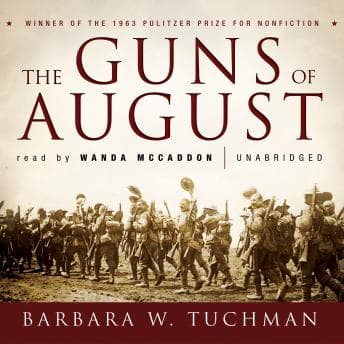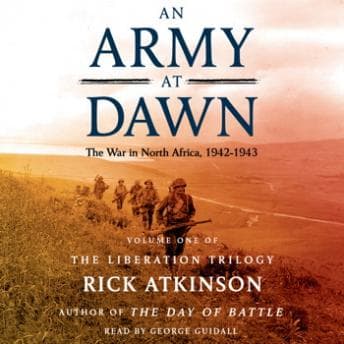
Let me cut to the chase: Rick Atkinson earned that Pulitzer, and George Guidall earns every minute of your attention across these thirteen hours.
I was cleaning my 1911 - Ranger curled up on his bed, giving me that look dogs give when they know you're about to disappear into your head for a while - when I started this one. Three hours later, the gun was clean, I'd missed dinner, and Linda found me just sitting there with an empty coffee mug, still listening.
Where Green Lieutenants Became Generals
Here's what most people get wrong about North Africa. They think it was a sideshow. A warmup act before the main event in France. Atkinson demolishes that misconception with surgical precision. This is where the American military machine - bloated, overconfident, and dangerously inexperienced - got its teeth kicked in and learned how to fight.
The Kasserine Pass sections hit different when you've seen green troops freeze under fire. Atkinson doesn't sugarcoat the chaos, the command failures, the sheer bloody incompetence that cost American lives. He names names. Fredendall building his underground bunker seventy miles from the front while his men died? That's the kind of detail that makes your jaw clench. I've known officers like that. They exist in every generation. That unflinching honesty reminded me of My Confession, where Tolstoy strips away the romantic nonsense about war and shows you what it actually costs.
But here's what Atkinson does brilliantly - he shows you the learning curve. Eisenhower transforming from a staff officer who'd never heard a shot fired in anger to the man who'd coordinate the largest amphibious invasion in history. Patton being Patton, slapping soldiers and winning battles in almost equal measure. Bradley quietly becoming the general's general while everyone else grabbed headlines.
Guidall Gets the Brass Right
George Guidall narrates this like a man who respects the material. No dramatic flourishes, no theatrical nonsense - just clear, authoritative delivery that lets Atkinson's prose do the heavy lifting. When he's reading Patton's diary entries, you can almost hear the arrogance dripping off the words. When he's describing the aftermath of a failed assault, he doesn't try to manipulate your emotions. He trusts the facts to do that work.
At thirteen-plus hours, this is a commitment. I listened at 1.25x because that's my default, and it worked fine. Guidall's pacing is measured enough that speeding up doesn't lose anything. Complex operational details - unit movements, logistics, the nightmare of coordinating American, British, and Free French forces who sometimes hated each other more than the Germans - come through clearly.
The Details That Separate Homework from Hackwork
Atkinson clearly did his homework. The kind that involves dusty archives and veteran interviews and actually walking the ground. When he describes the terrain around Oran or the approach to Tunis, you can tell he's been there. He knows what the desert looks like at dawn, how the wadis can hide an entire armored column, why the roads mattered more than the maps suggested.
This is where a lot of military history fails - authors who've never worn a uniform writing about combat like it's a chess game. Atkinson never forgets that every tactical decision meant real men dying in real pain. The section on Operation TORCH's opening days, with American troops firing on French forces who weren't sure whether to fight or surrender, captures that particular hell of confused combat where nobody knows who's winning.
Know Before You Deploy
Fair warning: this isn't a thriller. It's not Band of Brothers with its tight focus on one company. Atkinson is painting on a massive canvas - strategic, operational, and tactical levels all working together. If you want a quick, punchy combat narrative, look elsewhere. If you want to understand how America became a military superpower, how the lessons written in blood in Tunisia paid dividends on the beaches of Normandy, this is essential listening.
Skip it if you need constant action or prefer small-unit stories. But if you've ever served, you'll recognize the institutional failures and individual heroics that define every army at war. If you haven't, you'll learn more about how wars are actually fought than a dozen Hollywood movies could teach you.
Ranger approved this one. Mostly because I kept pausing it to explain things to him, and he's a patient dog. "See, boy, this is why you don't put your headquarters in a cave seventy miles from the fighting." He just wagged his tail. Smart dog.
Mission Accomplished, Mr. Atkinson
Now I need to start book two.








![Steve Jobs [unabridged audiobook] audiobook cover](/_next/image?url=https%3A%2F%2Fcovers.audiobooks.com%2Fimages%2Fcovers%2Ffull%2F9788499923406.jpg&w=1920&q=75)