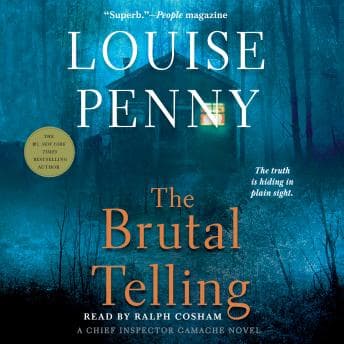

"Chaos is coming, old son."
That line hit me around mile three of my morning jog along the Charles River, and I nearly tripped over a golden retriever. It's such a polite way to announce that everything is about to go to hell. And in Three Pines, it usually does.
(I know, I know. I told my therapist I was taking a break from murder mysteries to focus on "uplifting literature." I lied. Sue me.)
This isn't just another cozy mystery where a body drops and everyone has tea. Louise Penny is doing something cruel here. She's taking the safest place in her fictional world—Olivier's Bistro—and turning it into a crime scene. It's a violation. And honestly? I'm here for the psychological fallout.
Louise Penny pulls off this same trick in Great Reckoning: A Novel, where she weaponizes our attachment to Three Pines against us.
The Psychology of the Lie
Here's the thing about Olivier (the bistro owner and prime suspect): his behavior exhibits classic avoidance patterns. The man is a walking case study in the Shadow Self. We all have that friend who curates their life a little too perfectly, right? Olivier is that guy. But when the cracks start showing, they don't just appear—they shatter the whole foundation.
Penny understands that the scariest thing isn't the murderer in the woods; it's realizing you don't actually know the people you eat dinner with. The cognitive dissonance the villagers experience—desperately wanting Olivier to be innocent while the evidence piles up—is painful to watch. I found myself analyzing their denial mechanisms while chopping onions for a curry I definitely made too spicy. (The crying was from the onions. Mostly.)
Ralph Cosham Sounds Like Your Wisest, Saddest Uncle
Ralph Cosham. The man is a legend. If my dissertation committee spoke to me with this much gravitas and warmth, I might actually finish my writing on time.
He doesn't just "read" Gamache; he inhabits him. There's a specific weariness in Cosham's voice that captures the burden of command perfectly. He sounds like a man who has seen the worst of humanity but still chooses to be kind. It's a delicate balance.
And the pacing? Exquisite. He takes his time. He's not rushing to the action; he's letting the silence hang there, making you sit with the discomfort. Soothing and unsettling at once—like having tea with a kindly uncle who just happens to be discussing a decomposing body.
When the Comfort Reads Stop Being Comfortable
Look, usually I listen to these books to relax. But The Brutal Telling lives up to its name. The ending isn't the neat little bow we usually get in the genre. It's messy. It's unfair. It's psychologically accurate.
People betray us. The stories we tell ourselves about our friends are often just that—stories. As a researcher, I appreciate the brutal honesty of human nature here. As a listener who just wanted a comfort listen on my commute? I was literally shouting at my car speakers on the drive to campus. My students probably think I've lost it.
Who's This For (And Who Should Run)
If you want a puzzle you can solve in ten minutes, go elsewhere. If you need your mysteries wrapped in a neat bow, skip this one entirely. But if you're drawn to character disintegration, to watching a community's trust collapse in slow motion—and you can handle an ending that doesn't apologize for being unfair—this is your book.
One Last Observation Over Cold Coffee
Ralph Cosham could read the phone book and I'd listen, but hearing him narrate the unraveling of everything Olivier built? That's something else entirely.
Just be prepared. The title isn't a metaphor.