I usually listen to audiobooks to decompress after twelve hours of keeping people alive. You know—mindless thrillers, medical mysteries where I can critique the CPR technique, stuff that lets my brain idle.
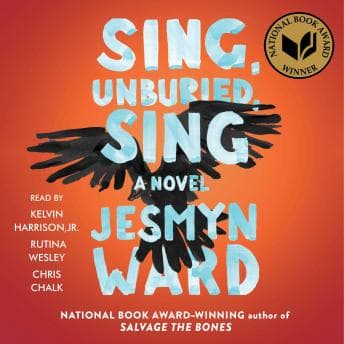
Sing, Unburied, Sing is not that book.
I finished this one pulling into my driveway at 7:15 AM, sun just coming up, and I couldn't get out of the car. I just sat there. Carlos came out to check on me because I wasn't moving. (I told him it was just a really long red light. He didn't buy it.)
This book hurts. But in the way a deep tissue massage hurts—where you know there's damage there that needs to be worked out.
The Voices in My Head
Let's talk about the narration because—wow. We've got three voices here: Jojo (the thirteen-year-old son), Leonie (the mother), and Richie (the ghost).
Rutina Wesley does Leonie, and I've got to be honest—at first, I hated it. Her voice is breathy, high-pitched, desperate. It grated on my nerves. I almost switched to a podcast. But then, about an hour in, it clicked. I see women like Leonie in the ER all the time. The ones who are high, desperate, loving their kids but loving the drug more, vibrating with this frantic, selfish energy. Wesley isn't trying to be pleasant; she's being accurate. It's uncomfortable because it's supposed to be.
Then you have Kelvin Harrison Jr. as Jojo. This kid. His voice is so grounded, so weary for a thirteen-year-old. He sounds like the kids I see in the waiting room, holding it together while their parents fall apart. When he talks about his grandfather Pop, you can hear the love in the texture of his voice. It's heartbreaking.
A Road Trip Through Hell
The plot is technically a road trip to pick up the white father from Parchman Farm (the prison), but it feels more like a descent.
Jesmyn Ward writes about ghosts, but not the "boo!" kind. She writes about the kind of ghosts we carry in our blood. The trauma that doesn't die. As a nurse, I see generational trauma every night. I see the history of a family written on a patient's chart before I even meet them. This book takes that concept and makes it literal.
The supernatural elements—the ghosts of Richie and Given—don't feel like magic. They feel like symptoms. Like the fever dreams my patients have when the sepsis sets in.
There's a scene involving a traffic stop that had my heart rate up to 120. I was gripping the steering wheel so hard my knuckles were white. It felt too real. Too close to the stories I hear from families in the quiet hours of the shift.
The Driveway Moment
Look, this isn't a "fun" listen. My mom would hate it—she likes stories where everyone gets married or cured at the end. Here, the sickness is deep. It's in the soil.
But the writing? It's lyrical without being purple. It flows like a river—sometimes slow and muddy, sometimes violent. All the Light We Cannot See has that same kind of beautiful, devastating prose—the kind that makes you sit in your car afterward.
Who Should Listen (And Who Should Skip)
If you're looking for a distraction, skip this. Go find a murder mystery. But if you want to feel something—if you want to understand why some wounds never heal even with all the stitches in the world—listen to this. Just maybe don't do it right before you have to go be cheerful for your family.
(And yeah, I blamed the tears on allergies. Carlos still doesn't believe me.)