
Look, I need to rant for a second about narrator changes in beloved series. It's like when your favorite coffee shop gets a new barista who makes your drink slightly differently. Is it still good? Probably. Are you going to spend the first three sips silently mourning what you had before? Absolutely.
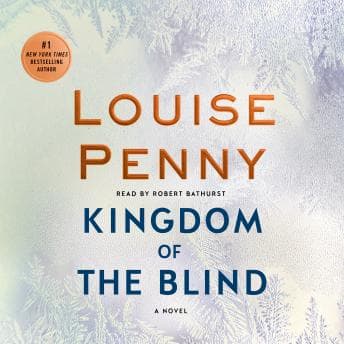
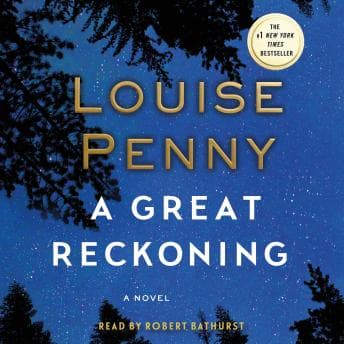
Robert Bathurst stepping into Ralph Cosham's shoes for the Gamache series is exactly that situation. And I'll be honest - for the first hour or so, I was that annoying customer internally complaining about the foam ratio. But here's the thing: Bathurst earns his place. He really does.
When the Map Becomes the Monster
Louise Penny understands something that a lot of mystery writers miss - dread doesn't come from the body. It comes from what the body represents. A dead professor. A strange map. Four cadets who shouldn't be there. And Armand Gamache, our beloved former Chief of Homicide, suddenly looking less like the investigator and more like the investigated.
This is psychological horror dressed in mystery clothing, and I am HERE for it.
The map stuffed in the bistro walls? That's the kind of detail that made me pause my dishwashing (yes, I was doing dishes, don't judge my multitasking) and just... think. Penny layers her mysteries like an onion, except every layer makes you more uncomfortable instead of making you cry. Hidden does something similar with its slow-burn revelations, though it doesn't quite reach these emotional depths. Well, maybe both.
Amelia Choquet is the kind of character I want to see more of in crime fiction - tattooed, pierced, angry, and completely out of place in a police academy. She's the wild card that makes this book crackle. The tension between her and Gamache? The mysterious relationship that the investigation keeps circling back to? I found myself genuinely unsure where Penny was taking us, and that's rare for me after reviewing hundreds of mysteries.
The Voice That Grew On Me
Okay, back to Bathurst. His British accent threw me initially - we're in Quebec, after all, and there's something slightly off about hearing these French-Canadian characters through that particular filter. But here's what won me over: the man commits. His Gamache has weight. Authority. A weariness that feels earned after twelve books of moral complexity.
The French-Canadian accents? He handles them with surprising grace. Not perfect, but satisfying in their own way. There's a wit to his delivery that matches Penny's writing - I actually laughed out loud during some of the bistro banter, which is not something I do often while folding laundry at midnight.
Is he Ralph Cosham? No. But he's not trying to be, and I respect that. He's putting his own stamp on these characters, and after the adjustment period (give it about two hours, honestly), it clicks.
The pacing works beautifully in audio format. Bathurst knows when to slow down for the emotional gut-punches and when to pick up speed as the investigation tightens. At 13 and a half hours, this is a commitment, but it never felt like a slog.
The Stained Glass Window Problem
Without spoiling anything - that stained glass window. The secrets it holds. Penny does this thing where she takes something beautiful and reveals the horror underneath, and it works every single time. This understands that horror isn't about gore - it's about dread. About what we hide. About what we refuse to see even when it's right in front of us. That same exploration of buried truths shows up in Second Wife, though in a more domestic setting.
Three Pines remains one of fiction's most perfectly constructed settings. It's cozy and sinister simultaneously. A place you'd want to live and a place where terrible things happen with alarming regularity. The audiobook format makes it feel even more intimate - like you're sitting in that bistro yourself, overhearing conversations you probably shouldn't.
Who Should Listen (And Who Should Skip)
If you're new to the Gamache series - honestly, start from the beginning. You can jump in here, but you'll miss so much context, so many relationships, so much of what makes this world feel lived-in.
If you're a longtime fan who's been avoiding the Bathurst-narrated books because of the narrator change? Take the leap. I was hesitant too. I was wrong.
If you need your mysteries fast and your answers immediate? Skip this one. Penny builds slowly. The payoff is worth it, but you have to trust the process.
My podcast listeners are going to love this one - it's exactly the kind of atmospheric, character-driven mystery that rewards close attention. Shirley (my cat) was unimpressed by my gasps during the final act, but she's unimpressed by everything that isn't tuna, so that's not a useful metric.
I listened to chunks of this in the dark, which felt appropriate. The mystery has teeth. The resolution has weight. And Bathurst, despite my initial skepticism, delivers it all with the kind of dramatic precision that makes audiobooks worth the format.