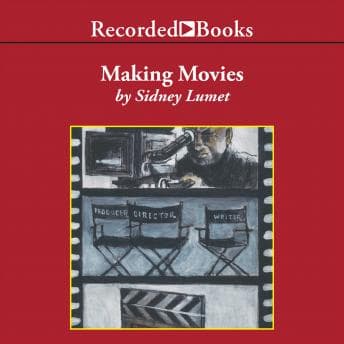

I have a serious bone to pick with Sidney Lumet. I used to enjoy movies. I used to sit on the couch with Denise after a long week of trying to get teenagers to care about The Catcher in the Rye, turn my brain off, and just let the images wash over me. Now? Thanks to this book, I'm analyzing the lenses. I'm wondering if the director chose a 50mm to flatten the background or if they just ran out of budget. I'm checking if the extras are "acting" too hard. Lumet has effectively ruined the magic of cinema for me by explaining exactly how the sausage is made—and honestly, I've never been more grateful.
The Anti-Auteur Theory
In grad school, we spent semesters talking about the "Director as God," the singular visionary molding art from clay. Lumet takes that theory, lights a cigarette with it, and tosses it in the gutter. He treats filmmaking not as mystical communion with the muse, but as a series of distinct, grueling, blue-collar jobs. It reminds me of what I tell my students about writing: inspiration is amateur hour; the real work is in the editing.
He breaks it down mechanically—lenses, lighting, editing, music. But unlike the dry textbooks I force my AP English kids to read, this feels like sitting at a bar with a guy who's seen it all. He talks about 12 Angry Men not as a triumph of tension, but as a logistical puzzle of claustrophobia created by slowly changing the focal lengths. He explains Dog Day Afternoon as a chaotic exercise in managing energy. It's technical, yes, but it's the kind of technical that makes you realize art is 90% problem-solving.
Davidson Sounds Like Stale Coffee and Film Stock
Richard M. Davidson was the perfect casting choice. He doesn't sound like a narrator; he sounds like a guy who's been shouting on sets since the '70s. That gravelly, no-nonsense New York delivery matches Lumet's prose perfectly.
There's a specific texture to Davidson's voice—a sort of weary authority—that sells the "war stories" aspect of the book. When Lumet (via Davidson) complains about studio executives or the insanity of working with difficult actors, you believe it. It doesn't sound like a performance; it sounds like a confession. A more polished, "actorly" narrator—someone with a Transatlantic accent, maybe—would've felt fake. Davidson sounds like he actually knows where the craft services table is.
Davidson brings that same worn-in authority to Hot Zone—different subject matter entirely, but that voice makes you feel like you're getting the story straight from someone who was actually there.The Ego in the Room
I'll admit, there are moments where Lumet's ego takes up a lot of bandwidth. He's not shy about telling you he was right and the studio was wrong. Some listeners might find that grating. Personally? I found it validating. It's the same energy I have when I know my interpretation of Faulkner is right and the school board's curriculum guide is wrong. You don't get to direct Network without thinking you're the smartest guy in the room. Just know going in that this isn't a humble-brag; it's just a brag. But he earned it.
Grading Papers to the Rhythm of the Edit
I listened to most of this while grading a stack of sophomore essays at 11 PM. There's a strange synergy between Lumet describing the agonizing process of cutting a film frame-by-frame and me trying to help a 16-year-old cut unnecessary adjectives. Both are about rhythm. Both are about clarity. And both make you want to bang your head against a desk sometimes.
Who's this for? Film lovers who want to understand the craft, not just consume the product. Teachers, writers, anyone who appreciates that creative work is mostly unglamorous problem-solving. Skip it if you prefer your movie magic unexplained—or if confident men explaining their expertise makes you twitchy.
If you love movies, this is essential. If you think movies are just "entertainment," this will wake you up. Just don't blame me when you can't watch a rom-com without critiquing the lighting setup.