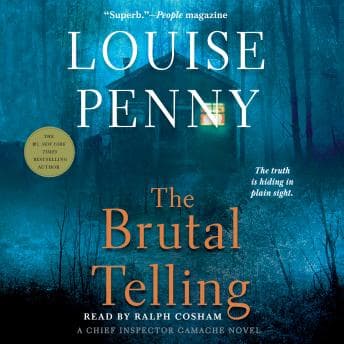

The Finney family is a case study I'd assign to my graduate students if I could. Louise Penny has done something genuinely impressive here—she's created a locked-room mystery where the real prison is generational trauma, and honestly? The psychology tracks.
I picked this up during a particularly brutal week of grading papers, listening while cooking elaborate biryani that took three hours and absolutely no one else would eat. (Don't feel sorry for me. The leftovers were excellent.) And there's something about Ralph Cosham's voice that pairs well with the slow ritual of browning onions—unhurried, warm, confident that you'll stay with him.
Why the Finney Family Dysfunction Works
Here's the thing about family reunion murder mysteries: they usually feel manufactured. You get a collection of quirky relatives, someone dies, and the author expects you to care because... they're related? That's not how psychology works. Penny understands that families don't just have secrets—they have patterns. The Finneys exhibit classic intergenerational trauma responses. The golden child. The scapegoat. The one who left and pretends the leaving fixed everything.
What makes this compelling is that Gamache isn't just solving a murder. He's watching a family system collapse under the weight of its own lies. And he recognizes something in it. The book takes him into "the dark corners of his own life," and Penny earns that—she doesn't just gesture at depth, she excavates it.
The research actually shows that people from high-conflict families develop hypervigilance that looks like intuition. Gamache has this. It's what makes him good at his job and probably exhausting to be married to. (His wife Reine-Marie deserves her own psychological profile, honestly.)
The Voice That Haunts Your Kitchen
Ralph Cosham won an Audie Award for narrating another Penny book, and you can hear why. His style is understated in a way that feels almost radical now—no theatrical gasps, no over-the-top villain voices. Just... presence. One listener described it as "Old World quality," and that's exactly right. He sounds like someone's grandfather telling you a story by the fire, except the story involves murder and the fire is metaphorical.
His handling of the Quebecois accents deserves mention. I'm not an expert on accent work, but I am someone who notices when narrators make French-Canadian characters sound like they wandered in from a cartoon. Cosham doesn't do that. The characters feel rooted in place without becoming caricatures.
Now. Some listeners found the pacing slow. They're not wrong, exactly—this is not a thriller that grabs you by the throat. It's a slow simmer. If you need constant plot momentum, you'll zone out. I found myself rewinding a few times when my attention wandered during the setup chapters. But once the storm hits and the body drops, the pacing earns its earlier patience.
The Psychological Realism That Got Me
Penny does something I rarely see in mystery fiction: she lets her characters be contradictory without explaining it away. The Finneys are terrible to each other in ways that feel true. The politeness masking contempt. The way old wounds get reopened with a single raised eyebrow at dinner.
I found myself asking: why does this family stay together at all? And Penny's answer—that love and hatred aren't opposites, that obligation is its own kind of chain—is psychologically sound. My therapist would have thoughts about every single Finney, and none of them would be simple.
The murder itself is almost secondary. Which will frustrate some readers. Ninth frustrated me in a similar way—the central mystery felt less urgent than the character work surrounding it. But for me, the mystery isn't whodunit—it's why people stay in systems that hurt them. Penny gets that the answer is complicated and rarely satisfying.
Who This Is For (And Who Should Run)
This is for people who like their mysteries character-driven and atmospheric. If you want to feel like you're trapped in a beautiful, suffocating inn with people who smile while they wound each other, this is your book. Commuters, especially—the 11-hour runtime is perfect for a week of drives.
Skip it if you need action to stay engaged. Skip it if slow pacing makes you want to throw your phone. And maybe skip it if family dynamics hit too close to home right now. There are abuse themes woven through the Finney history that Penny handles with care, but they're there.
Case Notes: Closed (For Now)
I'm already queuing up the next Gamache book. The man is a fascinating case study in how trauma shapes leadership, and I'm not done analyzing him. Plus, I have more biryani to make.