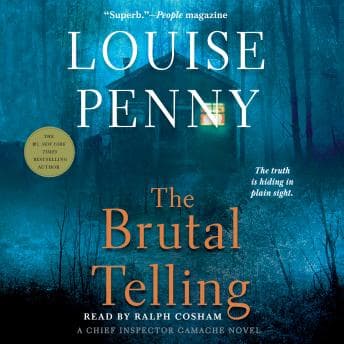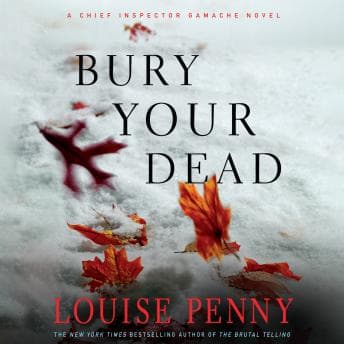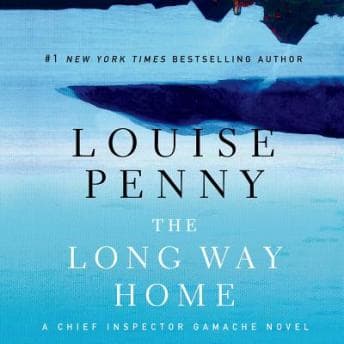

This is not a murder mystery. Let me cut to the chase—if you're coming in expecting Gamache to investigate a corpse, you'll be waiting a long time. This is a missing persons case wrapped in an art world odyssey, and honestly? It took me about four hours to make peace with that.
I was driving back from a client site in Houston—five hours of I-10 with nothing but cattle and wind turbines—when I finally stopped fighting the book's pace and let it do its thing. Ranger was sprawled across the back seat, snoring through what turned out to be one of the more contemplative entries in this series.
The Mission Brief
Clara Morrow's husband Peter hasn't come home. A year after their separation, he was supposed to return. He didn't. So Gamache—retired, content, genuinely happy for maybe the first time—agrees to help find him. And here's where Penny does something I both respect and found frustrating: she turns this into a road trip through Québec's art scene.
The journey takes Gamache, Beauvoir, Clara, and Myrna from gallery to gallery, artist to artist, tracking Peter's increasingly erratic path. They end up at the mouth of the St. Lawrence, in territory so desolate the first sailors called it "the land God gave to Cain." That's not hyperbole—it's actually bleak as hell.
The problem? Peter Morrow isn't that interesting. I've seen men destroy themselves chasing glory before—in uniform and out—and Peter's particular brand of artistic jealousy felt... small. His wife's talent surpassed his, and he couldn't handle it. That's the wound driving everything. By hour eight, I was more invested in the secondary characters than the man we were supposedly searching for.
Cosham's Final Tour
Ralph Cosham died shortly after recording this book. I didn't know that going in, but knowing it now colors everything.
His Gamache is definitive. That avuncular British accent shouldn't work for a French-Canadian inspector, but it does—there's a warmth and gravity to his delivery that makes you trust the man completely. When Cosham shifts to Beauvoir's sharper, more impatient cadence, or captures Clara's mix of hope and dread, you forget you're listening to one person. His handling of the French phrases and Québécois details never felt forced or performative.
The boat scenes with Gamache and Jean-Guy are where Cosham really shines. There's a quiet intimacy between these two men—mentor and protégé, father figure and son-in-law—that the narration captures without overselling. Cosham understood that sometimes silence carries more weight than dialogue.
I've listened to a lot of audiobooks with military characters where the narrator clearly never spent five minutes around actual service members. The same test applies to I Am Pilgrim—a thriller that actually gets the operational mindset right, and where the narrator's delivery matches that credibility rather than working against it. Cosham's Gamache feels like a man who's carried real weight, made hard calls, and found his way to something like peace. That authenticity matters.
Where the Operation Stalls
Here's my honest assessment: this is a twelve-hour audiobook that could've been eight. The art world philosophizing goes deep—too deep for my taste. There are extended passages about creativity, jealousy, the nature of artistic vision, that felt like Penny working through her own ideas about the subject. Interesting in a graduate seminar. Less gripping at mile marker 347 on a Texas highway.
Some listeners call this the weakest entry in the Gamache series. I can see why. Penny's stronger footing shows up clearly in A Great Reckoning, where the stakes feel properly weighted from the first chapter and the mystery earns every hour of runtime. The stakes feel lower than usual. There's no urgency—we're looking for a man who chose to disappear, not a killer on the loose. The "terrible damage" promised in the description takes its sweet time arriving.
But here's the thing: if you've been with this series, if you love Three Pines and its residents, the journey itself might be enough. Penny writes place and community better than almost anyone in the genre. The village scenes at the beginning—Gamache on his bench, the small rituals of retirement—those hit different when you've watched this man earn his peace.
Who Should Saddle Up (And Who Should Stand Down)
Series devotees: you'll want this. Cosham's final performance alone justifies the credit. The character moments between Gamache and Beauvoir are worth the slower patches.
Newcomers: start elsewhere. This is book ten. You'll miss too much context, and the payoffs won't land.
If you need body counts and procedural tension: skip this one. It's a character study disguised as a mystery, and the mystery itself is the weakest element.
Debrief Complete
Worth your time? Conditional yes. This is comfort food for Penny fans—familiar characters, beautiful Québec settings, Cosham's irreplaceable voice. But it's also a slower, more meditative book than the series usually delivers. I finished it. Ranger slept through most of it. That's probably the right approach: let it wash over you, don't fight the pace, and appreciate what Cosham gave us before he was gone.
Mission accomplished, but just barely.