Look, usually I want a clear objective in my books. Take the hill. Secure the asset. Go home. I like clean lines and clear bad guys.
McCarthy doesn't do that.
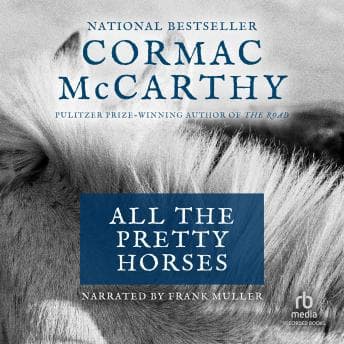
I picked this up on a flight back from a consulting gig in Houston, thinking I'd get a standard western to kill the time. You know—white hats, black hats, riding off into the sunset. Instead, I got gut-punched by prose so sharp it felt like it was cutting wire. I've spent enough time in the desert to know that it doesn't care about you, and this book captures that feeling better than any tactical manual I've ever read.
When the Voice Matches the Dust
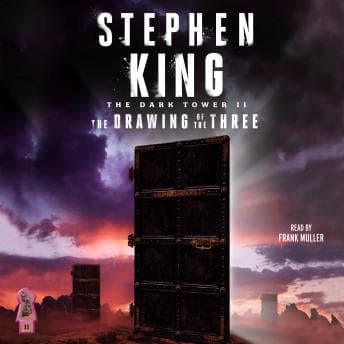
Let's talk about Frank Muller. (Rest in peace, by the way—the man was a titan). If you don't know the name, you haven't been listening to audiobooks long enough. Muller also narrated Dark Tower II: The Drawing of the Three, where that same gravelly authority carries Roland's quest.
His voice sounds like it's been dragged behind a truck on a gravel road and then washed down with good whiskey. It's got texture.
Here's the thing: McCarthy doesn't use quotation marks in his print books. It's a nightmare to read with your eyes—trust me, I tried once and gave up on page ten. But Muller? He fixes it. You always know exactly who's talking. He captures that slow, deliberate Texas drawl without making everyone sound like a cartoon character. He respects the silence between the words.
Ranger usually falls asleep to my thrillers within five minutes. With this one? He actually perked up during the horse breaking scenes. Muller growls the narration in a way that just commands attention.
The Slow Bleed of the Frontier
My wife Linda thinks this is just another "cowboy story." It's not.
It's a war story. Just a different kind of war. It's the war against becoming obsolete. John Grady Cole is sixteen, but he's got the thousand-yard stare of a guy who's seen three tours downrange.
The details on the horsemanship? Spot on. McCarthy clearly did his homework. He doesn't just say "they rode horses." He describes the tack, the sweat, the physics of the animal. As someone who appreciates technical accuracy—don't get me started on movies that get weapon calibers wrong—I respect the hell out of this.
But be warned. It's bleak. There's a prison scene in Mexico that reminded me of some very bad places I've seen in real life. It's not pretty. It's raw. It makes you realize that the "good old days" were mostly just hard, violent days with better scenery.
Why It Stuck With Me
I listen at 1.25x speed. Always. Life's too short for slow talkers.
But I actually slowed this one down to 1.0x about halfway through. (Yeah, I know. Shocking). You miss too much if you rush it. The language is the point.
It's not about the destination or the plot twists. It's about the loss. The loss of the land, the loss of innocence. It hit me harder than I expected. Linda asked me why I looked so sour after my morning run. I told her I just spent ten hours watching the old world die. McCarthy hits that same bleak note even harder in The Road—different landscape, same brutal honesty about what gets lost.
Who's This Mission For?
If you want a shoot-'em-up, go buy a Louis L'Amour. If you want to feel the grit in your teeth and maybe shed a tear when nobody's looking, this is the one. Skip it if you need action every chapter or can't handle long stretches of quiet punctuated by sudden violence.
Ranger approves. Mission accomplished.