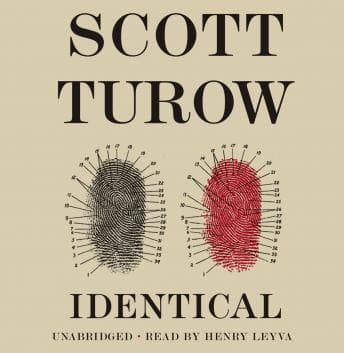

Does DNA excuse a man from murder?
That's the question Scott Turow throws at you in Identical, and frankly, it's the kind of legal knot that usually makes my head hurt. I picked this one up during a long drive out to a client site in West Texas—plenty of empty road to focus on a complicated plot. And make no mistake, this plot is thicker than Ranger's winter coat.
Here's the sitrep: You've got Paul Giannis, a state senator running for mayor, and his identical twin Cass, who just got out of the pen after doing 25 years for killing his girlfriend. Classic setup, right? Cain and Abel stuff. But then you throw in an ex-FBI agent running security (a job I know a thing or two about) and a private eye digging up old bones, and suddenly you're deep in the weeds.
The Man on the Mic
I hadn't listened to Henry Leyva before. Couldn't find much on his background, but he handles the material like a pro. He doesn't do that annoying thing where narrators try to make every character sound like a cartoon villain. His voice is clear, grounded, and—dare I say it—warm.
(Though, listening at my usual 1.25x speed, he sounded a bit more urgent, which helped the pacing.)
He differentiates the characters well enough without resorting to silly accents. When you're dealing with identical twins in a story, audio can get tricky. You need to know who's talking without the narrator holding up a sign. Leyva manages it. Keeps it steady. No theatrics, just the facts. I respect that.
When the Plot Gets Tangled
Look, Turow is a lawyer. He knows the inside of a courtroom better than I know the inside of a C-17. If you want more of his courtroom expertise, Last Trial delivers the same sharp legal mind at work. The legal maneuvering? Top-notch. The dialogue snaps. You can tell he's been there, done that.
But here's where it lost me a little. The "evil twin/good twin" trope is hard to pull off without feeling like a daytime soap opera. There were moments where the twists felt... forced. A bit too convenient. I've seen some wild scenarios in my line of work—truth is often stranger than fiction—but some of the developments here stretched my suspension of disbelief to the breaking point.
Also, the pacing. It's a slow burn. If you're looking for a Jack Reacher style beatdown every three chapters, you're in the wrong place. This is a chess match, not a firefight. Blue Cross plays a similar game—methodical detective work over action. There were stretches in the middle where I found myself checking the GPS, wondering how much longer the drive (and the chapter) was going to last.
Mission Debrief
Is it perfect? No. The ending is a bit out there. (I won't spoil it, but let's just say it's... memorable.) But if you like legal procedurals where the devil is in the details, Turow delivers the goods. It's smart, it's dense, and it treats the listener like an adult.
Who's this for? Listeners with patience for complex mysteries and a taste for courtroom chess. Skip it if you need action every chapter or if twin-swap plots make you roll your eyes.
Ranger slept through the whole thing, but he's not big on courtroom drama anyway. If you've got a long commute and the patience for it, give it a shot. Just don't expect a high-speed chase.