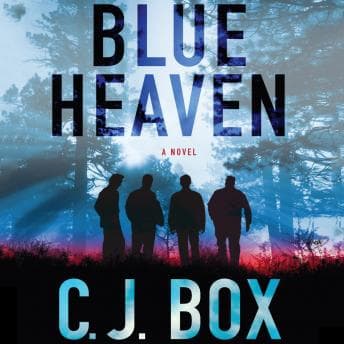

Two kids running through Idaho wilderness, four dirty ex-cops hunting them down. That's the setup, and Box doesn't waste your time getting there.
Look, I've worked with enough retired law enforcement to know the type. Most are solid citizens who served honorably. But the ones who went bad? They're the most dangerous predators you'll ever meet. They know the system inside and out. They know how to manipulate it. And that's exactly what makes Blue Heaven work - these aren't cartoon villains, they're guys who spent decades learning how to get away with things.
When the Bad Guys Know the Playbook
Box nails something that most thriller writers get wrong. These ex-LAPD cops don't just have guns and bad intentions - they have relationships with local law enforcement. They speak the language. They know how to make a sheriff feel like he's part of the team while they're actually running the show. I've seen this dynamic play out in real life, minus the murder. The deference that local cops give to big-city veterans, the assumption of competence. Box clearly did his homework on police culture, and it shows.
The Idaho setting works perfectly here. I've done some training exercises in that part of the country, and the isolation is real. No cell service. Miles between neighbors. The kind of place where help isn't coming unless you make it happen yourself. When William and Annie - twelve and ten years old - witness these men execute someone and run into those woods, you feel the weight of how alone they really are.
Jess Rawlins is the kind of character I'd want on my team. Old-school rancher, doesn't say much, reads situations fast. He's not some action hero - he's just a man who recognizes evil when he sees it and refuses to look the other way. That's rarer than it should be.
Leyva's Narration Earned Its Earphones Award
I don't know much about Leyva's background, but I can tell you this - the man understands pacing. He doesn't rush the quiet moments where tension is building, and he doesn't drag when the action kicks up. His voice for Jess Rawlins hits exactly right. Weathered but not weak. The kind of voice that's seen some things.
The villains each get distinct voices without Leyva going over the top. That's harder than it sounds. I've heard narrators turn antagonists into mustache-twirling caricatures. Leyva keeps them human, which makes them scarier. These guys joke with each other. They have moments of doubt. They're not monsters - they're men who made monstrous choices, and that's worse.
The kids' voices work too. Not cutesy, not annoying. Just scared children trying to survive. Annie's determination to protect her younger brother reminded me of some of the local kids I met in Afghanistan - that premature toughness that circumstances force on children. Ranger perked up during a few of their scenes. Good judge of character, that dog.
Where It Gets Complicated
Here's the thing. There's a subplot involving a local woman that some listeners find slows the momentum. I get it - when you've got kids in mortal danger, you want the story to stay locked on that threat. But I thought it added texture. Real life doesn't pause its other storylines just because one crisis is happening. And it gives you more insight into how this community of retired cops has infected the whole area.
Some of the events stretch believability. Won't spoil them, but there are a couple moments where I thought "that's convenient." Not deal-breakers, but noticeable. Box is usually tighter than this in his Joe Pickett books, so it stood out. Poisoned Pen had a few of those same convenient moments, but both books earn their way past it with strong fundamentals.
The violence is real but not gratuitous. Box doesn't linger on it, but he doesn't sanitize it either. If you're sensitive to kids being in danger - and I mean genuine, sustained peril - this might not be your book. It's not torture porn, but the threat is constant.
Mission Debrief
Mission accomplished. This one earned its Edgar Award. Box takes a simple premise - kids versus killers - and builds something that feels urgent and real. The corruption angle elevates it beyond standard thriller territory. And Leyva's narration is clean, professional, and emotionally calibrated.
I listened at 1.25x during a drive to Houston and back for a client meeting. Perfect road trip material. Kept me alert through some seriously boring stretches of I-35.
Who's this for: If you like your thrillers with teeth and you appreciate when authors get the details right about how law enforcement actually operates, this is your book. If you need your heroes to be invincible and your plots to be predictable, look elsewhere. Ranger approved this one.