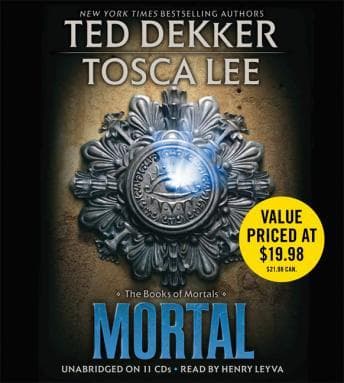

What happens when the greatest threat to humanity isn't an enemy you can shoot at?
That question kept rattling around my head during a late-night drive back from Houston. Client meeting ran long, I-10 was empty, and Ranger was passed out in the back seat. Perfect conditions for a dystopian thriller about a world where everyone's technically alive but spiritually flatlined.
The Tactical Situation
Let me cut to the chase—Dekker and Lee have built something genuinely unsettling here. The premise hits different when you've spent time in places where people were stripped of agency by ideology or fear. That same stripped-down emotional landscape shows up in Pretty Baby, though the oppression there comes from different sources. This medieval-future world where genetic manipulation has eliminated emotions like anger and hatred? Sounds like paradise until you realize they've also eliminated love, passion, and genuine human connection. Everyone's walking around in a chemically-induced stupor, and The Order likes it that way.
Rom Sebastian and his band of "Mortals"—people who've taken the blood that restores their humanity—are essentially running an insurgency against a system that doesn't even know it's oppressing anyone. The population can't feel enough to resist. That's a hell of a tactical problem, and the authors explore it with more sophistication than I expected from what could've been a simple good-versus-evil setup.
Where Leyva Earns His Stripes
Henry Leyva's narration is solid field work. The man differentiates between the emotionally-dead Order members and the awakened Mortals through subtle shifts in vocal energy—the dead speak with this flat, bureaucratic precision while the living carry heat in their voices. Not flashy, but effective. His emotional delivery during the betrayal sequences kept me engaged when I probably should've been paying more attention to the road.
Here's the thing though—some listeners apparently felt they'd have preferred reading this one themselves, and I can see that. The internal philosophical wrestling matches might land harder on the page where you can pause and chew on them. Leyva's doing the work, but there's a density to the worldbuilding that occasionally fights against the audio format. Not his fault. Just the nature of the beast.
The Mission Parameters
This is book two of three, and it shows. You're dropped into a situation nine years after the events of Forbidden, and while the authors catch you up reasonably well, there's backstory you're piecing together on the fly. I hadn't read the first one—went in cold—and managed fine, but I was definitely working harder than I would've liked in the first couple hours.
The runtime clocks in around 13 and a half hours. Not a sprint. The middle third drags in spots while the political maneuvering between factions plays out. But when the action kicks in, Dekker's thriller instincts show up sharp. The elite army hunting the Mortals—that's where my attention locked in. The tactical elements felt considered, not Hollywood nonsense.
Who Should Deploy (And Who Should Stand Down)
If you're into Dekker's Circle series, this is familiar territory done well. If you like your dystopian fiction with theological undertones and moral complexity, you'll find plenty to chew on. The good-versus-evil framework is there, but it's messier than Sunday school would have you believe.
Skip this if you need constant action or want background listening while multitasking—the philosophical stretches require focus. And if you haven't read Forbidden, consider starting there. You can follow this one cold, but you'll be playing catch-up.
The violence and dark themes are present but not gratuitous. I've seen worse in after-action reports. The mature content is more about the weight of the ideas than anything explicit.
End of Mission Debrief
Worth your time? Mortal delivers a compelling middle chapter in a series that takes its premise seriously. The world-building is ambitious, the stakes feel genuine, and Leyva's performance carries the emotional weight without overselling it. Not perfect—the pacing issues and mythology density work against the audio format in places—but it's a solid piece of speculative thriller fiction.
Ranger slept through the whole thing, which means either he approved or the drive was smooth enough he didn't need to stay alert. I'm calling that a win.
If you're looking for something that'll make you think about what actually makes us human while keeping you engaged through a long drive, this one accomplishes the mission. Just don't expect light entertainment.