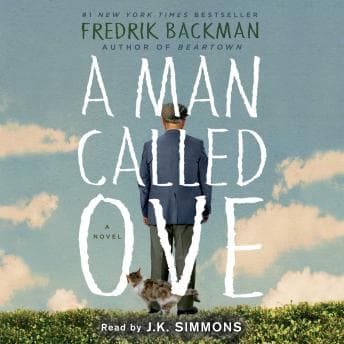

I was grading a stack of sophomore essays on The Catcher in the Rye when I started this audiobook. (Yes, teenagers still think Holden Caulfield is "whiny." The irony kills me.) I figured a story about a grumpy old man would be good background noise for my own internal grumbling.
I was wrong. I ended up staring at the wall for two hours, red pen uncapped, drying out on the desk.
Look, I usually tell my students to be skeptical of "celebrity" narrators. Usually, it's a marketing gimmick to sell units. But J.K. Simmons reading Fredrik Backman? That's not casting. That's alchemy.
The Art of the Grunt
If you know Simmons, you know the voice. The guy from Whiplash. The Farmers Insurance guy. He has this gravelly, deadpan delivery that sounds like he's constantly disappointed in the human race. Which, coincidentally, is exactly who Ove is.
Ove is the kind of guy who checks the neighborhood parking status at 6:00 AM. He judges people by the cars they drive. (Saab is good; Volvo is acceptable; anything foreign is a moral failing.)
Simmons doesn't just read these lines; he inhabits the frustration. He nails the "short fuse" energy—that specific frequency of irritation I feel during faculty meetings when someone asks a question that was answered in the email attachment. It's hilarious. I found myself laughing out loud in the break room, which definitely weirded out the new chemistry teacher.
But here's the thing—and this is why I teach literature—a caricature gets boring after ten pages. Simmons understands that Ove isn't just a jerk. He's a man in pain.
When the Laughter Stops
There's a shift in this book. It sneaks up on you. One minute you're laughing about Ove fighting with a cat or the "blonde weed" next door, and the next minute, Backman hits you with a sentence about grief that knocks the wind out of you.
Simmons handles these transitions like a virtuoso. He drops the gruffness just a fraction. He slows down. He lets the silence hang there.
(My students think "pacing" just means "reading faster." I wish I could play them Chapter 5 of this book to show them what pacing actually is.)
When Ove talks about his late wife, Sonja, Simmons' voice softens in a way that is heartbreakingly tender. It's rough, like sandpaper, but you can feel the desperate love underneath it. It reminds me of that Hemingway line about how the world breaks everyone, and afterward, many are strong at the broken places. Simmons plays Ove as a man trying very, very hard to stay broken because fixing himself seems like too much work.
Final Thoughts Over Cold Coffee
I finished this walking along the lakefront, wind whipping my face, crying behind my sunglasses. (I told Denise it was just the wind. She didn't buy it.)
This isn't just a "feel-good" story, despite what the marketing says. It's a feel-everything story. It's about how annoying other people are, and how absolutely necessary they are to our survival. Where'd You Go, Bernadette captures that same tension between misanthropy and desperate human connection.
If you've ever felt like the world is moving too fast and everyone else is an idiot—or if you just miss someone so much it makes you angry—listen to this. J.K. Simmons turns a grumpy Swedish novel into a performance that honestly deserves a standing ovation. Skip it if you need constant action or can't handle slow-burn emotional gut punches. But if you're ready to laugh, then ugly-cry? This one's for you.
Just maybe don't listen to the end in public unless you're okay with weeping near strangers.