
There is a line early in this series—I can't remember exactly where, maybe book two?—where Elena talks about things having "no edges." That feeling of dissolving. That's exactly how I felt sitting in my minivan at 2:45 PM, waiting for the dismissal bell to ring, staring at a discarded juice box on the floor mat.
I just finished the fourth and final Neapolitan novel. And honestly? I feel like I've been through a breakup.
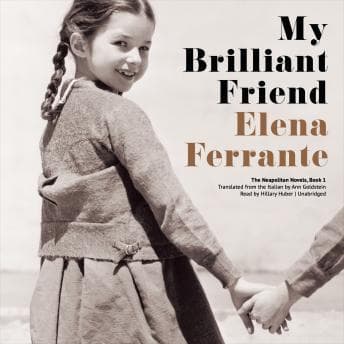
This isn't just a book. It's an 18-hour emotional marathon that I survived on 1.25x speed while folding approximately four thousand loads of laundry. If you've made it through the first three books, you know the drill. If you haven't, stop reading this and go start My Brilliant Friend. My Brilliant Friend is where this whole beautiful, devastating journey begins—Hillary Huber's narration hooked me from page one. (Actually, don't. Go get a coffee first. You'll need the energy.)
The Voice That Lived in My Head
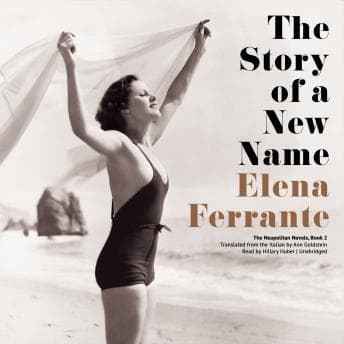
Let's talk about Hillary Huber. By this point, Book 4, she isn't just a narrator to me. She is Elena Greco. Her voice has this weary, warm, slightly raspy quality that sounds exactly like a woman who has spent a lifetime overthinking every interaction she's ever had. She brought that same exhausted wisdom to Story of a New Name, and by now I can't imagine anyone else voicing Elena. It's intimate. Like listening to your smartest, most neurotic friend confess her sins over a bottle of wine.
I read some reviews online—because I'm a masochist—complaining about her Italian pronunciation. Look, here's the thing: I took two years of high school Spanish and I can barely order a taco. If she's butchering the Neapolitan dialect, I am blissfully unaware. To my American ears, she sounded fantastic.
But. (You knew there was a "but" coming.)
There are moments in this book where Huber has to do voices for children and teenagers. And... yikes. It gets a little shrill. There were a few scenes where I actually turned the volume down because I didn't want the moms in the pickup line to think I was the one screaming. It's not a dealbreaker—she's too good at the internal monologue stuff to quit her—but it definitely tested my patience. Kind of like my actual children.
When Friendship Gets Ugly
Most books about female friendship are... nice. They're about support systems and drinking margaritas and helping each other move bodies (if it's a thriller). This is not that.
Elena and Lila's relationship is messy. It's toxic. It's competitive. And it is so, so real. In this final chapter, they are adults. Elena has "escaped" to Florence, become a famous writer, had kids, left her husband—basic midlife crisis stuff. Lila never left the neighborhood in Naples. But gravity—or maybe codependency—pulls Elena back.
Comparing this to other "women's fiction" feels wrong. It's like comparing a house cat to a tiger. Sure, they're both felines, but one will eat your face off. I usually stick to lighter reads—give me a happy ending and a bakery setting any day—but this series hooked me because it admits the things we aren't supposed to say. That sometimes we're jealous of our best friends. That sometimes motherhood feels like a trap. That we can love people who are bad for us.
The Aftermath (And Why I'm Crying in the Garage)
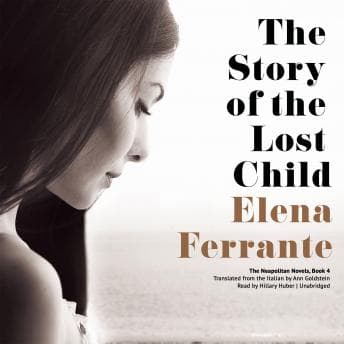
The title The Story of the Lost Child isn't subtle. Bad things happen. (I won't spoil it, but grab the tissues.)
The pacing in this final installment is relentless. The earlier books had these long, languid stretches of childhood summers. This one feels like a tumble down a hill. There's violence, there's political chaos, there's the constant low-level dread of the neighborhood. It's heavy. I'm not gonna lie to you.
But the ending? It wrecked me. It wasn't a big explosion. It was quiet. It was a closing of a circle that I didn't even realize was open. I sat in the garage for a full ten minutes after the audio stopped, just staring at the wall. My ice cream was melting in the trunk. I didn't care.
Who's This For (And Who Should Run)
If you've already invested in the first three Neapolitan novels, you have to finish. You just do. This is also for anyone who wants female friendship portrayed with all its ugly, complicated truth—not the sanitized brunch version. Skip it if you need tidy endings, if you're not in a headspace for heavy themes around children, or if you haven't read the earlier books. (Seriously, don't start here. That would be chaos.)
Back to the Pickup Line
So, yeah. It's extraordinary. The kind of book that changes how you think about your own friendships, your own choices. But now I need to listen to something where the biggest problem is a cupcake shortage. Seriously.