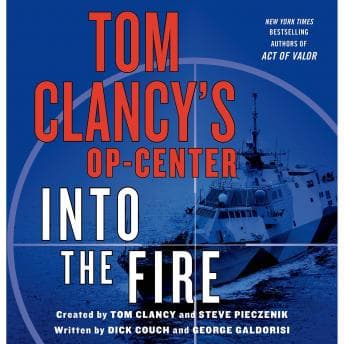

"The crew takes refuge on a tiny island, trapped dangerously between the grounded ship and a fleet of hostile North Korean soldiers."
That line from the description had me. Isolated military personnel, geopolitical chaos, a ticking clock—this is the kind of setup that makes me cancel plans and listen straight through. I started this around 11 PM, thinking I'd get a couple hours in before bed. Shirley was curled up on the radiator, judging me for still being awake. By hour three, I was too invested to stop.
And then the narration started actively working against me.
When the Story Fights Its Own Delivery
Look, I've listened to a lot of military thrillers. The genre lives and dies on momentum—you need that propulsive energy that makes you forget you're stuck in traffic or folding laundry. Dick Couch and George Galdorisi clearly understand this. The plot construction here is solid: a murdered North Korean general, a secret China-DPRK oil pact, American sailors stranded on a hostile island, and a terrorist cell activated on U.S. soil. It's ambitious. Maybe too ambitious for nine and a half hours, but ambitious.
The problem? Henry Leyva's narration creates these jarring speed bumps right when you need momentum most. Scene transitions feel abrupt—not in a thriller-pacing way, but in a "wait, are we in Washington or on the USS Milwaukee now?" way. When you're juggling multiple storylines across three continents, clarity isn't optional. It's everything.
The Tom Clancy Name Problem
Here's what nobody wants to say out loud: Tom Clancy's name on a book in 2015 (years after his death) is a brand, not a byline. Couch and Galdorisi are both legitimate military thriller writers—Couch is a former Navy SEAL, Galdorisi a retired Navy captain. They know this world. But the Op-Center franchise carries specific expectations, and this doesn't quite hit them.
The technical details feel authentic. The chain of command stuff, the naval operations, the intelligence community procedures—that all lands. What's missing is Clancy's particular gift for making bureaucratic maneuvering feel as tense as combat. The scenes in Op-Center headquarters should crackle with the same energy as Commander Kate Bigelow's desperate situation on that island. They don't.
(My podcast listeners always ask me about franchise continuations. My answer: lower your expectations by 20%, then decide if you're still interested. That math works here.)
What Actually Works
The island siege sequences genuinely had me tense. There's something primal about a small group of Americans trapped between hostile forces and the sea, rationing supplies, making impossible tactical decisions. Bigelow's leadership under pressure is the emotional core of the book, and when the narration settles into her perspective, everything clicks.
The dual-threat structure—military crisis abroad plus terrorist cell at home—is classic Clancy DNA. The pacing between these storylines is uneven, but when they start converging in the final hours, the payoff is satisfying. That same tension between multiple threads—though handled with more finesse—is what makes Ceremony in Death work so well. Not spectacular. Satisfying.
At 1.25x speed, some of the flow issues become less noticeable. I switched around hour four and didn't look back.
Who Gets Stranded With This One
If you're deep into the Op-Center series and need to continue, you'll probably finish this and feel fine about it. Military thriller completists who've exhausted their queue will find it fills the gap. But newcomers to the genre? Start elsewhere. Anyone specifically hunting for audiobooks with strong narration? Definitely start elsewhere. The story itself is a solid 3.5, maybe even a 4. The audio experience drags it down.
Shirley was asleep by the time I finished around 3 AM. She'd made the smarter choice.
The Librarian's Honest Stamp
I recommend a lot of audiobooks at work. People come in wanting "something like Tom Clancy," and I have a whole mental list. This one? It goes in the "if you've exhausted the better options" category. The bones are good. The execution is frustrating. The narration actively interferes with immersion at key moments.
Worth your time if you're already invested in Op-Center. Worth a credit? Probably not when there are stronger options in the genre. Stream it, borrow it, catch it on sale. But don't go in expecting peak Clancy—or peak audiobook production.