
Look, I need to talk about something that's been bugging me since mile marker 12 on the I-10 this morning.
Iris Johansen wrote a whole trilogy where Eve Duncan gets kidnapped, and across three books - THREE - nobody in this woman's circle thinks to do half the things we'd do in a real crisis situation. I'm sitting in my driveway at 7:45 AM, engine still running, yelling "THAT'S NOT HOW ANY OF THIS WORKS" while my neighbor waters his lawn and pretends not to hear me. Again.
The Trilogy Finale Problem Nobody Warned Me About
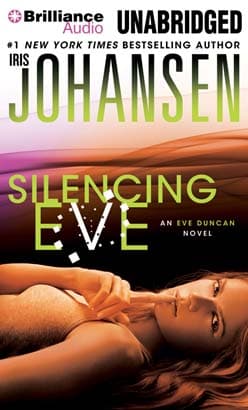
So here's the deal. Silencing Eve is book three of a trilogy that probably should've been one book. Maybe two if you're feeling generous. The setup happened in Taking Eve, the chase happened in Hunting Eve, and now we're supposed to get the big payoff. And you do get answers - every dangling thread gets tied up, I'll give Johansen that. But the pacing issue is real. There are stretches where multiple characters are basically circling each other, having the same tense conversation about finding Eve that they had forty minutes ago, just from a different location. It's like watching a trauma team run a code where everyone keeps rechecking the same vitals instead of actually doing something.
The supernatural elements threw me too. I knew the Eve Duncan series dabbles in paranormal stuff - Bonnie's ghost has been around for a while - but there are moments here where the plot leans hard into that territory, and it sits weirdly next to what's supposed to be a grounded thriller about a forensic sculptor in mortal danger. Pick a lane, is what I'm saying.
Elisabeth Rodgers Behind the Wheel
Here's where I'm genuinely split. Rodgers does strong work with the women. Her Eve has this slight Southern quality that feels lived-in, and her Kendra - the character with all the sass and sharp edges - is genuinely fun to listen to. There's an eerie, unsettling quality she brings to the villain that actually made me check my rearview mirror once. At 6 AM. On a well-lit highway. So credit where it's due.
But the male characters. Oh, the male characters. Her Joe Quinn is this deep, husky voice that's clearly meant to sound tough and commanding, and sometimes it works. Other times it sounds like someone doing a bad impression of a guy doing a bad impression of a cop. I've heard real trauma surgeons at 3 AM running on coffee and adrenaline, and none of them sound like that. Young Michael gets an age-appropriate voice that's actually sweet and convincing, which makes the Joe Quinn voice stand out more by comparison. It's like - you CAN do subtle. Why not do subtle for everyone?
The character differentiation is solid enough that you always know who's talking, which matters in a book with this many POV characters. That's not nothing. Twelve and a half hours is a commitment, and at least you're never lost.
When the Medicine (and the Logic) Gets Messy
As someone who's actually worked a code, I have a low tolerance for books that treat injuries and medical situations like plot accessories. Johansen doesn't go heavy on medical detail here - this isn't a medical thriller - but the general handling of physical danger, captivity, and the human body's response to stress feels... Hollywood. Characters bounce back from things that would have real people on a ventilator. Nobody gets an infection. Nobody has a realistic recovery timeline. Jar of Hearts actually made me flinch in the right ways - the body keeps score there, and the author doesn't let characters off the hook physically just because the plot needs them mobile. I know, I know, it's fiction. But my brain can't turn off fifteen years of night shift reality.
The emotional beats work better than the plot mechanics. There are genuine moments of connection between characters that Rodgers delivers with real feeling, and the mother-daughter stuff - even with its supernatural wrapping - hits differently when you're a Filipina mom's eldest daughter who never quite lives up to the original career plan. My mom would love this, actually. She'd probably ignore all the paranormal stuff and just focus on the family loyalty parts. (She still thinks I should've been a doctor.)
Who This Is Actually For
If you've read the first two books in this trilogy, you're finishing this one. You know it, I know it, Johansen knows it. And you'll get your resolution. If you're a longtime Eve Duncan fan who's been following since the early books, Rodgers keeps the character voices consistent enough that it feels like coming back to people you know.
But if you're new to the series? Do not start here. You will be completely lost. And if you're someone who needs tight plotting and realistic procedural details, this one's going to test your patience.
Carlos asked why I was still sitting in the car when he came out to grab the mail. I told him I was finishing my book. He said, "Was it good?" And I said, "It was... fine." Which is the most honest review I can give. It's fine. It finishes what it started. It doesn't blow your mind, but it doesn't waste your time either.
Post-Shift Prescription
Perfect for that post-shift decompression if you're already invested in Eve Duncan's world. Not the book that's going to convert skeptics. The narration carries some weak writing in places, stumbles in others. Night shift approved - but barely, and only because the villain voice is genuinely creepy enough to keep you alert on the drive home.