
The Case Study I Didn't See Coming
I was halfway through my Saturday morning jog along the Charles when Jane Hawk started explaining her dead husband's suicide note, and I literally stopped running. Just stood there on the path like an idiot, some guy with a golden retriever giving me a concerned look as he passed. Because here's the thing - I study why people do what they do for a living, and Koontz had just presented me with a psychological puzzle that actually made me forget I was supposed to be exercising.
"I very much need to be dead." That's what Jane's husband wrote. And if you know anything about suicide notes - and unfortunately, I've read the research - that phrasing is wrong. It's too detached, too clinical. Real despair doesn't sound like that. Jane knows it too, which is what makes her such a compelling protagonist. She's not just grieving; she's analyzing. My therapist would have thoughts about this character, but honestly? I found myself nodding along with Jane's obsessive need to understand.
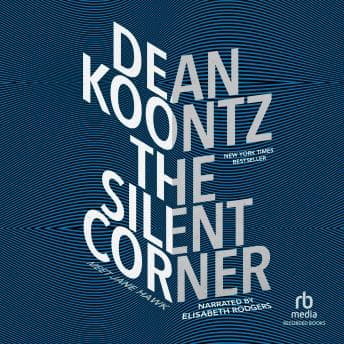
Elisabeth Rodgers delivers Jane with this controlled intensity that works beautifully for the character. There's steel underneath the grief, and you can hear it in how she reads Jane's internal monologue - measured, deliberate, like someone holding themselves together through sheer force of will. The research shows that this kind of emotional compartmentalization is common in high-functioning individuals dealing with trauma, and Rodgers captures it without making Jane feel cold. That's harder than it sounds.
Where the Psychology Gets Interesting
Here's what Koontz understands about human nature that a lot of thriller writers miss: people don't just do terrible things. They convince themselves the terrible things are necessary. The antagonists in this book - and I'm being vague because spoilers - exhibit classic patterns of moral disengagement. They've built an entire framework to justify what they're doing, and that's way more terrifying than a mustache-twirling villain who's evil for evil's sake.
That same exploration of duality - the respectable exterior hiding something monstrous - is what makes Strange Case of Jekyll and Hyde still work after all these years.
The biotech elements are genuinely unsettling. I found myself asking: why does this feel so plausible? And then I remembered I live in a world where we're already debating the ethics of neural interfaces and AI consciousness. Koontz wrote this in 2017, and it reads like he was taking notes on our current anxieties. (Don't tell my students I said a Dean Koontz novel counts as prescient social commentary, but here we are.)
Fair warning - the pacing in the first few hours is... deliberate. Koontz loves his descriptions. He wants you to know exactly what kind of trees are in the parking lot and how the light hits the dashboard. I was folding laundry during chapter three and honestly zoned out for a bit. But once the plot kicks into gear around hour four, I basically burned through the rest during a cooking marathon. Made an entire batch of dal makhani and barely noticed because I was too busy trying to figure out who was pulling the strings.
The Narrator Question
Elisabeth Rodgers. She's good - genuinely good - at the emotional heavy lifting. When Jane is processing her husband's death, when she's making impossible choices about her son, Rodgers nails it. The vulnerability underneath the competence. That's the stuff that kept me listening.
But. (You knew there was a but.)
The character voices are uneven. Her male characters mostly work - there's a gruff FBI type she does well, and Jane's allies sound distinct enough. But there's a child character, and look, I don't want to be harsh, but that voice pulled me out of the story every single time. It's that slightly-too-precious thing some narrators do with kids, and it doesn't match the tone of the book at all. I found myself wishing she'd just used her natural voice with maybe a slight pitch adjustment.
The good news? The child isn't in every scene, and Rodgers seems to find her footing as the book progresses. By the second half, I'd mostly stopped noticing the voice work and was just absorbed in the story. Give it time if the early character work bugs you.
Who Should Listen (And Who Should Skip)
This is a fascinating case study in genre blending - part thriller, part sci-fi horror, part character study. If you're the kind of person who wants to understand why the conspiracy exists, not just how the hero stops it, you'll probably enjoy this. Jane Hawk is smart in a way that feels earned, not convenient. She makes mistakes. She has blind spots. She's driven by love and rage in equal measure, and Koontz doesn't pretend those are simple emotions.
Skip this if you need your thrillers to move at breakneck speed from page one - the descriptive passages will test your patience. Also, content warning for suicide. It's central to the plot and handled seriously, but if that's a trigger, maybe read the print version where you can control the pace.
I listened at 1.25x after the first few chapters, and that felt right. Helped with Koontz's more meandering moments without losing Rodgers' emotional nuance.
The Verdict
Psychologically, this tracks. Jane's grief, her determination, her willingness to burn everything down for answers - it all makes sense. The conspiracy is genuinely creepy in a way that lingers. And despite my quibbles with some of the voice work, Elisabeth Rodgers delivers a performance that kept me running an extra mile just to hear what happened next.
My mother would ask why I need another thriller series when I already have so many. Maa, that's not how this works. Though honestly, if I'm collecting Koontz, I should probably revisit Odd Hours too. I'm already downloading book two.