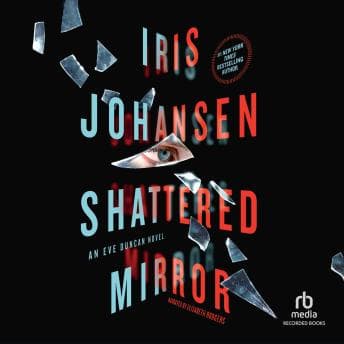

What happens when a witness protection case goes sideways after years of careful hiding?
That question kept me company on a late-night drive back from a client site in Houston. Three hours of empty I-10, just me, Ranger snoring in the back seat, and Teresa MacGuire's photographic memory getting her into the kind of trouble that makes my security consulting work look like babysitting.
The Tactical Setup
Let me cut to the chase—Johansen knows how to structure a chase narrative. Teresa's got an eidetic memory that witnessed something catastrophic as a kid, and now her cover's blown. The premise is solid. I've worked with actual witness protection cases in my consulting days, and the paranoia Johansen builds here rings true. That constant looking-over-your-shoulder tension, the way Teresa has to calculate every human interaction—it's authentic enough that I found myself checking my mirrors more than usual.
The problem? The execution doesn't quite match the promise. The plot mechanics work fine, but somewhere around hour five, I realized I was more interested in the tactical details of her evasion than I was in Teresa as a person. That's a problem when your protagonist is supposed to carry an emotional story about family and sacrifice.
Rodgers Carries the Weight
Elisabeth Rodgers, though—she's doing the heavy lifting here. Her character differentiation is clean and purposeful. When the tension ratchets up, she doesn't oversell it with theatrical panic. She adds urgency through pacing and breath control, which is exactly how real stress sounds. I've heard people under actual pressure, and Rodgers gets that clipped, controlled quality right.
She's clearly comfortable with Johansen's material—apparently she's narrated several of her books—and that familiarity shows. Rodgers brings that same lived-in comfort to Vendetta, where her pacing does a lot of the heavy lifting the prose doesn't always earn. Each character gets a distinct voice without veering into cartoon territory. The villains sound genuinely menacing rather than mustache-twirling.
Now, one reviewer apparently had to pull over their car because Rodgers said "jerkily" in a way that bothered them. Look, I've listened to audiobooks narrated by people who couldn't pronounce "lieutenant" correctly (it's lef-TEN-ant if you're being proper, by the way). One awkward adverb doesn't sink a performance. Rodgers is professional and consistent throughout.
Where the Mission Loses Focus
Here's where it lost me: Johansen's plotting feels like she's running a checklist rather than telling a story. Twist here. Revelation there. The "you won't see the twists coming" promise from the description? I saw most of them coming. Maybe I'm just cynical from too many years of threat assessment, but when your job involves predicting how situations will go wrong, thriller twists become a bit predictable. Enemy is one of the few thrillers that actually surprised me—Child earned his reveals because the logic holds up under scrutiny, which is the bar I keep measuring everything else against.
The romantic subplot felt shoehorned in—like someone told Johansen she needed to hit certain beats regardless of whether they served the story. And there's an overreliance on adverbs in the prose that Rodgers does her best to smooth over, but you can only do so much with "she said nervously" and "he moved jerkily" before it starts to grate.
That said, the core concept of the photographic memory as both gift and curse is handled well. Teresa can't forget what she witnessed, literally, and that psychological weight comes through even when the plot mechanics feel formulaic.
Mission Debrief
This is solid mid-tier Johansen. If you're a fan of her Eve Duncan series, you'll probably enjoy this standalone, though it doesn't hit the same heights. If you're new to her work, this isn't where I'd start.
Rodgers' narration elevates material that could have felt generic in lesser hands. At 10 hours and change, it's a reasonable time investment for a road trip or a week of commuting. I got through it in two long drives and didn't feel like I'd wasted my time—but I also won't be thinking about it next month.
Who Should Deploy (And Who Should Stand Down)
This one's for Johansen completists and thriller fans who want competent escapism without demanding brilliance. If you need every plot beat to surprise you, look elsewhere. If you want a reliable narrator carrying a serviceable story about a woman with a dangerous memory, Rodgers will get you there.
Skip it if bad military or law enforcement details bother you (Johansen's research is decent but not bulletproof), or if you need deep character development to stay engaged.
Ranger slept through the whole thing, which means it wasn't exciting enough to wake him up but wasn't bad enough to make me turn it off. That's about where this lands—competent, professional, forgettable. Mission accomplished, but just barely.