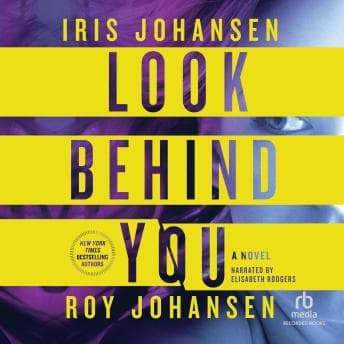

What happens when identity becomes a literal puzzle—when someone hands you a skull and says 'find her'? That's the psychological hook that kept me up past midnight, standing in my kitchen stress-eating leftover dal while Elisabeth Rodgers' narration played through my earbuds.
I came to Shattered Mirror as an Eve Duncan newcomer, which—I'll be honest—is probably not the ideal entry point into Johansen's series. But the premise grabbed me: a forensic sculptor receives a skull, reconstructs the face, and then meets the dead woman's living twin. Eve exhibits classic traits of someone whose professional detachment has become a coping mechanism. She builds faces for the dead. She gives closure. And yet here she is, pulled into a case where the living mirror of her reconstruction is in danger.
The Twin Problem (And Why It Actually Works)
Twins in thrillers are usually a gimmick. I've read too many where the 'which one is which' tension feels manufactured. Vanishing Man plays with similar identity questions, though it approaches them from a completely different angle. But Johansen does something interesting here—she makes the psychological weight of being a surviving twin the actual story. The dead sister's face, emerging from clay under Eve's hands, becomes this haunting presence throughout the narrative. A fascinating case study in survivor guilt and identity formation. Who are you when half of your original self is gone?
The research actually shows that identical twins often struggle with individuation. Johansen seems to understand this. The living twin isn't just a victim to be saved—she's someone grappling with the uncanny valley of seeing her own face reconstructed on a skull. That's genuinely unsettling material.
Rodgers' Voice Work—The Hits and the Misses
Elisabeth Rodgers gives Eve a slight Southern accent that grounds her immediately. There's something measured about it, professional but warm. Eve's husband Joe Quinn gets this deep, husky voice that reads as protective without being overbearing. And the villain? Rodgers goes eerie—not cartoonish, but genuinely unsettling in a way that made me check my door lock at 1 AM. (My therapist would have thoughts about this character, specifically about the author's understanding of how predators actually think.)
The standout, though, is Michael—Eve's son. Rodgers portrays him as an actual child, not an adult doing a 'kid voice.' It's authentic in a way that's surprisingly rare in audiobook narration.
But here's where I need to be honest: the character differentiation is inconsistent. Some secondary characters blur together vocally, and during dialogue-heavy scenes, I occasionally lost track of who was speaking. At 12 hours, that's a problem. I found myself rewinding more than I'd like.
Where the Pacing Stumbles
The middle section doesn't quite track—psychologically or structurally. There's a stretch around hours 5-7 where the tension Johansen builds so effectively in the opening just... deflates. The investigation becomes procedural in a way that feels dry. Some listeners have called this boring, and I understand why. I made it through by doing meal prep (paneer tikka masala, since you asked) and letting it become background noise.
The final act picks back up, but that middle sag is real. If you're listening during a commute or workout, you might lose the thread. I had similar pacing issues with Lock and Key: The Gadwall Incident, though that one never quite recovered its momentum the way this does.
Who This Works For (And Who It Won't)
If you're already invested in the Eve Duncan series, this is clearly essential listening—the character relationships have weight that I suspect comes from accumulated history across multiple books. Thriller readers who appreciate forensic detail and don't mind some procedural stretches will find enough here to justify the credit. But if you need relentless pacing, or you're looking for a standalone entry point? Start elsewhere. I kept asking: why does Eve really take this case? The answer is there, but it takes patience to reach.
What makes this character compelling is her professional obsession with giving the dead their faces back. It's a form of resurrection, really. And Johansen understands that this work changes a person. Eve Duncan isn't just solving crimes—she's processing grief, over and over, through clay and bone.
The Skull on My Kitchen Counter
Metaphorically speaking. By the end, I understood why this series has lasted as long as it has. Eve Duncan is a genuinely interesting protagonist—someone whose expertise becomes both her strength and her vulnerability. The twin mystery resolves satisfactorily, if not spectacularly. Rodgers' narration, despite its inconsistencies, kept me engaged through the slow patches.
Would I listen to another Eve Duncan book? Probably. But I'd wait for a sale. This is solid thriller work, not essential listening. The psychological elements are there, but they don't quite reach the depth the premise promises.