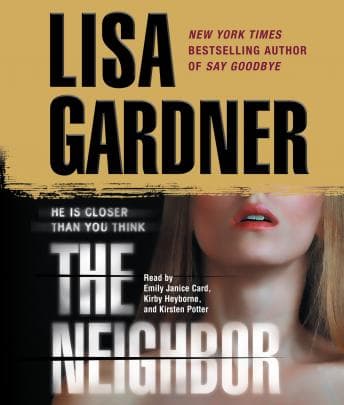
Neighbor: A Detective D. D. Warren Novel — Everyone's Lying, Including the Victim
by Lisa Gardner🎤Narrated by Emily Janice Card📚Detective D.D. Warren #3🟡 Wait Sale
✍️ 3.8 Editorial
🎤 4.0 Narration
Abridged
6h 28m
📋
Case Abstract
Everyone's Lying, Including the Victim
- •Narrator Assessment: Kirby Heyborne's tormented offender sections are chillingly authentic, while the three-narrator format mostly succeeds at distinguishing POVs despite occasional jarring transitions.
- •Psychological Profile: Paranoid domestic suspense where every character's 'normal' performance feels calculated—perfect for readers who love questioning everyone's motives.
- •Narrative Tempo: Ticking-clock urgency with a missing woman keeps momentum strong, though the ambiguous ending may frustrate those wanting clean resolution.
- •Clinical Verdict: Wait for Sale
Is this for you?
✅Pick this if: you love questioning everyone's motives and don't mind juggling multiple unreliable perspectives · you want ticking-clock domestic suspense and can accept an ambiguous ending · you enjoy chilling criminal psychology and will pay close attention to narrative breadcrumbs
❌Skip if: you need clean resolution or prefer every mystery thread tied up clearly · you want investigators to stay somber and dislike tonal shifts into banter · you mostly listen while distracted and need a story that's easy to track
📚Best for fans of: Just One Look, Gone Girl, The Couple Next Door
Read Time4 min read
Duration6h 28m
Your rating?

Reviewed byPriya Sharma
Psychology enthusiast. Analyzes characters like case studies. Not sorry about it.
🎧 Prefers listening while cooking, appreciates narrators who signal deception early, disengages quickly from unrealistic character motivations.
Last updated:
Share:
Clinical Observations 🧠
Audio production quality notes that may affect your listening experience
Quick Info
Release Date:June 16, 2009
Duration:6h 28m
Language:English
Audio Code:58694736
About the Narrator
Emily Janice Card
Emily Janice Card is an actor, writer, and singer from North Carolina, now residing in Los Angeles. She has appeared in leading stage roles and is the daughter of acclaimed sci-fi/fantasy writer Orson Scott Card. She has narrated and directed numerous audiobooks, including works by her father.
5 books
3.6 rating
📚 Learn More
Enjoyed this review? Rate it!
📬
Get Weekly Audiobook Picks
Join listeners getting honest reviews from our curators every Monday. No spam. Unsubscribe anytime.
Subscribe on SubstackMore Commute Audiobooks →

⭐ 5.0
Shadow Rising: Book Four of 'The Wheel of Time'
by Robert Jordan
Narrated byKate Reading
Reviewed byTom Bradley
41h 19mScience Fiction & Fantasy

⭐ 5.0
Brain Rules for Baby (Updated and Expanded): How to Raise a Smart and Happy Child from Zero to Five
by John Medina
Narrated byJohn Medina
Reviewed byDavid Park
9h 28mSelf-Help
⭐ 5.0
True Grit
by Charles Portis
Narrated byDonna Tartt
Reviewed byMarcus Williams
6h 18mFiction & Literature
⭐ 5.0
Book Thief
by Markus Zusak
Narrated byAllan Corduner
Reviewed bySarah Chen
13h 57mKids & Family

⭐ 5.0
Eleanor Oliphant Is Completely Fine: Reese's Book Club (A Novel)
by Gail Honeyman
Narrated byCathleen McCarron
Reviewed byMaria Santos
11h 2mRomance
More Mystery & Thriller Audiobooks

⭐ 4.8
Project Hail Mary
by Andy Weir
Narrated byRay Porter
Reviewed byPriya Sharma
16h 10mScience Fiction & Fantasy

⭐ 4.9
Dungeon Crawler Carl
by Matt Dinniman
Narrated byJeff Hays
Reviewed byMarcus Williams
13h 31mOther

⭐ 4.0
Kiss the Villain
by Rina Kent
Narrated byStephen Dexter
Reviewed byMaria Santos
14h 26mOther

⭐ 4.2
House of Earth and Blood
by Sarah J. Maas
Narrated byElizabeth Evans
Reviewed byMaria Santos
27h 50mOther

⭐ 4.4
Six of Crows
by Leigh Bardugo
Narrated byJay Snyder
Reviewed byPriya Sharma
15h 4mOther
More by Emily Janice Card
⭐ 3.8
Lost Gate
by Orson Scott Card
Narrated byEmily Janice Card
Reviewed byJordan Reeves
12h 22mScience Fiction & Fantasy
⭐ 3.5
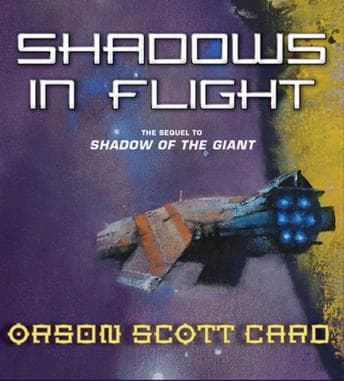
Shadows in Flight
by Orson Scott Card
Narrated byEmily Janice Card
Reviewed bySarah Chen
6h 25mScience Fiction & Fantasy
⭐ 2.5
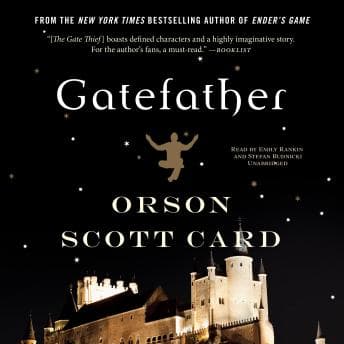
Gatefather
by Orson Scott Card
Narrated byEmily Janice Card
Reviewed bySarah Chen
11h 27mScience Fiction & Fantasy
Ready to listen free?