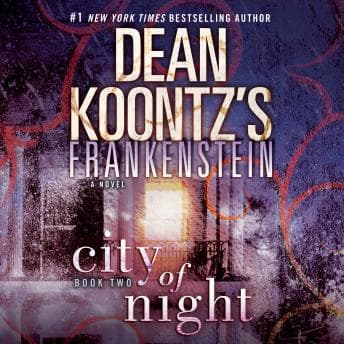

"You were never a monster. You were the first of us to be free."
Somewhere around the three-hour mark, Deucalion says something like this to himself, and I had to pause my jog along the Charles River because—psychologically speaking—this line reframes the entire Frankenstein mythology. The creature isn't the aberration. Victor is. And Koontz knows exactly what he's doing with that inversion.
I came to this second installment in Koontz's Frankenstein series expecting pulpy thriller fare. What I got was a surprisingly astute character study wrapped in New Orleans Gothic horror. My therapist would have thoughts about Victor Helios, and none of them would be kind.
The Psychology of Playing God (And Getting It Wrong)
Victor Helios—formerly Frankenstein, now a biotech magnate in modern New Orleans—exhibits classic narcissistic personality disorder with a god complex so textbook I could assign him as a case study. What makes this character compelling is that Koontz doesn't just make him evil for evil's sake. Victor genuinely believes he's improving humanity by replacing it. The cognitive dissonance required to maintain that worldview? Fascinating.
But here's where it gets interesting: his "New Race" creations are designed without the capacity for pleasure, for genuine connection, for anything that makes existence bearable. They're engineered to be perfect servants who inevitably go insane from the emptiness of their existence. Victor created beings incapable of happiness and then acts surprised when they become homicidal. The man has a PhD in missing the point.
Deucalion, the original creature, serves as the psychological counterweight. Two centuries of existence have given him something Victor never intended: wisdom. He's processed his trauma. He's found meaning. He's done the work, as we say in the field. Watching him mentor the detectives while grappling with whether he has the right to destroy beings who share his origins—that's genuinely compelling character development.
Christopher Lane's Cajun Carnival
Lane's narration is... a lot. And I mean that as a compliment, mostly.
His Cajun Creole accents are cartoonish in the best possible way—think slightly exaggerated 'Nawlins patois that somehow works for the heightened reality Koontz creates. That same theatrical energy worked beautifully in Unkindness of Ravens, where the narrator leaned into the Gothic atmosphere without tipping into parody. When he voices the local characters, you can practically smell the beignets and feel the humidity. His diction is genuinely peerless; every word lands with precision.
The real magic happens in his tonal shifts. Victor's cold, clinical superiority sounds completely different from Deucalion's measured gravitas, which sounds nothing like Detective Carson O'Connor's sharp wit. Lane understands that this story walks a tightrope between horror and dark comedy, and his delivery never tips too far in either direction.
That said—and this is minor—the pacing occasionally drags in the middle sections. Around hour five, there's a stretch where the conspiracy-building feels like setup without payoff. Lane's consistent excellence keeps you engaged, but I found myself bumping up to 1.25x speed during the exposition-heavy passages.
Who Gets the Most Out of This (And Who Should Pass)
This is ideal for anyone who loves psychological horror that actually understands psychology. If you want your monsters to have coherent motivations and your villains to be genuinely disturbing rather than just violent, Koontz delivers. Skip this if you need standalone stories—it's book two, and you'll miss the emotional weight of Deucalion's journey without the first installment. Also skip if you're squeamish; there's violence, language, and some sexual content that earns the thriller label.
The eight-hour runtime is manageable for a weekend of focused listening. I finished it over three morning runs and one very long session while making dal makhani at 11 PM. (My mother would be proud of the dal, less so of the murder audiobook accompaniment.)
Case Notes: Final Assessment
Koontz does something clever here that most Frankenstein retellings miss: he makes the question of personhood genuinely uncomfortable. Victor's New Race aren't zombies or robots. They think, they feel (sort of), they suffer. When Deucalion and the detectives discuss destroying them, there's real moral weight to the conversation.
I found myself asking: why does Victor really keep creating beings designed to fail? The text suggests megalomania, but I read something darker—a man so terrified of his own mortality that he keeps trying to prove he can manufacture life itself. Evil Beneath explores similar territory with a villain whose need for control masks existential terror, though with less philosophical depth. Every failed creation is evidence of his power, not his limitations. That's a fascinating case study in denial.
Christopher Lane's performance elevates solid source material into genuinely engaging audio. His Audie Awards are well-earned. The production is clean, the pacing is mostly tight, and when the story demands intensity, he delivers.
Is it perfect? No. Some plot threads feel rushed while others meander. The detectives' banter occasionally tips into sitcom territory. But psychologically, this tracks—and that's what matters to me.
Worth your credit if you're invested in the series. If you're new to Koontz's Frankenstein universe, start with book one. But if you're already hooked on this modern Gothic nightmare? You'll want to hear what happens next.