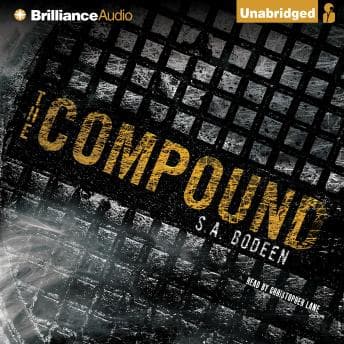

Couldn't sleep last night. Three AM, Linda dead to the world, Ranger snoring at the foot of the bed. So I figured I'd knock out something short from my queue. Grabbed Compound because at under six hours it seemed like a perfect insomnia listen. Bad call on the sleep front. Good call on everything else.
Let me cut to the chase: this is a YA book that punches well above its weight class. If someone told me I'd be genuinely unsettled by a kids' book about a billionaire's underground bunker, I'd have laughed. I'm not laughing now.
A Bunker Story That Actually Understands Confinement
Here's the setup: Eli's father is an obscenely wealthy tech mogul who built an underground compound to survive nuclear war. When the bombs supposedly fall, the family seals themselves inside for a planned fifteen-year stay. Six years in, things are falling apart - food supplies are dwindling faster than projected, Eli's father is becoming increasingly controlling, and there are... supplements to the food supply that I won't spoil but will say involve one of the more disturbing premises I've encountered in YA fiction. We're talking cannibalism-adjacent territory here. In a book marketed to middle schoolers. Bodeen has nerve, I'll give her that.
What works is the claustrophobia. I've spent time in confined spaces - FOBs where you couldn't go outside the wire for weeks, transport aircraft where the walls close in after hour twelve. Bodeen captures that specific madness of knowing you physically cannot leave. The way Eli describes the recycled air getting thicker, the artificial lighting that never quite feels right, the growing paranoia about his father's true motives - that's real psychological pressure, and she doesn't flinch from it.
The family dynamics are where it gets interesting. Eli's father, Rex, is a tech billionaire who's used to controlling everything and everyone. The way he manipulates his family underground - rationing information like he's rationing food - felt uncomfortably familiar. I've known commanders like that. Men who confuse authority with ownership. Rex doesn't just run the Compound; he runs his family like a private army where questioning orders isn't permitted.
Christopher Lane Carries the Weight
Lane narrates this solo, and he's smart about it. He plays Eli as a teenager who's old enough to suspect something's wrong but young enough to doubt his own instincts. There's this undercurrent of barely suppressed anger in his reading of Eli that builds across the six-year timeline - you can hear the kid hardening. When Eli finally starts pushing back against his father, Lane shifts the register just enough that you feel the power dynamic tilting.
His Rex is genuinely unsettling. Not over-the-top villain territory, but that calm, rational, we're-all-in-this-together tone that controlling people use when they're about to do something terrible. The kind of voice that makes you agree before you realize what you agreed to. I've sat across from men who talk like that in boardrooms. (Corporate security work teaches you things combat doesn't.)
Where Lane could've gone bigger with the younger kids' voices, he keeps it restrained. Works for the tone. This isn't a story that needs theatrical range - it needs the slow burn of dread, and he delivers that.
The Twist That Almost Lost Me
So there's a major plot twist. I'd heard some listeners were initially disappointed by it, and honestly? When it hit, my first reaction was the same. Felt like a cheat. Like the author had written herself into a corner and found the emergency exit. But - and this is the part that surprised me - the more I sat with it, the more it reframed everything that came before. The details about Rex, the inconsistencies in the compound's design, the communication systems that don't quite work the way they should. It all clicks into place. Bodeen was playing a longer game than I gave her credit for.
I won't spoil it. But I will say this: if you're a parent, the twist hits different. It's not about the bombs. It never was.
Who Should Strap In
If your kid (or you, no judgment) likes survival stories and can handle some genuinely dark themes - violence, psychological manipulation, and yes, that cannibalism element I mentioned - this is a tight, well-constructed listen. It's short enough for a road trip but demanding enough that you shouldn't treat it as background noise. You'll miss things.
If you need military precision in your bunker fiction, you might twitch at some of the compound's logistics. Fifteen years of supplies for nine people in a space that size? The engineering doesn't hold up to serious scrutiny. But this is YA, and the emotional architecture is sound even when the physical architecture is suspect.
Not for little kids. Just because it's shelved in the youth section doesn't mean your eight-year-old needs to hear it. The YA shelving issue cuts both ways though - Sword Song is another one that sits in that same uncomfortable space where the age label undersells what the book is actually doing to you.
Mission Debrief
Worth your time? Here's the debrief: Compound is a lean, mean five-and-a-half-hour listen that does more with its premise than most adult thrillers do with twice the runtime. Lane's steady narration keeps the tension ratcheted without overselling it. The twist demands a second listen. And at three AM with nothing but darkness outside and a snoring dog beside me, this book made my skin crawl in the best possible way.
Ranger slept through the whole thing. His loss.