
How do you teach a book about the Holocaust to teenagers who think history is something that happened to other people?
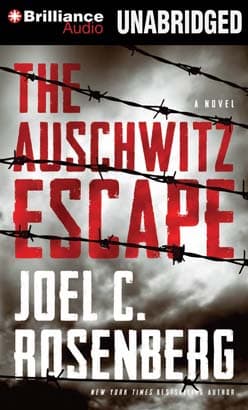
I've been wrestling with this question for two decades. Every year, I assign Night by Elie Wiesel, and every year I watch seventeen-year-olds struggle to comprehend incomprehensible evil. So when I started Joel C. Rosenberg's The Auschwitz Escape during a late-night grading session—red pen in hand, stack of essays on The Great Gatsby that somehow all mentioned the green light in the exact same way—I wasn't expecting to abandon the papers entirely. But by hour two, the essays sat untouched.
What Rosenberg Understands About Historical Fiction
Here's the thing about Holocaust narratives: they walk an impossible line. Too sanitized, and you betray the memory. Too graphic, and you risk exploitation. Rosenberg does something clever—he filters the horror through Jacob Weisz's disbelief. Jacob starts as a young German Jew who can't quite accept that his country has turned against him. That denial, that this can't really be happening feeling, mirrors how we read history from our comfortable distance.
The resistance sections before Auschwitz feel almost like a thriller—sabotage missions, close calls, the adrenaline of fighting back. Then the train comes. And suddenly you're in that cattle car with Jacob, and the thriller conventions evaporate. Rosenberg doesn't let you hide behind plot momentum anymore.
I kept thinking about my students. They'd recognize the resistance hero tropes from Marvel movies. They'd understand Jacob's rage. But would they sit with the suffocation of those camp scenes? The novel earns its nearly fifteen hours by refusing to rush past the parts we'd rather not linger on.
Christopher Lane Knows When to Disappear
Christopher Lane's narration does something I rarely praise: it gets out of the way. His German accents are precise without becoming caricature—there's a difference between Jacob's educated Berlin speech and the rougher dialects of camp guards that creates immediate social context. But Lane never performs the atrocities. He reads them. Flat. Matter-of-fact.
This is why we still read the classics, why Hemingway's iceberg theory works—the restraint is the horror. When Lane describes the selections, the chimneys, the casual brutality, his voice stays controlled. And that control is devastating. A narrator who wept through these scenes would give us permission to process them as drama. Lane's steadiness forces you to supply your own emotional response.
The escape sequences—and yes, there are multiple attempts, which the title already promised—finally let Lane open up. His pacing quickens. His breath catches. The contrast with the earlier flatness makes the hope almost unbearable.
The Faith Question (And Why I Kept Listening Past Midnight)
Rosenberg is an evangelical Christian author, and Jacob's wrestling with God runs throughout. My students would call this "preachy." I'd call it honest to the period. European Jews in 1944 weren't having abstract theological debates—they were asking why God had abandoned them in real time.
Jacob's faith journey doesn't resolve neatly. He doesn't find easy answers in Auschwitz because there aren't any. The novel's religious elements feel less like proselytizing and more like Rosenberg grappling with theodicy the way Wiesel did, the way anyone confronting this history must.
Denise found me at 1 AM, still listening, the grading completely forgotten. "You okay?" she asked. I wasn't sure. Lane had just delivered a scene where Jacob witnesses something no one should witness, and I needed a minute before the next chapter.
Who Should Walk This Path
If you loved The Tattooist of Auschwitz or All the Light We Cannot See, this belongs on your list—historical fiction that respects both the history and the fiction. When I need something lighter between these heavy reads, I turn to Royally Screwed—total tonal whiplash, but sometimes that's exactly what you need. If you're looking for light listening, keep walking. This demands focus. I'd recommend dedicated listening sessions, not background audio while cooking dinner.
Parents wondering about teen listeners: I'd say sixteen and up, with conversation afterward. The violence isn't gratuitous, but it's present. The emotional weight is significant. My students would hate this—it's long, it's heavy, it doesn't have a Marvel third act. I love it.
One caveat: at nearly fifteen hours, the middle sections in the camp can feel repetitive. The daily horror of Auschwitz was repetitive—that's part of its evil—but some listeners might find the pacing challenging. Lane's consistent delivery helps, but this isn't a book you'll finish in a weekend unless you're deliberately binging.
Worth Pausing the Faculty Meeting For
I finished The Auschwitz Escape during Principal Martinez's quarterly budget presentation. (Sorry, Principal Martinez. I really was listening to your thoughts on textbook allocations. I absolutely was not crying quietly in the back row about a fictional escape from a death camp.)
Rosenberg's novel won't replace Wiesel or Primo Levi in my curriculum. But it might be the book that makes a reluctant reader finally understand why we study this history. Sometimes fiction is how we approach truths too large for facts alone. Lane's narration serves that purpose with dignity.
The fate of millions hung in the balance then. Our memory of them hangs in the balance now. Books like this—patient, unflinching, humane—are how we keep that balance.