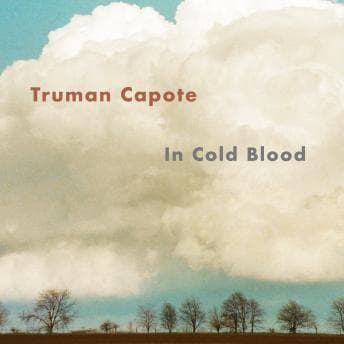

Okay, picture this. It's 11:30 PM. It's raining in Oregon (shocker, I know). I'm sitting in my favorite armchair—the velvet one that looks like it belongs in a Victorian séance parlor—and Shirley (my cat, not the author, though she acts like she wrote The Lottery) is staring intently at a corner of the room where absolutely nothing is happening.
And I'm listening to In Cold Blood.
I've read the physical book. Twice. Once in college, once when I started working at the library. But listening to it in the dark? That's a whole different kind of haunting.
Let's get real for a second. We talk about "True Crime" now like it's a Netflix category or a podcast genre where two friends drink wine and laugh about murder. (No shade, I listen to those too). But this? This is the grandfather of them all. And it doesn't feel like content. It feels like a confession.
Scott Brick: The Cilantro of Audiobooks
Look, I know Scott Brick is the cilantro of the audiobook world.
You either think he's the gold standard, or you think he sounds like he's reading a eulogy for a ham sandwich. I get it. He has this melodramatic, breathy quality that can be... a lot. (I tried listening to him narrate a techno-thriller once and had to tap out because why was he whispering about computer code?) He was much better suited to Jurassic Park, where that intensity actually matched the dinosaur chaos.
But here?
It works. It works so well it actually unnerved me.
Capote's prose isn't dry journalism; it's heavy, atmospheric, and deeply psychological. It needs a narrator who understands the weight of what's happening. Brick drops his voice into this weary, somber register that captures the desolate, flat landscape of Holcomb, Kansas perfectly. He doesn't sound like a reporter; he sounds like a witness.
There's a specific cadence he uses for the Clutter family—wholesome, unsuspecting—that clashes so violently with the voices he uses for Perry and Dick. He nails that specific Midwest rhythm. Not a caricature, just... flat. Open. Vulnerable.
If you usually skip Brick, pause. Give this a shot. He respects the dread.
The Horror of the Ordinary
As a horror fan, I'm used to monsters. Ghosts. Demons. Whatever.
But the scariest part of this audiobook isn't the gore (though, fair warning, the descriptions of the crime scene are visceral). It's the quiet.
The first few hours are just... life. The Clutter family baking pies, planning weddings, running a farm. And because you know what's coming—because history has already spoiled the ending—every mundane moment feels like a knife twisting in your gut.
I found myself literally holding my breath during the scenes leading up to that night in November 1959. Capote (and Brick) stretches the tension until it snaps. It's not a jump scare. It's a slow-motion car crash.
And honestly? The way the book burrows into the killers' heads is the part that kept me up. It forces you to sit with them. To understand them, just a little bit. And that is way more terrifying than just writing them off as monsters. I got a similar psychological dread from Giving Up The Ghost, though that one at least had actual ghosts instead of just human monsters. (Shirley was unbothered, naturally. She slept through the trial scenes).
The Verdict
This isn't an easy listen. It's dense. It's tragic. And yeah, at 14+ hours, it requires commitment. You can't really multitask with this one—I tried folding laundry and ended up just standing there with a half-folded towel for ten minutes.
But if you want to understand where the modern obsession with True Crime comes from—or if you just want to experience a clinic in atmospheric dread—you need this. Skip it if you need your true crime served quick and breezy, or if you can't handle sitting inside a killer's psychology for hours at a time.
Just maybe keep the lights on. And check your door locks.
(I checked mine twice. Don't judge me.)