
I was halfway through making chana masala on a Sunday night — the kind of elaborate cooking project where you toast whole spices and pretend you're not avoiding your inbox — when Victoria Oliver's chapters started hitting me somewhere I wasn't prepared for. A mother describing the daily architecture of living with a child who might hurt you. The locks. The routines. The constant risk calculus. I had to turn the burner off and just stand there in my kitchen holding a wooden spoon like an idiot.
Lisa Gardner gets something right here that a lot of thriller writers fumble: the psychology of family violence isn't about monsters. It's about systems.
Three Women, Three Survival Strategies, One Body Count
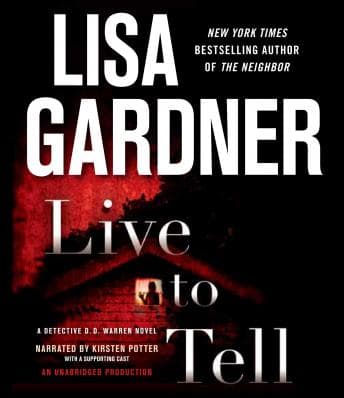
The structure is the smartest thing about this book. You get three women — D.D. Warren investigating a family massacre in a working-class Boston neighborhood, Danielle Burton nursing traumatized kids in a pediatric psych ward while dragging around her own 25-year-old family tragedy, and Victoria Oliver white-knuckling her way through motherhood with a son who exhibits genuinely alarming behavior. Each woman gets her own narrator, which is a choice that pays off more than I expected.
What makes this character web compelling is that Gardner understands something the research actually shows about trauma survivors: they don't all react the same way, but they do tend to develop rigid coping architectures. D.D. is the classic hypervigilant controller — she manages her terror by managing everyone else. Danielle has turned her survival guilt into compulsive caregiving. And Victoria? Victoria exhibits classic accommodation behavior, restructuring her entire life around her son's volatility and calling it love.
I found myself asking: why does Victoria really keep those secrets? Not because Gardner told me she's a devoted mother. Because the behavioral pattern is so precisely drawn — the locked bedroom doors, the hidden sharp objects, the cheerful performance for outsiders — that I recognized the profile before the plot confirmed it. The author understands human nature.
Psychologically, this doesn't track in a couple of places, though. D.D.'s romantic subplot feels grafted on, like Gardner remembered she needed to give her series detective a personal life. And there's a reveal late in the book involving Danielle's past that relies on a coincidence so aggressive it practically has its own zipcode. My therapist would have thoughts about how conveniently everyone's trauma connects.
The Three-Narrator Gamble
Here's where the audiobook format either makes or breaks a multi-POV thriller. Ann Marie Lee handles D.D. with a brisk, no-nonsense Boston energy — clipped sentences, a detective's impatience. Kirsten Potter takes Danielle and gives her something more guarded, more measured, which fits a woman who's spent decades keeping her story locked down. Rebecca Lowman draws Victoria with an almost unbearable tenderness that slowly curdles as you understand what she's actually describing.
The transitions between narrators are where you really feel the structural ambition. When you shift from D.D.'s investigative momentum to Victoria's claustrophobic domesticity, the tonal whiplash is deliberate — and effective. You're inside a different survival mode each time.
But — and I need to be honest here — the pacing drags in the middle third. There are stretches in the psych ward sections where Danielle's backstory unfolds at a rate that tested my patience even on a long jog through Cambridge. I bumped the speed up to 1.25x for about two hours and didn't miss a thing. At 13-plus hours, this book could've been tighter. Gardner spends a lot of time establishing the ward dynamics, and while some of that pays off, some of it is just... setup waiting for a payoff that's too far away.
Where Gardner Outperforms the Genre (and Where She Doesn't)
Compared to something like Gillian Flynn's work, Gardner is less interested in making you distrust the narrator and more interested in making you understand them — which is a fundamentally different kind of suspense. Flynn asks "who is lying?" Gardner asks "why did this family break?" That second question is harder and, honestly, scarier. White Cargo sits in that same uncomfortable territory — less interested in the puzzle than in the damage left behind when families become the source of danger rather than safety.
But compared to Gardner's own later books like Find Her, the plotting here feels a little more conventional. The family-annihilation case follows a murder-mystery structure that, if you've read enough true crime (and I have read too much true crime), you'll see the shape of before D.D. does. The twists land, but they land like expected guests arriving on time rather than someone kicking in the door.
What stays with me isn't the whodunit. It's Victoria standing in her kitchen at 2 AM, checking the locks she installed herself, telling herself this is what good mothers do. This is a fascinating case study in how the stories we tell ourselves about family — about what love requires, what loyalty demands — can become the very architecture of our destruction.
Who This Is Actually For
If you want a thriller that earns its body count with genuine psychological weight, this is worth your time. If you need breakneck pacing throughout, you'll get frustrated around hour six. If you're a D.D. Warren series reader, this is strong — probably not the peak of the series, but far from filler.
Skip if you're sensitive to depictions of child abuse and family violence. Gardner doesn't exploit it, but she doesn't flinch from it either.
The Case File Stays Open
I finished this book, washed my dishes, and then sat on my couch thinking about Victoria Oliver for another twenty minutes. That's not nothing. Gardner built a thriller around the most uncomfortable truth in criminal psychology: that the people most capable of hurting us are the ones we've let closest. The mystery is solid. The psychology is better. And those three narrators turning in three distinct portraits of women trying to outrun the past? That's what makes this an audiobook rather than just a book you happen to listen to.