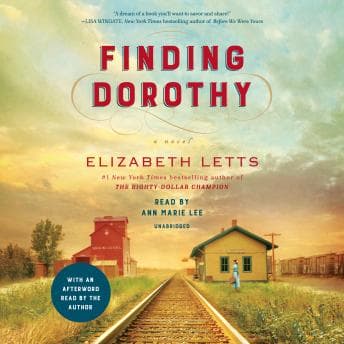

Everyone kept telling me this was a sweet, feel-good Wizard of Oz nostalgia trip. A gentle book about the woman behind the curtain, so to speak. And sure, there's warmth here. But what caught me off guard - what had me gripping my steering wheel at 7:45 AM after a twelve-hour shift - was how much of this story is about loss. About watching someone you love struggle and not being able to fix it. About showing up anyway.
As someone who spends most nights watching families sit vigil at bedsides, that hit different than I expected.
Maud Gage Baum Deserved Her Own Story Decades Ago
Here's what got me: Elizabeth Letts doesn't just write Maud as "the wife of the guy who wrote Oz." She builds this woman from the ground up - suffragette's daughter, one of the first women at Cornell, a mother who buried a child and kept going, a wife who believed in her husband's weird dream of writing fairy tales when they were barely scraping by on the Dakota prairie. The dual timeline works surprisingly well. You get 1938 Hollywood Maud, seventy-seven years old and bulldozing her way onto the MGM set, intercut with the younger Maud navigating marriage, poverty, grief, and the slow creation of the story we all know.
The prairie sections are brutal. Letts doesn't romanticize it. The dust, the isolation, the dead crops, the children getting sick - and then there's the real Dorothy. The neighbor girl Maud tried to protect. I won't spoil what happens, but I will say Carlos asked why I was crying in the car. I blamed allergies. He didn't buy it.
What I appreciated as a healthcare person: when children are sick in this book, they're sick the way children actually got sick in the 1890s. No miracle recoveries. No dramatic last-breath speeches. Just the awful quiet of a house where someone small is suffering and you don't have the tools to help. Letts did her research, and it shows in those moments.
Ann Marie Lee Made Me Forget I Was Listening to One Person
The narration situation here is interesting - Ann Marie Lee handles the novel itself, and Elizabeth Letts reads her own afterword. But Lee is the star. Her Maud ages convincingly across decades. Young Maud has this clipped determination, this brightness. Older Maud carries weight in her voice without becoming frail. And her Frank Baum - this gentle, slightly dreamy man who tells stories to anyone who'll listen - is one of the most convincing male characterizations I've heard from a female narrator. Period. There's a scene where Frank is telling one of his fantastical stories to the children, and Lee gives him this quiet wonder that made me think of my own dad telling us Filipino folk tales at bedtime. That specific tenderness.
Her Judy Garland is young and nervous and hungry for approval, which tracks with everything we know about Garland at that age. The Hollywood scenes are lighter in tone but carry this undercurrent of exploitation that Lee doesn't oversell. She lets the discomfort build.
At nearly fourteen hours, this is not a quick listen. But I never once considered bumping up the speed. The pacing earns its length - the prairie years need room to breathe, and the Hollywood chapters need their own kind of slow tension.
The Medicine of Stories (Not the Kind I Usually Mean)
Look, I work in a trauma center. I'm practical. I believe in evidence and protocols and doing the next right thing. But this book makes a case for something I also believe in, quietly, on those 3 AM shifts when I'm sitting with a patient who can't sleep: stories matter. The whole thesis of Finding Dorothy is that Oz wasn't just a children's book. It was born from real pain, real love, real loss on the American prairie. And Maud carried that knowledge like a diagnosis she couldn't share with anyone.
The parallel between Maud trying to protect the real Dorothy and then trying to protect Judy Garland decades later - a girl she sees as another dreamer being chewed up by forces bigger than her - that's the emotional spine of this book. And it works because Letts never makes it tidy. Maud can't save everyone. She knows that. She tries anyway.
My mom would love this. (She still thinks I should've been a doctor, but she's a sucker for strong women who outlast the men around them.)
Who This Is For and Who Should Keep Scrolling
If you love historical fiction grounded in real lives, if you're a Wizard of Oz person (even casually), if you want a book about a woman who refused to be a footnote - this is yours. Night shift approved. Perfect for that post-shift decompression when you need something absorbing but not violent.
If you want action or fast plot turns, this will test your patience. It's a slow build. Character-driven down to its bones. If you need a thriller to stay awake on your commute, this isn't it. Beach Read scratched that faster-paced itch for me when I needed something with more momentum and less quiet devastation.
But if you've ever sat with someone through the hard part and wondered if it meant anything - yeah. Listen to this one.