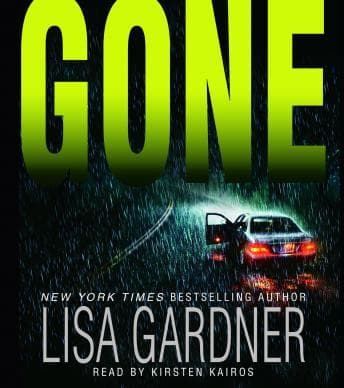

Okay, let's be real for a second. I almost turned this off in chapter one. Not because the writing is bad—Lisa Gardner knows how to hook you—but because I couldn't figure out why the hardened state trooper sounded like my auntie when she has a bad chest cold.
I checked the reviews before I started (a bad habit, I know, confirms bias), and everyone was complaining about the male voices. I thought, "Priya, you're a professional. You can look past a weird accent." Turns out, I struggled. The plot kept me going, but we need to talk about the audio choices here.
The "Chest Cold" Phenomenon
Here's the thing about Anna Fields. She was a legend. She won Audies. She knew how to pace a story. But for some reason, her choice for Bobby Dodge and the other male characters in this book is just... bizarre. It's this throaty, deep register that sounds less like "masculine authority" and more like "needs a lozenge immediately."
It distracted me. I found myself analyzing the vocal cords rather than the plot. And as someone who actually lives in the Boston area (I listen to these on my morning run along the Charles), the lack of a New England accent was another strike. If you're setting a book in Massachusetts, give me a dropped 'R' or something. It felt geographically unmoored.
However—and this is a big however—her pacing is excellent. Once I stopped fixating on the gravelly men, the rhythm of the suspense actually worked. She knows where to pause. She knows how to build tension. If you can get past the tone, the technique is there. That same tension-building technique shows up in House of a Thousand Candles, though with a completely different narrative style.
Catherine Gagnon: A Case Study in Manipulation
Narrator gripes aside, psychologically? This book is fascinating.
We have Catherine Rose Gagnon. In clinical terms, she's a mess. But in narrative terms? She's gold. I spend my days researching how stories shape identity, and Catherine is the ultimate example of a character who has crafted a persona to survive. She's a victim, yes, but she's also terrifying.
The dynamic between her and Bobby (the sniper) is classic transference and counter-transference, though my therapist would probably tell me to stop diagnosing fictional characters. But seriously—the way Gardner blurs the line between "damsel in distress" and "femme fatale" is what kept me listening. Most thrillers want the victim to be perfect and sympathetic. Gardner makes Catherine cold, calculating, and dangerously sexy. It triggers that "savior complex" in Bobby, and watching him fall into that trap is like watching a car crash in slow motion.
It's messy. It's toxic. I loved it.
Priya's Prescription
So, here's the verdict. If you're extremely sensitive to unconvincing male voices—specifically women doing that throaty "I'm a tough guy" register—this might drive you up the wall. Grab the Kindle version instead.
But if you're like me and you live for a psychological puzzle where you can't trust the "victim," it's worth pushing through the audio quirks. Just maybe speed it up to 1.25x. It smooths out the edges of the narration and makes the thriller elements pop.
(And seriously, if anyone finds a thriller where the psychology of trauma is actually handled realistically, email me. I'm still looking.)