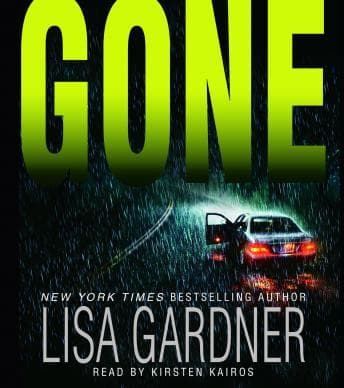

Lisa Gardner's Gone is not her best thriller. There, I said it. But here's the thing — it's still a pretty solid case study in what happens when a profiler's training collides with raw, desperate love, and that tension kept me listening through ten hours of Oregon rain and hostage negotiations while I was making my mother's rajma recipe at midnight. (The dal needed to simmer anyway. Don't judge.)
When the Profiler Becomes the Subject
What makes this book interesting from a psychological standpoint is the role reversal. Pierce Quincy is an ex-FBI profiler — someone who's spent his career dissecting other people's worst moments — and suddenly he's the one being dissected. His estranged wife Rainie Conner vanishes from a desolate stretch of highway, engine still running, purse on the seat, and Quincy has to confront every cognitive bias he's trained himself to exploit in others. The protagonist exhibits classic approach-avoidance conflict: he needs to think like a profiler to find Rainie, but the emotional flooding of losing someone you love makes clinical thinking nearly impossible.
Gardner understands this dynamic. The scenes where Quincy oscillates between analytical mode and barely-contained panic feel psychologically honest. The research actually shows that expertise crumbles under personal threat — it's called the "curse of expertise" in some literature, and watching Quincy struggle with it gave the book its best moments. His daughter Kimberly, also FBI, serves as a mirror character — same training, less emotional entanglement — and their interactions highlight how grief distorts perception. That part? Gardner nails it.
But then there's the kidnapper with his theatrical alias borrowed from an eighty-year-old killer, demanding money and celebrity, and I found myself asking: why does this antagonist really choose this particular brand of performance? The answer felt... thin. The villain's psychology reads more like a plot mechanism than a believable mind. He wants power, celebrity, control — okay, fine, but the specifics of his escalation pattern don't quite track with the profile Gardner builds. Poe understood this — the psychology of the performative villain who needs an audience — and the stories in Works of Edgar Allan Poe, Raven Edition, Volume 2 still do more with that particular dark archetype in twenty pages than most thriller novelists manage in three hundred. Psychologically, this doesn't track as tightly as her setup promises. The motivation needed one more layer, one more ugly truth, to make me believe he was a real person rather than a narrative convenience.
Anna Fields and the Problem of Male Voices
Let's talk about the audio experience, because this is where things get complicated. Anna Fields — who won an Audie Award and multiple Earphones Awards, so clearly knows her craft — delivers the emotional suspense scenes with real urgency. When Rainie's captivity tightens, when Quincy's control fractures, Fields leans into those moments and you feel the temperature drop.
But the male voices. Oh, the male voices. Quincy, the kidnapper, the local law enforcement — they all emerge from roughly the same register with slight variations that aren't quite enough. By hour three, I was occasionally losing track of who was speaking in dialogue-heavy sections, which is a problem in a mystery where you're supposed to be tracking everyone's credibility. It's not terrible — it's more like watching a skilled actress play multiple roles in a one-woman show where the costume changes are just different hats. You get the idea, but the illusion strains.
The pacing also wobbles. The middle section — roughly between the initial hook and the final act escalation — has a repetitive quality. Quincy investigates, hits a wall, gets another clue, pivots. The pattern repeats enough times that I started predicting the rhythm rather than being surprised by the content. My therapist would have thoughts about this character, but I had more thoughts about Gardner's plotting choices in the second act.
Who Should Press Play (and Who Should Walk Away)
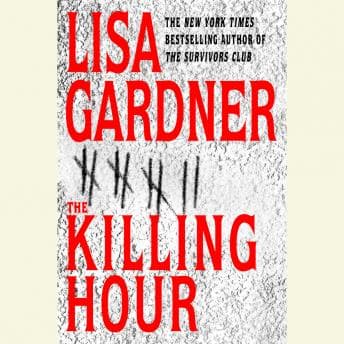
If you've already read Gardner's Alone or The Killing Hour and love the Quincy-Rainie universe, this is a satisfying continuation. Not the peak of the series, but it deepens the relationship dynamics in ways that pay off emotionally. If you're new to Gardner, honestly? Start elsewhere. This book assumes you already care about these people, and without that investment, the predictability of the thriller mechanics might lose you.
The audiobook specifically requires dedicated listening — this is not your morning jog background book. The plot complexity and the narrator's similar-sounding male voices mean you need to pay attention or you'll miss critical shifts.
The Case File, Closed
This is a fascinating case study in how a strong character premise can carry a thriller even when the plot mechanics get a little creaky. Gardner understands human nature — particularly the way love and loss make smart people stupid — better than the story structure around it. At ~11 hours, it's a commitment, and I'd recommend bumping it to 1.25x speed to tighten up those saggy middle stretches. Not Gardner's finest, not Fields' finest, but there's enough psychological honesty in Quincy's unraveling to make it worth your time. Just maybe not your next credit.