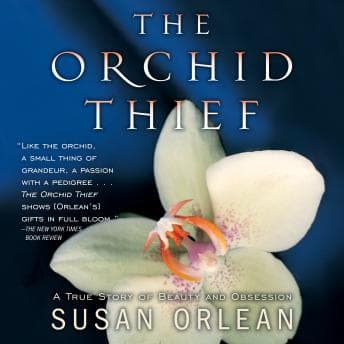

Look, I have a complaint. Susan Orlean made me care about orchids. Deeply. I teach Hemingway and Fitzgerald to teenagers who'd rather watch paint dry, and somehow this woman got me emotionally invested in Dendrophylax lindenii—the ghost orchid—while I was supposed to be grading sophomore essays on The Great Gatsby at 11 PM.
This is profoundly unfair.
The Art of the Obsessive Tangent
What Orlean does here reminds me of what the best essayists have always understood: the subject is never really the subject. Gatsby isn't about parties. Moby Dick isn't about whaling. And The Orchid Thief isn't about orchids—it's about the terrifying, beautiful, occasionally pathetic human capacity to want something so badly that reason becomes irrelevant.
John Laroche is the kind of character my creative writing students would invent and I'd mark up with "too unbelievable—tone it down." Missing front teeth. A history of obsessions he picks up and discards like hobbies—tropical fish, Ice Age fossils, old mirrors. Now orchids. He's stealing protected ghost orchids from the Fakahatchee Strand with Seminole tribe members, exploiting a legal loophole involving Native American sovereignty, and he's doing it all with the absolute conviction of someone who has never once questioned whether his passion might be slightly unhinged.
Orlean follows him into Florida's swamps—literally—and what emerges is this sprawling meditation on collectors, aristocrats, smugglers, and fanatics. The orchid world, it turns out, is populated entirely by people who would recognize Ahab as a kindred spirit.
Anna Fields Knows When to Step Back
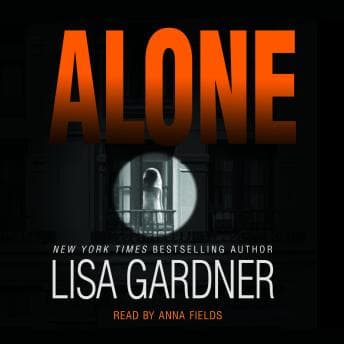
Here's where I'll defend the narrator against critics who wanted more... drama, I suppose. Anna Fields has this low-pitched, earnest delivery that serves the material exactly right. Orlean's prose is already doing the heavy lifting—it's witty, observational, occasionally devastating in its precision. A narrator who tried to punch it up would've ruined everything.
Fields reads like a very smart friend telling you about the strangest thing she encountered this week. No affectation. No performance. Just the words, delivered with the kind of respect that suggests she trusts you to find the humor and pathos on your own. At under five hours (this is the abridged version), she keeps the pace brisk without feeling rushed.
My only note—and this is minor—is that Laroche himself probably deserves a slightly more eccentric vocal characterization. Fields keeps him grounded, which works, but I occasionally wanted just a hint more of his apparent mania coming through in her interpretation.
Why Some Listeners Bounce Off This
I should be honest: this book meanders. Orlean will start telling you about Laroche's court case and then detour into the history of orchid hunting in Victorian England, then pivot to the biology of epiphytes, then land somehow on a meditation about Florida itself as a place where people go to reinvent themselves.
If you need a tight narrative arc with clear rising action, this will frustrate you. Some listeners have called it bloated, directionless. They're not wrong about the structure—they're just wrong about whether that's a flaw.
This is creative nonfiction in the tradition of John McPhee. The digressions ARE the point. Braving the Wilderness works the same way—Brené Brown circles her subject until you've internalized something profound about belonging without realizing you were being taught. Orlean is building something cumulative, layering observations until you suddenly realize you've absorbed an entire worldview about passion and obsession without quite noticing it happening.
My students would hate this. I love it.
The Adaptation Question
Yes, Charlie Kaufman turned this into that gloriously weird movie with Nicolas Cage playing twin screenwriters. No, the film and the book are barely the same thing. Kaufman's version is about the impossibility of adapting a book like this—which is itself a kind of tribute to how strange and formless Orlean's original is.
Listen to the audiobook first. Then watch the movie. Then come back and listen again. The layers multiply.
Who Should Wander Into These Swamps (And Who Should Stay on Dry Land)
This is for readers who loved Mary Roach's obsessive deep-dives, or Bill Bryson's willingness to follow curiosity wherever it leads. If you want to understand why people become consumed by things—whether orchids or rare books or vintage guitars—this is essential. But if you need plot, clear structure, a destination? Skip it. You'll spend five hours waiting for something that isn't coming.
It's also, quietly, one of the best books about Florida ever written. Orlean gets something about that state's particular combination of beauty, decay, and reinvention that most writers miss entirely.
I finished it on a Saturday morning walk along the lakefront with Denise. She asked what I was listening to. I tried to explain and ended up talking for twenty minutes about ghost orchids, Victorian plant hunters, and a toothless man who might be either a genius or a con artist or both.
The prose deserves to be savored. Keep it at 1.0x. Let Orlean's sentences breathe. Let Fields' measured delivery carry you into the swamp.
Class Dismissed—Go Get Lost in Something
At under five hours, this is a perfect weekend listen—substantial enough to feel like an accomplishment, short enough to finish before Monday's lesson planning demands your attention. The abridged version actually works here; Orlean's tangents are trimmed but not gutted, and what remains is concentrated and potent.
This is why we still read—or listen to—the best creative nonfiction. Not for information. For the experience of watching a first-rate mind become fascinated by something and pull you along into that fascination whether you wanted to go or not.