
What if the thing we've been taught to suppress our entire lives is actually the key to everything?
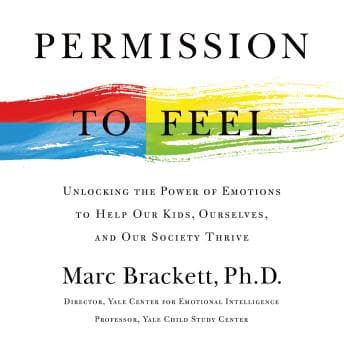
I was stirring a pot of dal at 10 PM—comfort cooking after a brutal week of grading undergraduate papers on attachment theory—when Marc Brackett started talking about his uncle. The uncle who, unlike every other adult in young Marc's life, actually saw him. Who gave him permission to feel scared, angry, isolated. And I just... stopped stirring. Stood there in my kitchen with a wooden spoon suspended mid-air, thinking about every client case study I've ever read where the turning point was exactly this: one person who validated instead of dismissed.
This is a fascinating case study in what happens when an emotion scientist turns the lens on himself first.
The Research Actually Shows Something Different
Brackett's RULER framework—Recognizing, Understanding, Labeling, Expressing, Regulating—isn't revolutionary on paper. Any psych grad student could sketch something similar. But what makes this book work is the weaving of his personal narrative with the research. The same tension between accessible framework and deeply personal stakes is what kept me reading Blink—Gladwell, too, wraps behavioral science in human stories, though he leans further into narrative than data, which is both its strength and its limitation. He doesn't just cite studies; he explains why he needed to conduct them. The bullying he endured. The emotional illiteracy of the adults around him. The way shame compounds when you're told your feelings are wrong or excessive.
The protagonist exhibits classic wounded healer patterns, and I mean that as a compliment. Brackett's transparency about his own emotional struggles gives the research credibility it wouldn't have if delivered by someone who seemed to have it all figured out. When he discusses how RULER has been implemented in thousands of schools—reducing stress, depression, burnout—you believe it because you've heard him admit he's still working on his own emotional regulation.
Psychologically, this tracks. We trust teachers who've done the homework themselves.
When the Author Is the Narrator (And Maybe Shouldn't Be)
Here's where things get complicated. Brackett narrates his own book, and the reviews are genuinely split. Some listeners describe it as "natural," like having a conversation with the man himself. Others suggest he should have hired a professional narrator.
I found myself asking: why does this matter so much for THIS particular book?
Because a book about emotional intelligence, read by its author, becomes a kind of meta-test. You're evaluating his emotional expression in real-time. And Brackett's delivery is... competent. Passionate in places. But there's a flatness that creeps in during the more research-heavy sections. His pacing can drag when he's explaining study methodologies. (My therapist would have thoughts about whether I'm being too harsh here, but she'd also agree that eight hours is a lot of time to spend with someone who occasionally sounds like he's reading a grant proposal.)
The natural quality works when he's telling personal stories. It works less well when he's presenting data. This isn't a dealbreaker, but at nearly eight hours, you'll notice.
Who Should Listen (And Who Should Skip)
Parents. Teachers. Anyone who works with kids and has ever thought "why won't they just calm down?" Brackett's framework is practical—he gives you actual vocabulary, actual strategies. The mood meter concept (plotting emotions on axes of pleasantness and energy) is simple enough that a third-grader could use it. And that's the point.
But also? Adults who grew up emotionally illiterate. Who learned to suppress rather than express. Who still, at 30 or 40 or 60, don't have words for what they're feeling beyond "fine" or "stressed." The research shows that emotional granularity—being able to distinguish between frustrated, disappointed, and resentful—actually improves regulation. You can't manage what you can't name.
If you're already well-versed in emotional intelligence research, some of this will feel basic. If you're looking for deep clinical psychology, look elsewhere. But if you want a practical, accessible introduction with enough science to feel credible and enough personal narrative to feel human? This delivers.
The Case File Closes
I finished the book while washing dishes, which felt appropriate. Mundane task, mind wandering, suddenly hit with the realization that I've spent twenty years studying why people do what they do, and I still sometimes struggle to name my own emotions in real-time.
Brackett's not offering a cure. He's offering permission. And sometimes that's exactly what we need—someone to say: what you're feeling is real, it matters, and here are some tools.
The narration won't win awards. The pacing occasionally drags. But the content? Solid. Science-backed. Genuinely useful. Worth your time if you're ready to stop treating emotions as problems to be solved and start treating them as data to be understood.
My mother would say I'm overthinking this. She's probably right. But that's kind of the point, isn't it?