
The 6 AM Caltrain Test
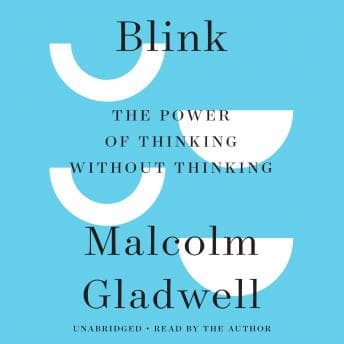
It's 6:15 AM on the Baby Bullet to Mountain View. I'm staring at the Clipper card reader, deciding in roughly 0.2 seconds whether I tagged on or if I'm about to commit accidental fare evasion. According to Malcolm Gladwell, my brain already knows the answer long before my conscious anxiety kicks in.
I picked up Blink because my Product Manager keeps talking about "product intuition" and "gut feel" during sprint planning, and I needed to understand if he's actually a genius or just guessing. (Spoiler: It's usually guessing. Don't tell him I said that.)
This is one of those books that feels like it was engineered in a lab specifically for commuters who want to feel smarter than the person sitting next to them.
The "Human Cache" Layer
Here's the quick version from a systems perspective: Gladwell argues that the human brain has a high-speed cache layer. We do this thing called "thin-slicing"—taking a tiny sample of data and running a massive pattern-matching algorithm on it instantly.
When it works? It's magic. The stories he tells are honestly gripping. There's this art expert who looks at a multimillion-dollar statue and just knows it's a fake because it feels "fresh." Or the tennis coach who can predict a double fault before the racket hits the ball.
But when the cache is corrupted? You get the election of Warren Harding (who looked like a president but was a terrible one) or the tragic shooting of Amadou Diallo.
The science? It holds up... mostly. But let's be real. Gladwell isn't writing a technical doc here. He's writing pop-psychology folklore. He cherry-picks the data that fits the narrative, but he does it so smoothly you almost don't care.
The Gladwell Voice (Literally)
Narrating your own book is a risk. Usually, I hate it. Authors aren't actors.
But Gladwell? He's the exception. The guy is a podcaster at heart. His voice has this specific cadence—part investigative journalist, part campfire storyteller—that makes even the driest statistics sound like a conspiracy theory you need to know about.
I had to crank this up to 1.75x speed though. Seriously. At 1.0x, his dramatic pauses are long enough for me to run a unit test suite. He speaks with this supreme confidence that borders on smugness. You can practically hear him raising an eyebrow at the microphone. He pulls off the exact same performance in Outliers, and honestly, it's even more effective there because the material is stronger. If you're into that "I know something you don't" vibe, it works. If you're already annoyed by the premise, it might grate on you.
The "Could Have Been A Blog Post" Factor
Here's my main gripe with the business/psych genre, and Blink is a repeat offender.
The core concept is brilliant. Truly. Talking to Strangers explores similar territory about snap judgments, but it's tighter and less repetitive. The idea that we can train our intuition? Fascinating. But by hour five, I was checking the progress bar.
He circles back. A lot. We get it, Malcolm. Thin-slicing is powerful. We don't need the 15th anecdote to prove the same point we established in Chapter 2. It feels like he had enough content for a killer 3-hour podcast series but needed to stretch it to fill a hardcover.
The ROI on the last two hours is pretty low. I found myself zoning out, watching the scenery blur past San Mateo, only tuning back in when his inflection changed.
Final Verdict
Is it worth the credit? Yeah, probably.
It's a cultural touchstone. People reference "Blink moments" all the time in tech, and it helps to know the source material. Plus, the breakdown of why "New Coke" failed (because sip tests are different from drinking a whole can) is actually super relevant to A/B testing in software.
Who should listen: Tech folks who want to understand why their PM keeps saying "trust your gut," anyone curious about the psychology behind snap decisions, or commuters who want something that feels productive without requiring full attention. Who should skip: If you need rigorous methodology or get annoyed by repetitive anecdotes, you'll be frustrated by hour four.
Just don't treat it like a manual for life. It's entertainment that makes you think, not a rigorous scientific study. Listen to it on the train, feel smart, then go back to trusting your data logs over your gut.