
The "Podcast Before Podcasts" Experience
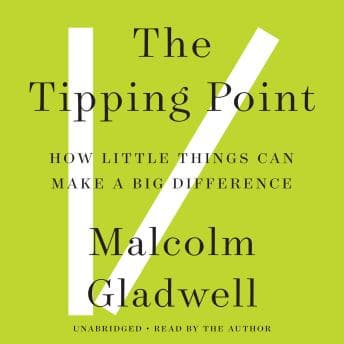
Okay, let's be real for a second. If you work in tech, marketing, or have ever sat through a product roadmap meeting, you've heard the terminology. "The Tipping Point." "Mavens." "Connectors." It's basically the source code for modern corporate buzzwords.
I've been meaning to actually read the source material for years, but let's face it—after staring at distributed system logs all day, my eyes are done. So I grabbed this for the Caltrain commute, thinking it would be one of those "eat your vegetables" business books.
You know the type. Dry. Monotone. Could've been a blog post.
I was wrong.
Graph Theory for People Who Hate Math
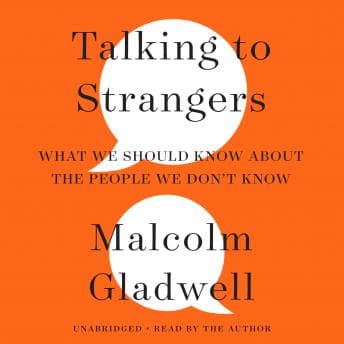
Here's the thing about Malcolm Gladwell: he's not really an author in the traditional sense. He's a podcaster who writes books. That narrative style is even more refined in Talking to Strangers, where he leans fully into the investigative journalism angle. (Yes, I know this book came out before podcasts were really a thing, but the vibe is there).
Listening to Gladwell narrate his own work is a cheat code. He doesn't read the text; he performs the argument. He has this specific cadence—curious, slightly incredulous, like he's discovering the secret along with you—that makes even the history of Hush Puppies shoes sound like a high-stakes thriller.
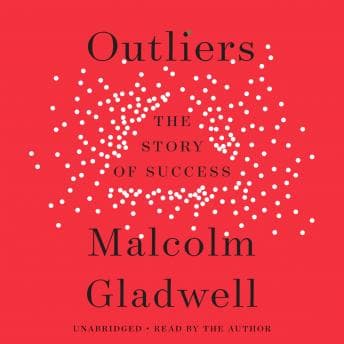
For my fellow engineers: Gladwell is essentially debugging society. He looks at an output (a sudden drop in crime, a fashion trend) and traces the stack trace back to the root cause. He uses the same pattern-recognition approach in Outliers, except there he's debugging success instead of trends.
The concept of "Connectors"? That's just identifying the high-degree nodes in a network graph. "The Law of the Few"? That's Pareto efficiency. But because he wraps it in stories about Paul Revere or Sesame Street, it sticks way better than any dry lecture on network topology ever could.
The Production: Radio Drama Vibes (For Better or Worse)
The audio production is... interesting. It's not just Gladwell talking. They splice in music stings and, weirdly, voice actors for the quotes.
Sometimes this works. It breaks up the monotony of a single voice, which is great when you're 45 minutes into a delay at the Palo Alto station. But other times? It feels a little like an old-timey radio drama. There were moments where a voice actor would come in with a super dramatic reading of a mundane quote, and I literally laughed out loud. (The guy next to me on the train definitely judged me).
Fair warning: the pacing is great at first, but the last third drags. The concepts start to feel repetitive. I bumped the speed from my usual 1.5x to 1.75x for the last two hours—the ROI on those chapters drops as he reiterates points he already made.
The Verdict
If you want hard, rigorous science that holds up to peer review? Eh, maybe look elsewhere. Gladwell is a storyteller first, data analyst second. He cherry-picks to make the narrative work.
But as a framework for thinking about how ideas spread? It's gold.
It's the perfect audiobook for when you want to feel smart without burning too many brain cycles. It kept me entertained through a week of commutes, and I didn't even need to rewind when I zoned out to check Slack.
Who's this for: Tech folks, marketers, or anyone curious about why some ideas catch fire and others fizzle—especially if you've been nodding along to these concepts in meetings without knowing the source. Skip it if you need airtight methodology or can't handle a bit of narrative hand-waving.
Bottom line: It's a classic for a reason. Just don't take it as absolute gospel.