
The Debrief
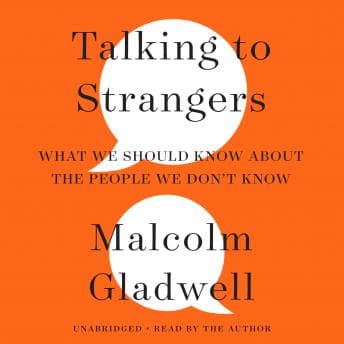
Let me cut to the chase - this isn't just an audiobook. It's something else entirely. I was driving back from a client site in Houston, three hours of I-10 ahead of me, and within the first ten minutes I realized I'd accidentally stumbled into what felt like a documentary that happened to be in my ears. Gladwell doesn't just read his book to you. He produces it. And honestly? It's the first time I've ever thought "yeah, this is why audiobooks exist."
Look, I've been skeptical of Gladwell before. Some of his earlier stuff felt a little too neat, too "here's a clever idea wrapped in a bow." But this one hit different. Maybe because the subject matter - how spectacularly wrong we get it when we try to read strangers - is something I've lived through. Three deployments taught me that the guy smiling at your checkpoint might be planning something, and the nervous kid who won't make eye contact might just be scared of the heavily armed Americans in his village. We trained for this stuff. We still got it wrong. A lot.
Why This Audiobook Format Actually Matters
Here's what separates this from every other nonfiction audiobook I've listened to. When Gladwell talks about the Sandra Bland traffic stop, you don't just hear him describe it. You hear the actual dashcam audio. The escalation. The fear and anger in both voices. I pulled over at a rest stop outside Schulenburg because I needed a minute after that section. (Ranger gave me a look like "why'd we stop?" but he doesn't understand.)
The production includes interviews with the actual people involved in these cases - psychologists, investigators, witnesses. Court transcripts get performed, not just read. There's even a theme song, which sounds ridiculous until you hear Janelle Monáe's "Hell You Talmbout" and understand why it's there. It's not gimmicky. It's purposeful.
Gladwell's own narration is - and I don't say this lightly - pretty much perfect for this material. He's got this measured, curious delivery that never feels like he's lecturing you. That same conversational intelligence comes through in David and Goliath, where he turns conventional wisdom about power dynamics on its head. More like a really smart friend walking you through something he can't stop thinking about. His pacing is excellent. The dramatic pauses actually work instead of feeling theatrical. I listened at my usual 1.25x and it held up fine, though honestly this is one where normal speed might be worth it just to let the archival audio breathe.
Where It Gets Uncomfortable (In a Good Way)
The book covers some heavy ground. Bernie Madoff. Amanda Knox. Neville Chamberlain trusting Hitler. Campus sexual assault. The CIA getting played by Castro for decades. Gladwell's central argument is basically this: we're wired to "default to truth" - to assume people are telling us the truth - and this makes us terrible at detecting deception. But here's the kicker. That same default is also what makes society function. We can't go around suspecting everyone of everything.
As someone who spent years in environments where you had to suspect everyone of everything, this landed hard. The psychological cost of constant vigilance is real. Gladwell doesn't spell that out explicitly, but I felt it. The book made me think about how I've struggled to turn that switch off since coming home. Linda's mentioned it. More than once.
The Sandra Bland case becomes the emotional anchor of the whole thing. Gladwell traces how a routine traffic stop escalated into an arrest and eventually a suicide in a Texas jail. He doesn't point fingers as much as he examines the systems and assumptions that failed. The "Kansas City Experiment" stuff about aggressive policing - how a strategy that worked in high-crime areas got applied everywhere with disastrous results - that's the kind of clear-eyed analysis I wish more people in law enforcement would engage with. Not political. Just factual.
Fair Warning
This isn't light listening. The content includes discussions of sexual assault, suicide, police violence, and racial injustice. If you're looking for something to zone out to during a workout, this ain't it. I found myself pausing to think more than I usually do. Which is probably the point.
Some folks might find the production elements distracting if they're used to straightforward narration. I get that. But for me, hearing the actual voices - the real recordings - added a weight that Gladwell's words alone couldn't carry. When you hear the tremor in someone's voice during a police interrogation, you're not just understanding the concept of stress. You're experiencing it.
Who Should Listen (And Who Should Skip)
If you want nonfiction that makes you work for it - that challenges assumptions you didn't know you had - this is your mission. Skip it if you need background listening or can't handle heavy subject matter right now. No shame in that.
SITREP
Worth your time? Absolutely. This is what happens when an author understands that audiobooks can be their own art form, not just someone reading print aloud. Gladwell clearly did his homework, and more importantly, he found a way to make you feel the research instead of just absorbing it.
Is it perfect? Nah. Some sections feel a bit stretched, and Gladwell's tendency to connect disparate case studies can occasionally feel like he's reaching. But the core argument is solid, the production is exceptional, and I walked away thinking differently about some assumptions I didn't even know I had.
Ranger approved this one. He stayed awake through the whole Houston drive, which is more than I can say for most of my lieutenants during briefings.
Mission accomplished.