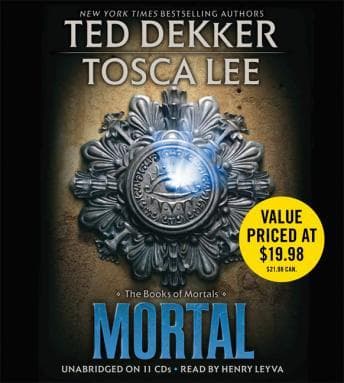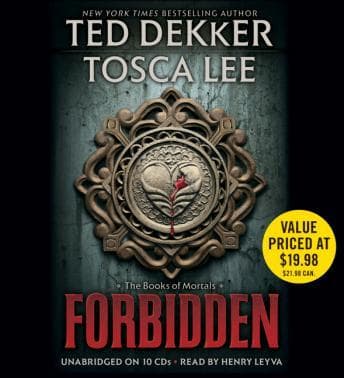
So here's the thing people keep telling me about Dekker: he's the Christian thriller guy. The one who writes like he's trying to scare you into salvation. And I'll be honest, I went into Forbidden expecting exactly that - heavy-handed allegory dressed up in genre clothing, the kind of thing that would make me roll my eyes so hard they'd get stuck.
I was half right. But the half I was wrong about? That's the interesting part.
A World That Feels Like Emotional Lobotomy
Dekker and Tosca Lee built something genuinely unsettling here - a future where humanity has been chemically stripped of all emotion except fear. Not rage, not joy, not love. Just fear. And the concept alone had me sitting up straighter in my chair at the reference desk during a slow Thursday afternoon (don't judge me, nobody was checking out books and the rain was doing that Oregon thing where it sounds like static). The "medieval future" worldbuilding is weird in ways that don't always land - one listener nailed it when they called it an "oxymoronic medieval future" they couldn't lose themselves in - but when it works, it creates this suffocating flatness. Imagine a world where grief doesn't exist. Where nobody mourns. That's not a dystopia built on oppression; it's built on absence. And absence, as any horror fan knows, is where the real dread lives. Bitter Harvest gets at something similar - the horror isn't what's present, it's what's been carved out and left hollow.
Rom, our protagonist, stumbles into a vial of blood that essentially reboots his emotional capacity. And the first time he feels something - actually feels it - Henry Leyva's voice does this thing where it cracks open just slightly. Not melodramatic. Just... raw. Like someone waking up from anesthesia and realizing they can feel pain again and it's the most beautiful terrible thing.
This understands that horror isn't about gore - it's about dread. Specifically, the dread of being alive in a world that's chosen not to be.
Henry Leyva: Slow Commitment That Pays Off
Let me be real - the first couple hours, Leyva sounds like he's finding his footing. The emotional flatness of the world means the early narration is deliberately restrained, but there's a difference between "performing emotional deadness" and "sounding a little uncertain about the material." For the first stretch, I wasn't sure which one I was hearing.
But then the blood takes effect. Rom starts feeling. And Leyva wakes up with him.
By the midpoint, the narrator commits. That's rare - especially in a book that asks you to portray characters who literally cannot feel emotion and then slowly, painfully learn how. The differentiation between characters improves as the stakes escalate, and there's a particular tension in the way Leyva handles the scenes where Rom is surrounded by the emotionless masses. You can hear the isolation in his voice. The loneliness of being the only person in the room who's actually alive.
It's not a perfect performance. Some listeners feel the book works better on the page, and I get that - there are passages of internal philosophical weight that feel like they're designed for eyes, not ears. Moments where you want to pause and reread rather than rewind. But Leyva carries the emotional arc with enough conviction that I stayed locked in.
The Allegory Problem (And Why I Didn't Hate It)
Look. I grew up in a household where the only acceptable horror was Revelation. I know Christian allegory when I see it, and Forbidden is practically vibrating with it - blood that brings life, awakening from spiritual death, the cost of true feeling in a numbed world. It's not subtle. It's really, really not subtle.
But here's what surprised me: Dekker and Lee don't let the allegory flatten the story. The blood doesn't just bring love and light - it resurrects hatred, ambition, greed. The awakening isn't clean. It's messy and dangerous and people die because of it. That complexity - the idea that feeling everything means feeling the terrible things too - kept me from dismissing it as propaganda dressed in thriller clothing.
Is it preachy in places? Yeah. Does the pacing drag in the first third while the worldbuilding settles? Absolutely. But once the engine catches, there's a momentum to it that's hard to deny. I was listening at my kitchen table at 11 PM, fork halfway to my mouth, completely forgetting about the pasta getting cold.
Shirley (my cat) was unimpressed. I was more invested than I expected to be.
The Slow Start Is Real - But So Is the Payoff
The biggest legitimate complaint: this book takes its time. The first couple hours are heavy on establishing the emotionless world, and if you're not hooked by the premise, that stretch will feel like wading through fog. I'd say give it three hours before you decide. The story earns its runtime, but it doesn't earn it immediately.
At 11 and a half hours with a single narrator, this demands focused listening. Don't try it on a run. Don't put it on while cooking. This needs your attention, especially during the philosophical stretches where the ideas are doing more work than the plot.
Who Gets the Blood, Who Stays Numb
If you're a Dekker fan, this is apparently more mature and restrained than his usual fare - and I'd agree based on what I've read of his other work. If you want pure thriller pacing, the slow burn might frustrate you. If you're allergic to religious allegory, you'll feel it here, no question.
But if you're curious about dystopian fiction that asks what it actually costs to feel - and you can handle a first act that takes its time getting there - this is a solid listen. My podcast listeners who dig philosophical horror-adjacent thrillers are going to find something to chew on here.
Something about a world that chose fear as its only emotion feels uncomfortably relevant. Shirley Jackson walked so... well, Dekker's doing something different. But he's walking in interesting territory.