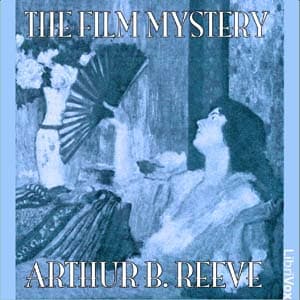

Everyone kept telling me Craig Kennedy is 'the American Sherlock Holmes.' I went in expecting derivative. What I got was something weirder and more interesting—a psychological time capsule wrapped in a murder mystery.
I was chopping onions for a biryani at 10 PM (don't judge, sometimes you need to cook through your feelings) when Stella Lamar collapsed on that silent film set. And I found myself asking: why does this death feel so different from modern celebrity murder mysteries? The answer hit me somewhere around the cardamom—it's the complete absence of our contemporary parasocial relationship with fame. In 1921, when Reeve wrote this, movie stars were still genuinely mysterious. We hadn't invented the 24-hour celebrity news cycle. The 'beloved idol of millions' actually was an idol, not someone whose breakfast we'd seen on Instagram.
The Prototype of a Trope
The protagonist exhibits classic early detective fiction patterns—the brilliant scientist-sleuth paired with a journalist sidekick who narrates. Yes, it's the Holmes-Watson dynamic. But here's what makes Kennedy compelling: he's obsessed with scientific evidence in an era when forensic science was basically magic to readers. Reeve was clearly doing his research on early film technology, and the procedural details about movie-making feel authentic in a way that surprised me.
The research actually shows Reeve was a journalist himself before becoming a novelist. You can feel it. The newsroom energy is real. The technical curiosity is genuine.
But—and my therapist would have thoughts about this character—Walter Jameson, our narrator, is kind of a disaster. One listener nailed it: 'A flapper smiles at him and he goes to pieces.' Psychologically, this doesn't track for a seasoned reporter. He's written as simultaneously worldly enough to cover crime and naive enough to be completely undone by a pretty face. It's the kind of inconsistency that pulled me out of the story more than once.
When the Medium Becomes the Mystery
This is a fascinating case study in how setting shapes narrative. The early film industry wasn't just a backdrop—it was genuinely strange territory for 1921 readers. Imagine reading a murder mystery set on a Mars colony today. That's the vibe. The victim dies while the camera is rolling, and there's something almost meta about it. A woman whose job is pretending to be someone else, dying in the middle of that performance. Real death captured by a machine designed to create fake life.
(I wrote that down in my notes app at 11:30 PM. The biryani was burning. Worth it.)
The pacing is... period-appropriate. Which is a polite way of saying it meanders. Eight and a half hours is a commitment, and there are stretches where Kennedy's scientific explanations feel more like lectures than investigation. But honestly? I didn't mind. It's fun to take a stroll back in time, as one listener put it. The language is 'mildly quaint'—not so archaic it's unreadable, but definitely flavored with that early 20th century formality.
The LibriVox Variable
Let's talk about the elephant in the room: this is a volunteer-read production with various narrators. I can't give you specifics about vocal performances because the research didn't provide them, and I won't invent details I don't have. What I can tell you is that LibriVox productions are inherently variable. Some chapters will be stronger than others. Some readers will have better equipment than others. That's the trade-off for free public domain audiobooks.
For a mystery that relies on following clues and keeping track of suspects, the multi-narrator format adds an extra layer of cognitive work. You're not just tracking the plot—you're adjusting to different voices, different pacing, different interpretive choices. Not ideal for a genre that rewards close attention.
Who Will Love This (And Who Should Run)
If you're a golden age mystery completist, this is essential listening. If you're interested in the history of detective fiction—how we got from Poe to Christie to modern procedurals—Kennedy is a fascinating missing link. If you love period pieces and can appreciate prose that feels like it was written by someone who wore a hat indoors, you'll have a good time.
Skip it if you need tight plotting and modern pacing. Skip it if inconsistent narration quality will drive you crazy. Skip it if you can't forgive a narrator protagonist who loses all brain function around attractive women. (I couldn't quite forgive it, but I kept listening anyway.)
Case Closed, Biryani Salvaged
Reeve was a good but not first-rank mystery writer. That's not an insult—most writers aren't first-rank. What he was is genuinely curious about science, technology, and how they intersect with crime. A hundred years later, that curiosity still translates. The mystery had me fooled, which is more than I can say for most contemporary thrillers that telegraph their twists from chapter three. Devil's Hand managed the same trick—kept me genuinely guessing until the final act.
Is it a landmark of the genre? No. Is it a worthwhile eight hours for the right listener? Absolutely. Just don't expect Holmes. Expect his American cousin who went to journalism school and got really into chemistry.