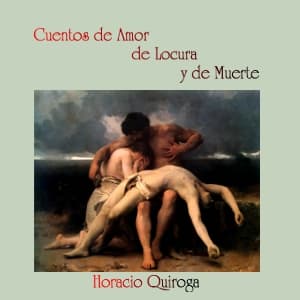

"La gallina degollada" — the decapitated hen. Around the two-hour mark, that story hit me like a physical blow. I was grading sophomore essays on The Great Gatsby at my kitchen table, red pen in hand, and I had to put everything down. Just sat there. Denise asked if I was okay. I wasn't, really. Not because the story is gratuitously violent — it's not — but because Quiroga builds to that ending with the inevitability of Greek tragedy. You see it coming. You can't stop it. And the narrator — I think it was María Fernanda Rojas on that particular story — delivered the final paragraphs with this terrible, measured calm that made it worse.
This is why we still read the classics.
The Poe of the Río de la Plata Earns That Title
I've taught Poe for two decades. "The Tell-Tale Heart," "The Cask of Amontillado" — I know the mechanics of literary horror intimately. So when people compare Quiroga to Poe, I'm skeptical. Most comparisons are lazy marketing. But Quiroga? He understood something Poe understood: that the most disturbing horror lives in domestic spaces. "El Almohadón de Plumas" (The Feather Pillow) takes a marriage bed and turns it into something that made me check my own pillows before sleep. I'm a grown man. A teacher. And I checked my pillows.
The collection moves between love, madness, and death — as the title promises — but Quiroga doesn't treat these as separate categories. They bleed into each other. Love becomes obsession becomes destruction. The jungle settings in stories like "A la Deriva" feel as psychologically oppressive as any Gothic mansion. A man floating downriver after a snakebite, his body failing him by degrees — the prose deserves to be savored, even as it describes something terrible.
Thirteen Narrators, Thirteen Interpretations
Here's where I have to be honest about the limitations. With thirteen different readers — Franco Patiño, Leonel Arias, Aldo Lumbia, and the rest — you're getting an anthology experience, not a unified vision. Some transitions between stories felt jarring. One narrator would finish with emotional intensity, and the next would begin with a completely different energy.
But there's something to be said for this approach. Each narrator brings their own interpretation to Quiroga's vision. The Spanish is clean, neutral — accessible for those of us who learned our Spanish from books rather than Buenos Aires streets. And when the material demands emotional weight, these readers deliver. The mystery immersed in everyday situations — that's what several listeners noted, and I felt it too. These aren't performers showing off. They're serving the text.
My students would hate this. I love it.
What Quiroga Is Really Saying
Let's talk about what makes this collection endure. Quiroga wrote from a life marked by tragedy — his father's accidental death, his stepfather's suicide, his own accidental killing of a friend. The man knew death intimately before he put pen to paper. You feel that in every story. This isn't an author imagining horror from a comfortable distance. This is someone who understood that the universe is fundamentally indifferent to human suffering. That same philosophical resignation runs through Tao Te Ching, though it arrives at acceptance rather than horror.
"La Meningitis y su Sombra" explores illness and delusion with the precision of someone who has watched people die. The narrator — I believe it was Jorge Mansilla — captured that clinical detachment that makes Quiroga's prose so unsettling. There's no sentimentality here. No comforting lessons. Just the cold observation of human fragility.
This reminds me of what Hemingway said about writing one true sentence. Quiroga writes true sentences about terrible things.
Class Dismissed — But This One Stays With You
At just under seven hours, this collection demands your attention but doesn't overstay its welcome. I finished it across three days — some during my lakefront walks with Denise, some during late-night grading sessions when I needed something more substantial than podcast chatter.
If you loved Poe, this is his spiritual successor — but with a Latin American sensibility that feels both familiar and foreign. If you're studying Spanish literature, this is essential. If you need a single guiding voice throughout, the thirteen-narrator anthology approach might frustrate you. And if you're looking for something comfortable and reassuring? Look elsewhere. Quiroga offers no comfort.
Content warnings are necessary: violence, death, madness, and implications of sexuality that would make my principal raise an eyebrow. These aren't gratuitous — they're integral to what Quiroga is doing. But know what you're getting into.
I'm adding this to my personal curriculum. Not for my students — they're not ready, and honestly, neither are most adults — but for my own ongoing education in what literature can do when it refuses to look away from the darkness.